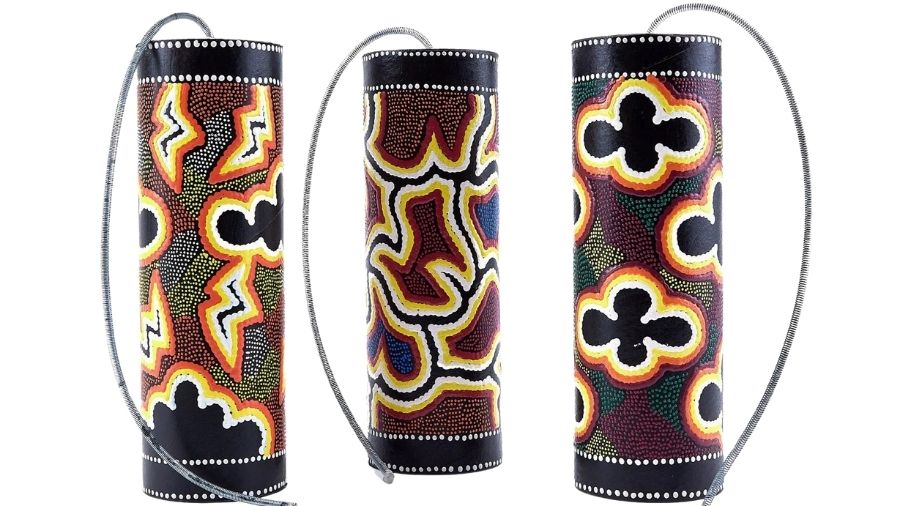
The Thunder Drum (also known as the Thunder Tube or Spring Drum) is one of the most powerful and misunderstood instruments in modern music and sound therapy. Often mistaken for a simple novelty toy, this percussion instrument—made of a cylinder, a membrane, and a sensitive metal spring—can literally generate the sound of an entire storm. Its deep, low-frequency rumble and sharp peals of "thunder" are invaluable in contexts where a powerful, non-rhythmic sound effect is needed.
If you thought the Thunder Drum was only good for a single "BOOM," prepare to be surprised. We’ve compiled 10 unique, high-value uses for the Thunder Drum, spanning film scoring, deep meditation, and stage performance.
1. Energy Release and Grounding
The powerful, low-frequency sound produced by the Thunder Drum is exceptional for energetic rebalancing. The deep rumble vibrates through the body (a process called vibroacoustic therapy), helping to release stagnant tension and promoting a sense of deep grounding in meditation or sound bath sessions.
2. Creating a Sound Bath Atmosphere
The Thunder Drum works as the perfect "crescendo" or "conclusion" to a sound bath. While Crystal Singing Bowls and chimes create a continuous tone, the Thunder Drum provides a dramatic emotional release, simulating a natural event (the storm passing) that can clear the room's energy and lead to catharsis.
3. Sleep Therapy and Relaxation
For clients suffering from anxiety or poor sleep, the rhythmic, non-intrusive rumble can be used as white noise. Because the sound is naturally generated and dynamic, it is more engaging than static sound machines, helping to slow brain waves and induce a state of deep calm.
4. Emotional and Cathartic Release
The sound of a loud, approaching storm stimulates primal emotions. Used in a controlled, therapeutic setting, this emotional stimulation can promote a cathartic experience, allowing participants to process intense feelings safely before returning to a relaxed state.
5. Film and Video Sound Effects (SFX)
The Thunder Drum is a staple in Foley and sound design for its authentic, adjustable sound. Composers use it to record professional-grade thunder, earthquakes, or deep, resonant impacts that cannot be replicated cleanly by digital samples alone.
6. Stage Transitions and Drama
In live theater, radio plays, or performance art, the Thunder Drum provides instant, dramatic tension. It is used to punctuate emotional moments or bridge scenes, giving an inexpensive, portable way to add professional-level audio drama.
7. Percussion Layering
For drummers and percussionists, the Thunder Drum can be shaken to create a long, deep spring decay. Contact-miking it and running it through effects pedals can turn it into a unique spring reverb texture for electric guitar, synths, or cinematic studio layers. To keep it clean, use a high-pass filter around 25–35 Hz to remove subsonic rumble, then gently cut 80–120 Hz if the low end feels too boomy. A light cut around 200–350 Hz can reduce muddiness, while 600–900 Hz may need soft reduction if the spring sounds scratchy. Avoid bright boosts, tame harshness from 6–8 kHz, and use compression only lightly. Record slightly off-axis in a quiet room, leaving space for the decay so the sound remains deep, powerful, and atmospheric without becoming muddy or harsh.
8. Storytelling
The Thunder Drum is a foolproof instrument for children's stories. It requires no complex technique, making it perfect for young listeners to create sound effects that accompany a narrator's tale, building tension and engagement in the classroom or at home.
9. Sound Physics Demonstration
Teachers use the Thunder Drum to demonstrate concepts of physics, such as vibration, resonance, and energy transfer. The visible spring and audible vibration make abstract concepts tangible, linking the instrument to educational use cases.
10. Paired with Other Instruments
The Thunder Drum excels as a non-rhythmic texture instrument. It pairs exceptionally well with Handpans (adding bass depth to ambient music) and Rainsticks (completing the natural soundscape of a storm).
Ready to Create Your Own Atmosphere?

The Thunder Drum is the missing link between simple percussion and cinematic sound design. Whether you are leading a sound bath or building a score for your next film, this instrument is the most versatile way to add drama and deep resonance.