The darbuka is a goblet-shaped hand drum associated with Middle Eastern, North African and Mediterranean music. Its compact size, distinctive shape and combination of deep bass tones and sharp high-pitched sounds make it one of the world's most recognisable hand drums. In this guide, you'll learn where the darbuka comes from, how it is made, how it sounds, how it is played and how it compares with other world drums.
What is a darbuka?
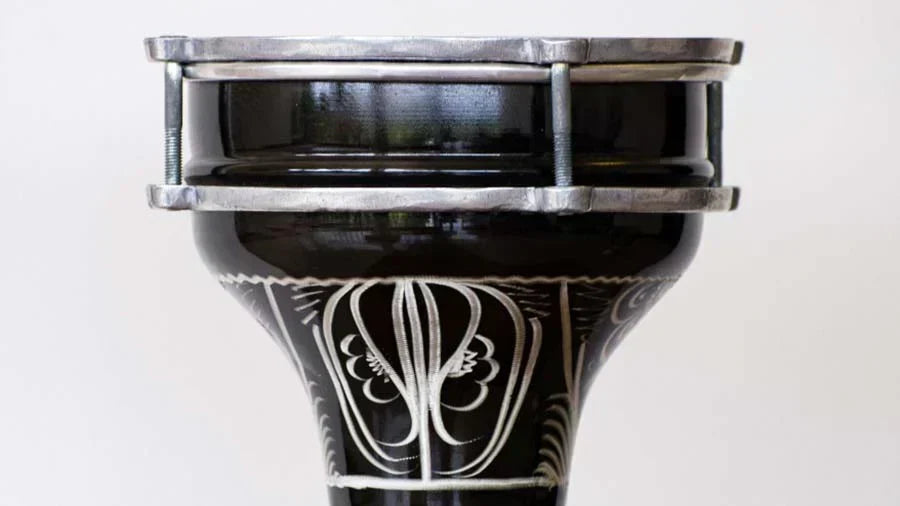
A darbuka is a single-headed goblet drum played primarily with the hands. The narrow body and wider drumhead help produce contrasting tones, from a deep "doum" in the centre of the head to a sharper "tek" around the edge. This combination allows a player to create complex rhythms using only their hands.
Darbukas are commonly associated with Middle Eastern music and dance, but they are also used in contemporary music, percussion ensembles, fusion, pop and electronic music. The name varies between regions. Darbuka, darabuka, darbukka and doumbek are all names that may refer to closely related goblet drums, although the exact design and terminology can vary between musical traditions.
Where did the darbuka originate?
The darbuka has a long history in the Middle East and surrounding regions. Similar goblet-shaped drums have been used for centuries across areas including the Middle East, North Africa and the Mediterranean. Traditional drums were often made from ceramic or clay bodies with natural animal-skin heads.
Modern instruments are also commonly made from metals such as aluminium, copper or brass, with synthetic heads used on many contemporary drums. The instrument became an important part of traditional music and dance, including Arabic and Turkish musical traditions, and its distinctive sound has since spread around the world.
What is a darbuka made from?
Darbukas can be made from clay, ceramic, metal or wood, with the material affecting the instrument's appearance, weight and sound. Traditional darbukas often feature clay or ceramic bodies with natural skin heads, while modern instruments commonly use aluminium, copper or brass with synthetic heads for greater durability and resistance to changes in humidity. The shape of the body is also important, with the wide playing surface producing the main tones while the narrower body helps project and resonate the sound.
What does a darbuka sound like?
One of the defining features of a darbuka is its ability to produce several contrasting sounds from a single drum. The centre of the drumhead produces a low, resonant bass tone, commonly called a doum. Striking closer to the edge produces a higher-pitched tek or tak sound.
Players combine these tones with additional finger and hand techniques to create fast, intricate rhythms. This makes the darbuka particularly effective for rhythmic music where the percussion needs to be both melodic and highly expressive.
What size is a darbuka?
Darbukas are available in different sizes. Smaller drums are generally lighter and easier to transport, while larger drums can produce a deeper tone.The ideal size depends on the player's age, playing style and the type of sound they want. A smaller darbuka can be particularly convenient for beginners and travelling musicians, while larger instruments can provide greater bass response.
How is the darbuka used?
The darbuka is traditionally played with the hands while sitting or standing. Players use their palms, fingers and fingertips to produce different tones and rhythmic patterns. It is particularly prominent in Middle Eastern, Arabic and Turkish music, where complex percussion rhythms are an important part of the musical tradition. The darbuka can also be heard in world music, fusion, pop, rock, jazz and electronic music. Its strong attack allows it to remain distinctive even when combined with other instruments.
Darbuka vs djembe
Although both are hand drums, the darbuka and djembe are different instruments. The darbuka has a goblet-shaped body and is strongly associated with Middle Eastern and Mediterranean musical traditions. The djembe has a larger goblet shape with a rope-tuned head and originates from West Africa, particularly the Mandé cultural region.
They also have different playing techniques, tonal characteristics and traditional rhythms. If you're interested in hand percussion, comparing instruments like these is a useful way to discover how different cultures have developed their own approaches to rhythm.
Where to buy World Drums?

The darbuka is just one example of the huge variety of drums found around the world. Different cultures have developed instruments with their own unique shapes, materials, sounds and purposes. You can explore a range of world drums and percussion instruments, including shamanic drums, Indian drums, thunder drums, ocean drums and djembes, each offering a different way to experience rhythm and sound