
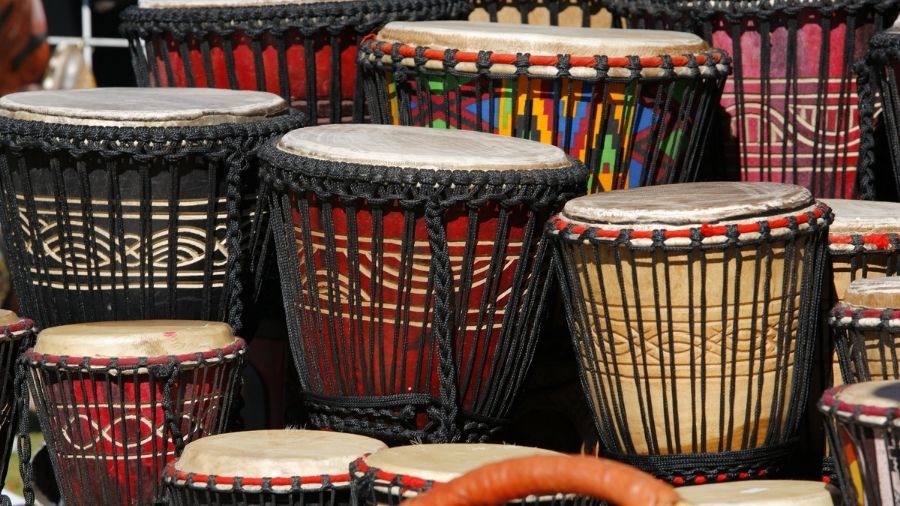
The djembe produces three primary sounds: bass, tone, and slap. Every rhythm is built from these foundations. Mastering them gives you control over dynamics and groove. Each tone comes from where and how you strike the drumhead, not from force alone.
Bass
The bass is the deepest sound on the djembe. It is created by striking the centre of the drumhead with a relaxed, flat hand. Your fingers should be together, and your palm should make full contact before rebounding naturally. The sound should be low, round, and full—not muted or thin. Bass is used to anchor rhythms and create grounding patterns. It acts as the foundation in traditional West African rhythms. A common mistake is hitting too hard or keeping the hand pressed on the skin, which chokes the sound. The key is relaxed impact and immediate lift.
Tone
The tone is a clear, open sound produced by striking near the edge of the drumhead, but not on the rim. Your fingers should stay together, and the strike should be firm but controlled. Only the fingers make contact—avoid letting the palm touch the skin. Tone is used for melodic phrasing within rhythm patterns. It adds clarity and movement between bass notes. A common mistake is hitting too far in toward the centre, which turns the sound into a weak bass. Position and clean contact are essential for a bright, ringing tone.
Slap
The slap is the sharpest and most cutting sound on the djembe. It is also the most difficult to master. Like the tone, it is played near the edge, but the fingers are slightly relaxed and separated. The sound comes from a quick snapping motion of the fingers striking the rim area. Slap adds energy, accents, and expression to rhythms. It helps rhythms stand out and gives dynamic contrast. Beginners often tense their hands or overhit, producing a flat “pop” instead of a crisp crack. Relaxation and rebound are crucial.
How to Practice Each Tone
The correct hand position affects every tone which is why you need to sit upright with the drum tilted slightly forward so sound can project, keep wrists loose, fingers naturally curved, and avoid locking your elbows or playing stiffly—your hands should rebound freely after every strike, as tension kills tone.
Practice each sound separately before combining them, starting slowly and aiming for consistent, clean tone over speed: play bass notes until they sound full and even, tones with a clear ring and no palm contact, and slaps with a crisp attack and no tension. Once each tone is controlled individually, combine them into simple bass–tone–slap patterns, remembering that consistency matters more than volume and precision builds speed naturally.
Take Your Technique Further


