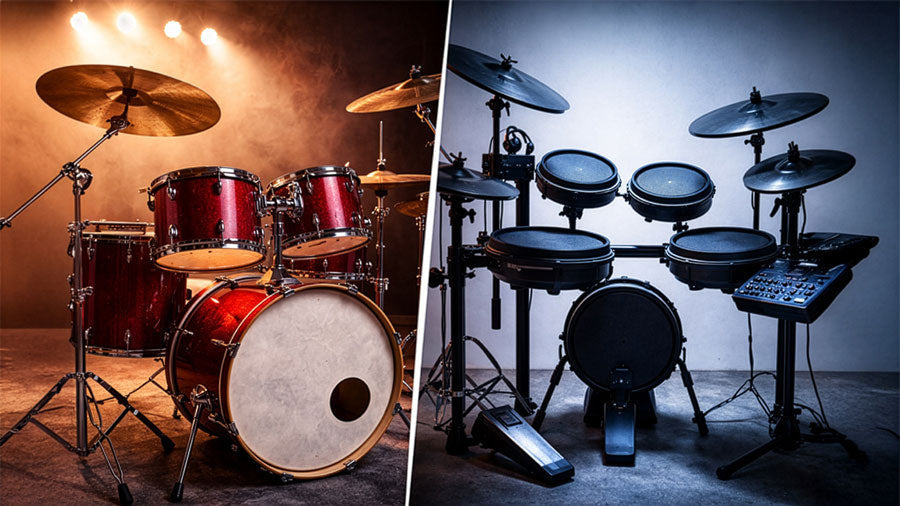
If you’re thinking about learning drums, one of the biggest questions you’ll face is whether to choose an electric drum set or a traditional acoustic drum kit. Some drummers love electronic kits and play them exclusively, while others strongly prefer acoustic drums and feel nothing compares to the real thing. The truth is that neither option is universally “better.” The right choice depends entirely on your living situation, budget, practice needs, and goals as a drummer. Understanding the strengths and limitations of each type of kit will help you make a decision that actually works for your environment.
Why Electronic Drum Kits Became Popular
One of the biggest reasons drummers choose electronic kits is volume control. Acoustic drums are loud by nature. A full drum kit can easily reach sound levels that disturb neighbors, roommates, or family members. Electronic kits solve this problem by allowing you to practice with headphones, dramatically reducing the noise that escapes the room. For drummers living in apartments or shared homes, this can make the difference between being able to practice regularly or not at all. Electronic kits are also useful in teaching environments and drum camps, where many drummers may be playing in the same room. Using electronic kits keeps the overall volume manageable and allows instructors to communicate with students without shouting over multiple acoustic drum sets.
Playability and Feel
One of the biggest differences between electronic and acoustic drum kits is how they feel to play. Acoustic drums create sound naturally through vibrating drumheads and cymbals, so the rebound, tone, and dynamics respond directly to how hard or softly you strike them. This physical interaction is a big part of what many drummers enjoy about playing an acoustic kit. Electronic drum sets try to recreate that experience using rubber or mesh pads connected to a sound module. Higher-end models often include sensitive digital snare pads for ghost notes and buzz rolls, ride cymbals that detect bell, bow, and edge playing, and hi-hat systems designed to mimic the movement of real hi-hats. While modern electronic kits can feel impressively realistic—especially those with mesh heads and upgraded cymbals—most players still notice some difference compared to the response of acoustic drums.
Sound and Drum Modules
Unlike acoustic drums, electronic kits produce sound by triggering digital samples stored inside a drum module. These modules often contain hundreds of drum sounds and allow players to customise their setup, adjusting tuning, effects, and kit configurations to suit different styles. Many modules also support importing custom sounds, recording directly into a computer, and practicing with built-in metronomes or play-along tracks. Higher-end electronic kits typically include more advanced modules with improved sound quality, additional inputs for extra pads or cymbals, and expanded output options for live performance. This level of flexibility makes electronic drum kits especially useful for recording, experimenting with different sounds, and adapting quickly to a wide range of musical genres.
Expandability and Connectivity
Electronic kits are designed to be highly customizable. Many modules include extra inputs that allow drummers to add additional toms, cymbals, or percussion pads. Some modules also provide separate audio outputs, allowing specific drums like the kick and snare to be mixed individually in live sound setups. This gives sound engineers more control over how the drums sit in a mix during performances. Acoustic kits can also be expanded, but doing so usually requires buying additional drums or cymbals, which can become expensive quickly.
Cost Considerations
Price is another important factor when choosing between electronic and acoustic drum kits. Entry-level electronic kits can be relatively affordable, but higher-end models often cost as much as professional acoustic drum sets. With acoustic drums, the main expenses usually include the drum shells, cymbals, and hardware such as stands, pedals, and a drum throne. Electronic kits, on the other hand, direct much of their cost toward the drum module and advanced sensors that generate the digital sounds and detect playing dynamics. Because of this, neither option is automatically cheaper—the overall cost depends largely on the quality and level of equipment you decide to purchase.
When an Electronic Drum Kit Makes More Sense
An electronic drum kit can be a better option for players who live in apartments or shared buildings where noise levels need to be controlled. Because electronic kits allow you to practice with headphones, they make it possible to play without disturbing family members or neighbors. They also often include built-in recording features, practice tools, and a wide range of drum sounds, making them useful for experimentation and learning. Their compact size can also be helpful in smaller living spaces. For many drummers, the biggest advantage is simple: electronic kits make it possible to practice regularly without creating excessive noise, which is often the deciding factor.
When an Acoustic Drum Kit Is the Better Choice
Acoustic drums may be the better choice if you have a dedicated practice space where volume is not an issue and you want the most natural playing experience. Many drummers prefer acoustic kits because the sound, rebound, and dynamic response come directly from the instrument rather than a digital trigger. They are also the standard setup for live performances with traditional bands, where authentic drum tone and expressive dynamics matter most. For many musicians, the sound and physical response of acoustic drums still feel unmatched compared to electronic alternatives.
It Depends on Your Situation
The debate between electronic and acoustic drums often misses an important point: the best drum kit is the one that allows you to play regularly. If your environment only allows quiet practice, then an electronic kit is the better choice. If you have the space and freedom to play loudly, an acoustic kit may provide a more satisfying experience. Many drummers eventually use both—an electronic kit for practice and an acoustic kit for rehearsals or performances.
Browse Our Collection Of Drums