From a delicate shimmer to a full orchestral crash, cymbals bring rhythm, colour and emphasis to music. This guide explains what makes a cymbal different from a gong or bell, where cymbals came from, and how to compare the main types before buying, playing and looking after your own.
What Is a Cymbal?
A cymbal is a metal percussion instrument, usually a circular plate with a curved profile, that sounds when struck with a stick or mallet, or against another cymbal. It is an idiophone: the metal body itself vibrates to make the sound, rather than a stretched drumhead. A gong is a separate family of metal percussion, usually suspended and struck with a mallet; a bell is another distinct form. A cymbal’s raised centre is called its bell, but that name does not make every cymbal a type of bell.
History of Cymbals
Cymbals have ancient roots across Asia and the Near East, rather than one securely identified inventor. A Hattian bronze example recorded by The Metropolitan Museum of Art dates to around 2300–2000 BCE in central Anatolia, now Turkey. Early cymbals accompanied ritual, ceremony and dance. Later, Ottoman military bands helped popularise their sound in European music, leading to orchestral use. Turkish and Armenian cymbal-making traditions became influential in modern manufacture, while China developed its own distinctive designs. Today cymbals mark orchestral climaxes, keep time in jazz, drive rock and pop rhythms, and accompany dance and ceremonial music.
Types of Cymbals
Start with the job you want the instrument to do. Paired hand cymbals create clashes; finger cymbals add small rhythmic accents; drum-kit cymbals provide timekeeping and effects. Tingsha offer a compact paired-cymbal form, while bell effects cymbals produce a focused ringing accent. These formats differ in grip, mounting and response, so a cymbal that suits a dance performance may be the wrong choice for a drum kit.
Drum-Kit Cymbals
Hi-hats pair two cymbals on a pedal-operated stand for closed, open and foot-played sounds. A ride supports repeating patterns with a defined stick sound, while a crash opens into a broader accent. Splash cymbals give short, quick bursts; China cymbals have an upturned rim and a rougher, explosive character. Stacks combine cymbals for a short, rattling effect. Some models cover more than one role, so listen to the response rather than choosing by the label alone.
Hand Cymbals

Paired hand cymbals suit players who want to make accents without a stand or drum kit. Our Vietnamese brass models have contoured bodies and are listed in 13cm and 20cm sizes; the preview is the 20cm version. Compare their weight and grip as well as volume, especially for longer performances. Their resonant clash works for ensemble accents, ceremonial playing and sound textures, with lighter contact giving a less forceful response.
Finger Cymbals

Finger cymbals, often called zills in Turkish dance contexts or sagat in Egyptian contexts, are small cymbals worn on the fingers using loops. They let dancers and percussionists add patterns while moving, offering a different playing feel from larger hand cymbals. The Sheng example from our earlier guide demonstrates the format. When comparing sets, check loop fit, whether you receive two or four cymbals, and how clearly the sound responds to light contact.
Tingsha Cymbals

Tingsha consist of two small, thick metal cymbals joined by a strap. Associated with Tibetan Buddhist practice, they produce a clear, high-pitched ring when brought together. Choose this format for occasional lingering accents rather than the rapid finger patterns of zills. They are commonly sold as tingsha bells, illustrating why shop names alone do not always explain an instrument’s construction.
Bell Effects Cymbals

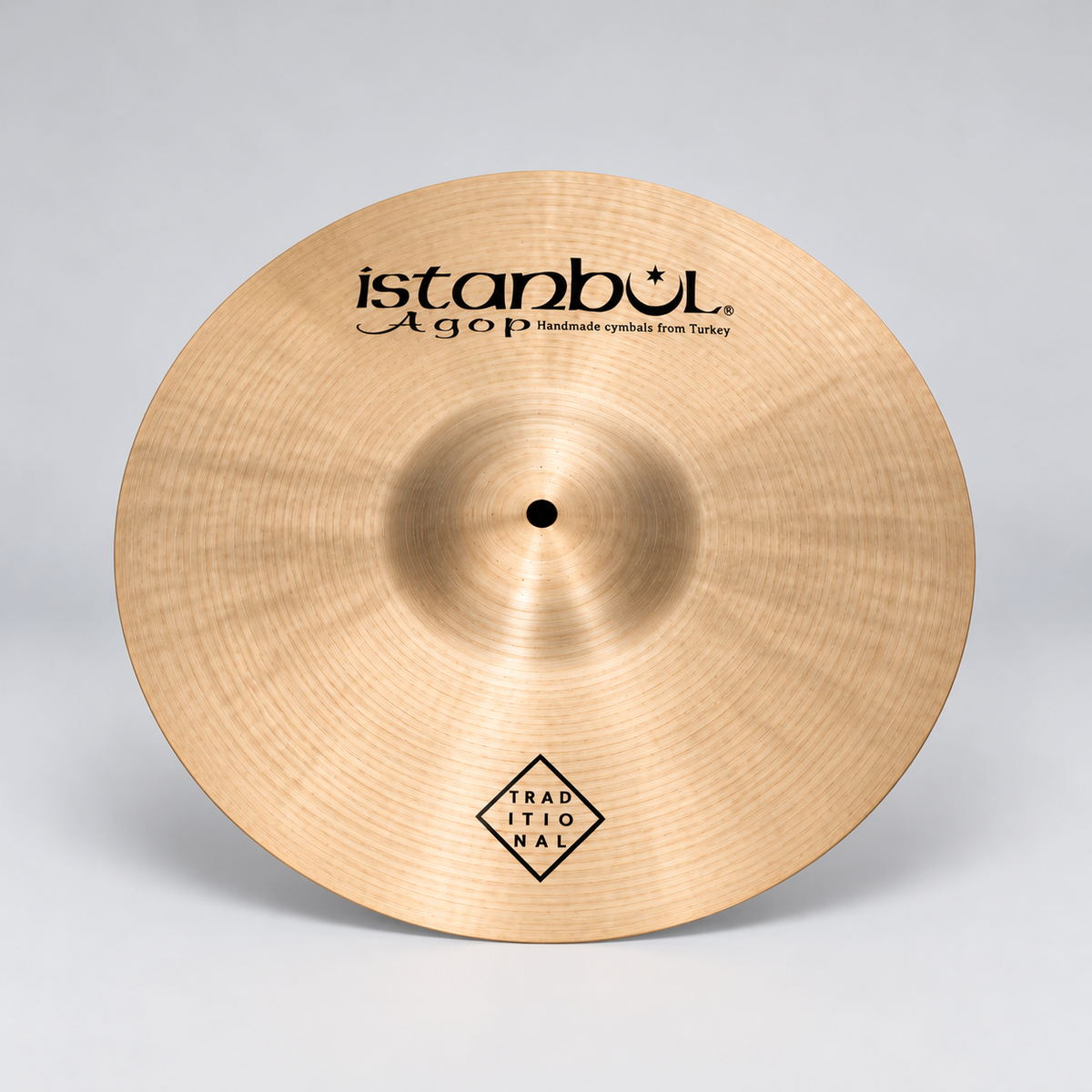
A bell effects cymbal is designed for a concentrated ringing sound rather than a broad crash. The Istanbul Agop 10-inch Traditional Bell has a lathed surface on both sides and produces high-pitched accents with longer sustain. Consider it for adding a distinct extra voice to a percussion or drum-kit setup; check that your stand and available space suit its mounting before buying.
How to Choose and Buy Cymbals
Choose the format first, then compare attack, sustain, stick definition and volume at a similar recording level. Diameter, weight, profile, hammering and alloy work together: heavier is not automatically better, and thin does not mean beginner-only. Bronze labels such as B8 and B20 refer to approximately 8% and 20% tin respectively; brass uses copper and zinc. XSR is a Sabian series made from B20, not a separate alloy. For a first drum kit, prioritise usable hi-hats, a ride and a crash; for handheld playing, check the grip, supplied straps and whether the listing is a pair. Buy for the sound and setup you need, not simply the brand or finish.
How to Play Cymbals
For paired cymbals, bring them together with a slight offset and separate them promptly so the sound can develop, rather than pressing two flat faces together. For a mounted crash, use a relaxed, glancing stroke and let the cymbal move freely; do not drive the stick straight through its edge. A ride’s bow and raised bell offer different sounds, while hi-hat pedal pressure changes the length and texture of each note. Begin gently, keep instruments away from ears and use hearing protection where the volume calls for it.
Setup, Accessories and Care
Mount compatible drum-kit cymbals on a stable stand with a protective sleeve and felt washers, leaving enough freedom to move rather than tightening the wing nut firmly against the metal. Hand and finger cymbals need secure, comfortable straps or loops instead. A divided cymbal bag protects surfaces during transport. Wipe with a soft cloth and follow the maker’s guidance for your finish before using polish: some natural or aged finishes should only be dry-wiped. Low-volume cymbals or suitable mutes can help with quieter practice, though they change the sound and feel.
Buying Second-Hand Cymbals
Inspect the edge, mounting hole and grooves for cracks, and check for an elongated centre hole caused by stand wear. Listen for unwanted buzzing and ask about repairs or drilled holes. A used cymbal can be good value, but age alone does not guarantee a better tone. Cracks can spread, and repair does not reliably restore the original sound or lifespan; compare the condition and total cost with an undamaged alternative.