Harmonicas, also called mouth organs or French harps, are loved for their compact size and expressive, soulful bluesy tones. Originating in the early 19th century, they’re essential in blues, folk, rock, and jazz, and are portable enough for stages, studios, and streets. As free-reed instruments, sound is produced by air flowing through reeds.
They come in types like diatonic, chromatic, and tremolo, with players such as Bob Dylan and Stevie Wonder. Learning basics is easier than violin or piano; beginners often start with a C harmonica for its simple major scale and common use in lessons. The mouth organ was invented by Christian Friedrich Ludwig Buschmann around 1821. To play smoothly, press your tongue against the harmonica, avoiding blocking holes with the tip, placing it against lower front teeth and pushing forward until the top touches the instrument.
What is the purpose of a harmonica?
Harmonicas are affordable and user-friendly instruments. They create music through reeds vibrating inside a metal case. Harmonicas are popular in blues, folk, rock and roll, and pop music. A specific type called the chromatic harmonica is favored in jazz and classical genres.
The history and origins of the harmonica
The harmonica has a rich history that dates back centuries. Similar wind instruments were used in ancient civilizations. Today's harmonica evolved with contributions from different cultures and regions. The exact origin of the harmonica is debatable, as similar instruments have been found in various parts of the world. However, the most widely accepted theory is that it originated in China around 3000 years ago. The Chinese instrument called the sheng, which consists of bamboo pipes and reeds, was the precursor to the modern-day harmonica.
From China, the instrument spread to other parts of Asia, including India, Japan, and Southeast Asia. Each region added unique touches to the instrument, resulting in different variations and playing styles. In the early 19th century, the harmonica made its way to Europe and the Americas, where it gained popularity and underwent further refinements. Next we are going to look at some interesting facts about the harmonica.
Buying Guide for Beginners
If you're a beginner buying your first harmonica, consider the material—plastic models are affordable and durable, wood offers a warm tone but needs more care, and metal (brass or stainless steel) is favored by professionals for sound quality. Check reviews on marketplaces and music forums for honest opinions on sound, durability, and playability, and watch for common complaints before deciding.
Accessories for Harmonica
In addition to the harmonica itself, a few essential accessories can enhance your playing experience. A harmonica caseprotects your instrument and makes transport easier, while a cleaning kit helps maintain its performance and longevity. A harmonica holder allows for hands-free playing, and instructional books or online courses make learning smoother and more effective.
Where to learn the harmonica?

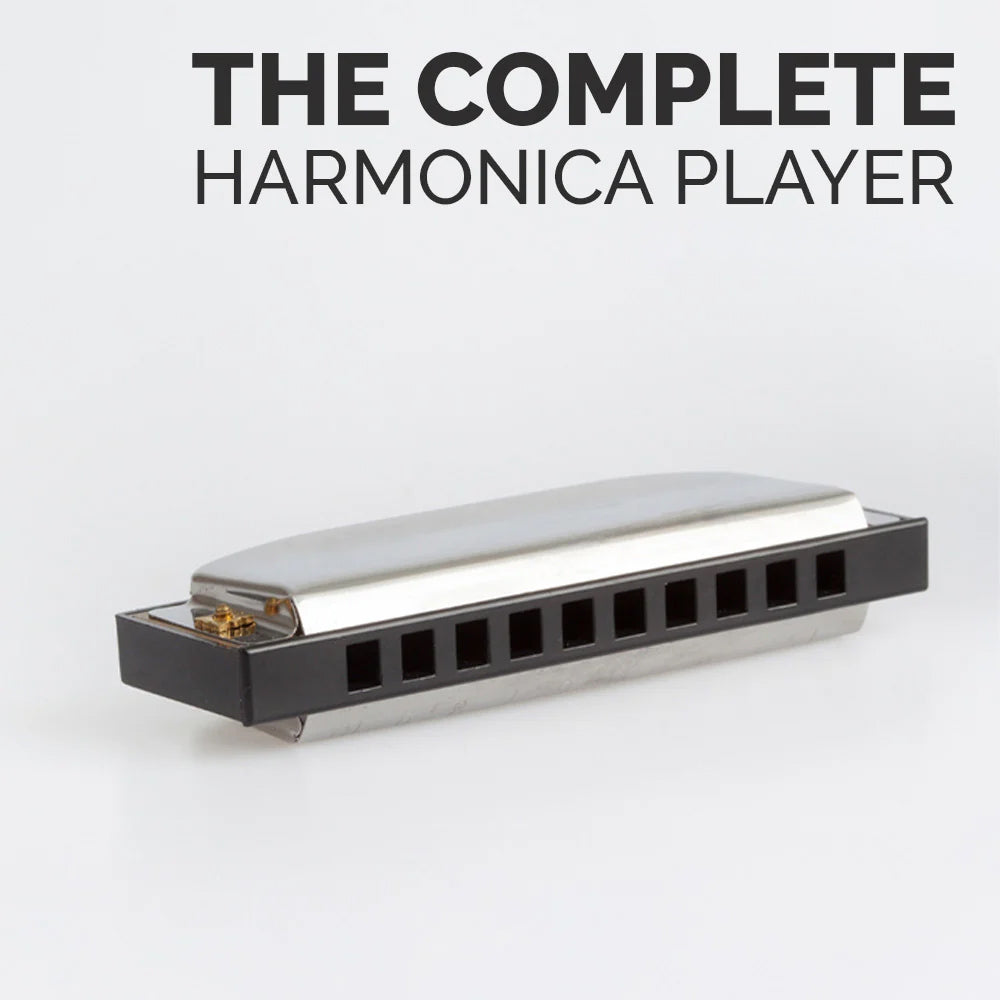
This Complete harmonica book is for players who are committed to mastering the fundamentals and understanding the why behind the music. Designed for those seeking deep knowledge, this eBook removes the confusion around complex techniques, breath control, and music theory. You will gain the foundational knowledge required for precise bending, perfect single-note tone, and the ability to confidently troubleshoot and improvise. Stop guessing and start build a solid technique that unlocks the true potential of your instrument.