
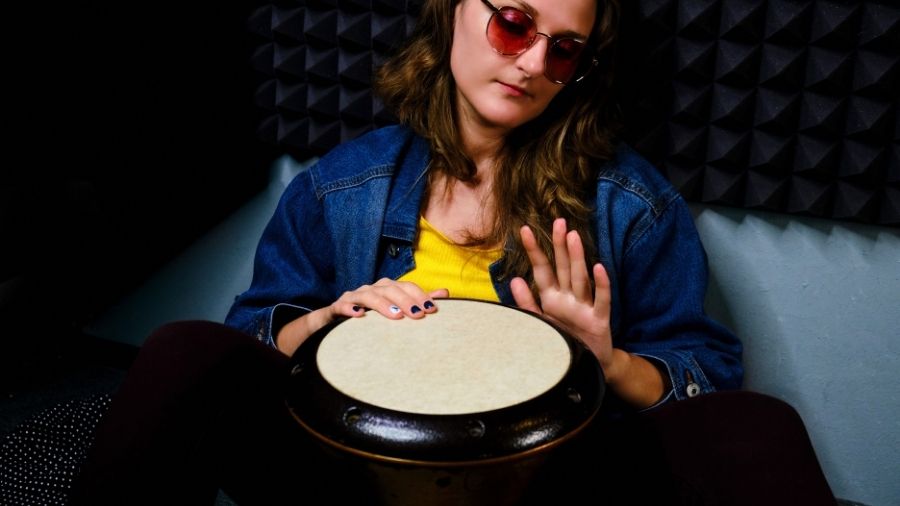
The djembe is a dynamic hand drum with deep bass, sharp slaps, and expressive mid tones. A clean recording comes from balancing clarity with impact—not making the drum louder or heavier than it naturally is. The goal of EQ is to remove problems, shape definition, and let the character of the drum speak clearly in the mix. Below is a simple, practical EQ approach that works for solo djembe recordings, ensemble percussion, and layered world-music productions.
EQ the Lows (Control Boom Without Killing the Bass)
EQ the Mids (Define Tone and Slap Clarity)
EQ the Highs (Shape Slaps Without Harshness)
High frequencies shape a djembe’s slaps, attack, and air, so the goal is clarity without harshness. Add a soft boost around 4–6 kHz only if slaps lack definition, and if the sound feels sharp or fatiguing, apply a gentle cut around 7–9 kHz, avoiding extreme high-end boosts that exaggerate finger noise or mic harshness. Prioritise subtractive EQ before minimal enhancement, record slightly off-axis to soften slap transients, and let dynamics come from the player rather than heavy processing—when EQ’d correctly, a djembe should sound crisp, open, and natural, with clear bass, defined tones, and controlled slaps.
Make Your Djembe Sound Better

EQ can polish a recording, but technique is what actually creates great sound, and hand position, strike consistency, posture, and rhythm control shape your tone long before mixing begins. The Complete Djembe Drum Player was created to build that control at the source, teaching proper bass, tone, and slap technique, correct posture and hand placement, rhythm fundamentals, and structured practice sessions that drive steady progress. If you want your djembe to sound clean, powerful, and consistent before it even reaches a microphone, this guide gives you a clear path forward—no guesswork, no wasted practice, just better sound faster.


