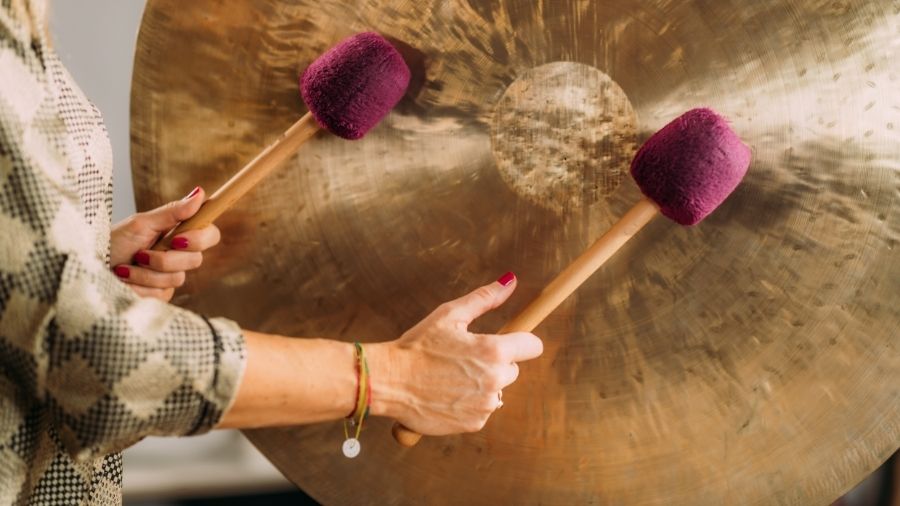
A gong produces extreme dynamics, complex overtones, and long decay. Clean EQ is about control and balance, not reshaping the sound. When recorded well, a gong needs only subtle EQ to remove rumble, tame harshness, and let the natural swell breathe. Below is a practical EQ approach that works for meditation, sound therapy, film, and music recordings.
EQ the Lows (Remove Rumble, Keep Power)
Gongs generate massive low-frequency energy, but much of what’s captured below the fundamental is room noise and vibration, so start with a high-pass filter around 40–60 Hz. If the sound feels boomy, apply a gentle cut around 120–200 Hz, and avoid boosting the lows—gong power comes from natural resonance, not bass emphasis. The low end should feel deep and controlled, never muddy.
EQ the Mids (Shape the Body)
The midrange carries a gong’s core tone and the transition from impact to sustain, so keep it mostly neutral to preserve its natural character. If the sound feels boxy or congested, apply a small cut around 300–500 Hz, and for clearer definition at the initial strike, add a light boost around 1–2 kHz—avoid overworking the mids, as this removes the organic bloom that makes a gong immersive.