
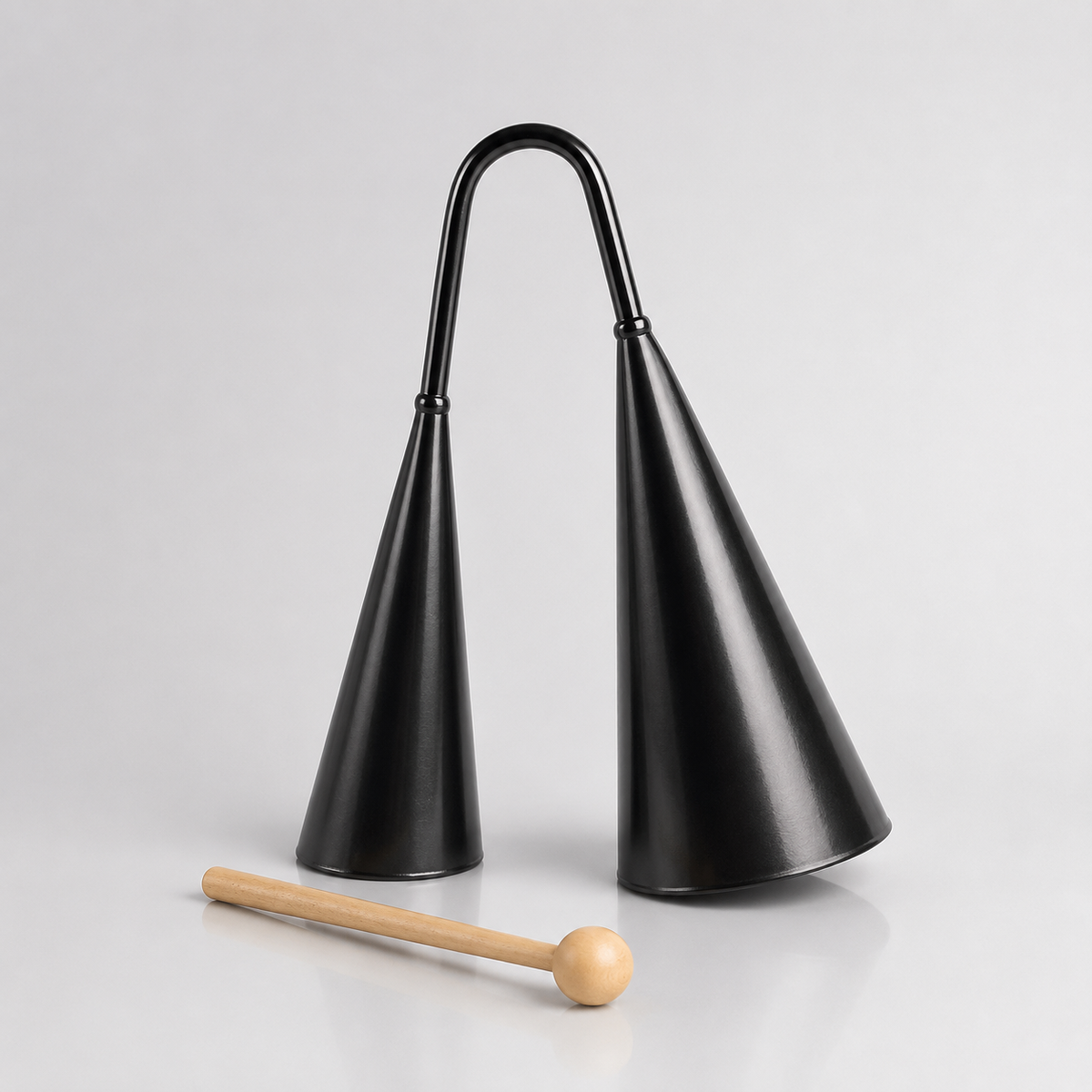
Agogo bells are a simple percussion instrument that produces two distinct pitches, making them ideal for creating rhythmic patterns and accents. Commonly used in Latin, African, and Brazilian music, they are easy to learn and offer plenty of opportunities to experiment with different playing techniques. In this guide, you'll learn about the parts of double agogo bells, how to hold them, several ways to play them, and tips for producing clear, rhythmic sounds.
What Are Agogo Bells?
Agogo bells consist of two metal bells joined together, with one bell larger than the other. The smaller bell produces a higher pitch, while the larger bell creates a lower tone, allowing you to alternate between contrasting sounds during a performance. Although agogo bells are widely recognised as musical instruments today, they have also traditionally been used in farming and as signalling tools in various cultures before becoming popular in percussion ensembles.
Parts of the Double Agogo Bells
A typical set of double agogo bells is made from solid metal and includes two bells connected by a metal handle. The larger bell produces a deeper tone, while the smaller bell creates a brighter, higher-pitched sound. The bells are played using a wooden or plastic beater, allowing you to strike either bell individually or use techniques that involve both bells together.
How to Hold Agogo Bells
There are two common ways to hold double agogo bells. The first is by gripping the handle from underneath, while the second is by wrapping your hand over the top of the handle. Both methods are equally effective, so choose whichever feels the most comfortable and gives you the best control while playing. A relaxed but secure grip will help keep the bells stable while allowing them to resonate freely.
Playing the Basic Bell Sounds
The most common way to play agogo bells is by striking each bell individually with the beater. Alternate between the larger and smaller bells to hear the difference in pitch and begin developing simple rhythmic patterns. Start slowly, aiming for clean, even strikes. As your accuracy improves, gradually increase your speed while maintaining consistent timing.
Playing Between the Bells
Another technique is to position the beater between the two bells and move it back and forth in a smooth motion. This allows you to strike both bells in quick succession, creating an energetic alternating rhythm. This technique works particularly well for fast rhythmic passages and adds movement and variety to your playing.
Creating Resonant Effects
You can also place the beater inside one of the bells and gently move it around while holding the instrument. This produces a unique resonant sound that differs from the normal striking technique and adds another texture to your performance. Although used less frequently than standard playing, this technique is useful for creating interesting sound effects and experimenting with different tones.
Developing Simple Rhythms
Once you are comfortable striking each bell, begin creating simple rhythmic patterns by alternating between the larger, lower-pitched bell and the smaller, higher-pitched bell. Start with an even pattern, then experiment by repeating one bell more often or changing the order to create your own rhythms and musical phrases.
Why the Two Bells Sound Different
The two bells produce different pitches because they are different sizes. The larger bell vibrates more slowly, producing a lower tone, while the smaller bell vibrates faster, creating a higher pitch. Using both pitches together gives the instrument its distinctive musical character and allows you to create rhythms that sound more expressive than using a single bell.
Ready to Take Your Agogo Bell Playing Further?

If you want to go beyond the basic techniques in this guide and learn how to play agogo bells with greater confidence, rhythm, and control, the Complete Agogo Bells Player eBook takes you further with practical guidance, playing techniques, rhythms, and exercises designed to help you develop your skills step by step. Whether you're a complete beginner or looking to improve your existing technique, it gives you a structured way to practise, learn new patterns, and get more from your instrument.


