What Does a Waterphone Sound Like?
A waterphone produces a metallic, shimmering, and unstable sound, with notes that bend and wobble as the water inside shifts. It creates evolving tones that glide between frequencies, often sounding dark, suspenseful, ambient, and cinematic. As the water moves within the chamber, the pitch subtly changes while the sound sustains, and this natural instability is what gives the waterphone its tonal character.
How Do You Play a Waterphone?
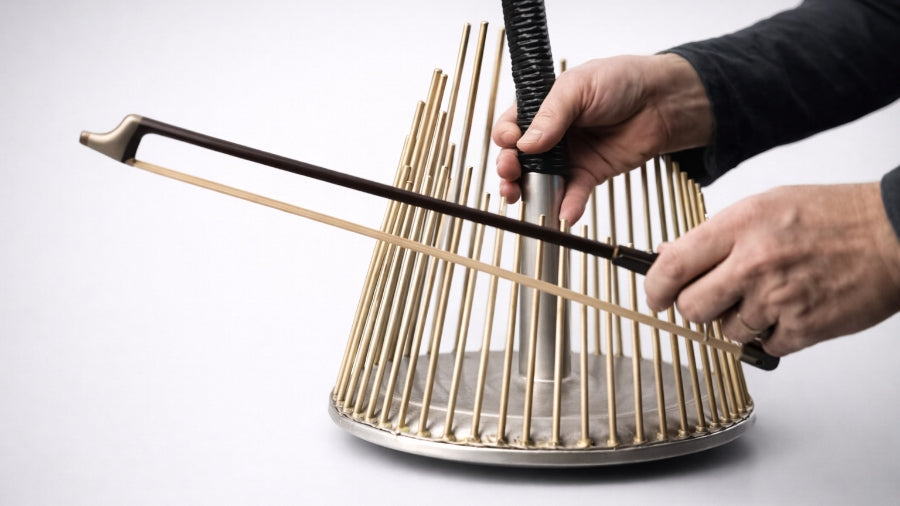
A waterphone can be played in three main ways: bowing the metal rods with a violin bow to create long, sustained, cinematic tones; lightly striking the rods with a mallet for short, shimmering notes; or shaking and tilting the instrument so the water inside shifts, bending and morphing the pitch even without direct contact. It isn’t focused on rhythm or fixed melody—instead, it’s about creating evolving texture and atmosphere.
What Is It Made From?
A waterphone is typically made from stainless steel or bronze for the resonator body, metal rods for tone production, and a small amount of water sealed inside the chamber. Unlike traditional percussion instruments crafted from wood, hide, or seeds, the waterphone uses industrial materials, yet produces an organic, evolving sound created by the movement of water within the metal body.
Where Was It Invented?
The waterphone was invented in the late 1960s by Richard Waters, an American artist and instrument maker. It quickly gained attention in experimental music and film scoring circles because nothing else sounded quite like it. It became widely recognised through use in horror film soundtracks and avant-garde compositions.
Is the Waterphone Easy to Learn?
The waterphone is easy to begin playing because it doesn’t require chord knowledge, scales, or rhythm reading—you’re not playing structured songs but creating evolving soundscapes. However, shaping intentional textures and controlling dynamics takes careful listening and subtle touch. It’s particularly suited to sound designers, film composers, experimental musicians, and meditation or ambient sound practitioners who value atmosphere over traditional melody.
Why People Love Unusual Instruments

People love unusual instruments like the waterphone because they expand what music can be—shifting the focus from structured melodies to atmosphere, texture, and feeling. Many musicians begin with traditional instruments, then grow curious about sound itself, which often leads them toward seed shakers, ocean drums, rainsticks, tongue drums, ritual percussion, and experimental metal instruments. If you’re drawn to rare sounds, you should explore our musical instrument collection showcasing unique percussion instruments from around the world.