
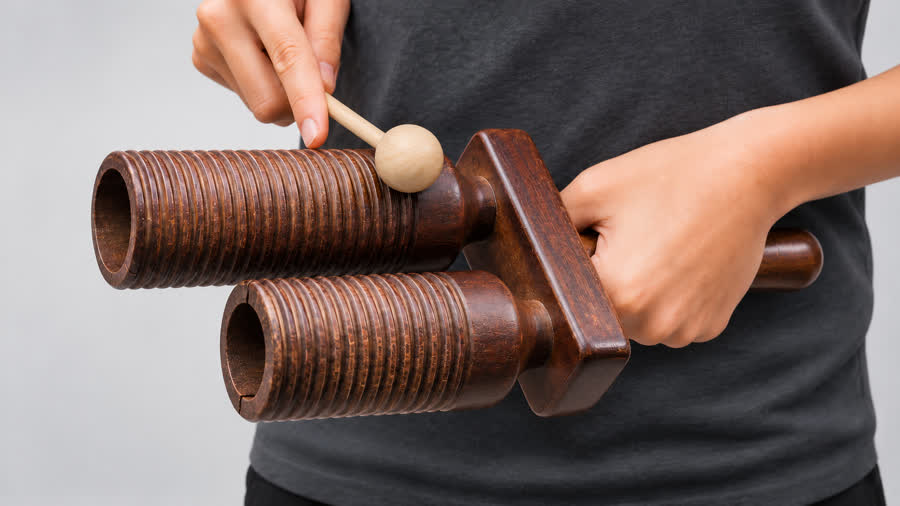
A wooden tone block turns a simple strike into a crisp accent. From Buddhist wooden fish to classroom tone blocks and percussion setups, these instruments make rhythm easy to hear and practise. This guide explains their history, main designs, sound and playing technique, plus versatile alternatives you can scrape as well as strike.
What Is a Tone Block?
A tone block is a percussion instrument with a hollow wooden body, usually opened by a narrow slit. Strike it with a suitable beater and the body vibrates to produce a short, resonant clack. It belongs to the idiophone family: the instrument itself makes the sound, rather than a stretched drum skin or string. “Tone block” is a common name for related designs, while temple blocks usually have rounder bodies. Different blocks produce higher or lower tones, but many are used for rhythm rather than tuned melodies.
History of Woodblocks
One important tradition is the Chinese muyu, or wooden fish, used to accompany Buddhist chanting; a related Japanese instrument is the mokugyo. Their carved fish forms carry religious meaning, rather than simply decorating a modern classroom instrument. These East Asian designs influenced temple blocks used in Western orchestras and early jazz drum kits during the twentieth century. Today, wooden blocks provide clear accents in ensemble music, theatre and percussion lessons, while recorded block sounds add rhythmic detail to electronic productions.
Different Types of Tone Block

Rectangular tone blocks give a crisp wooden clack, while rounded tulip designs offer a different knocking character and an easy-grip handle. Traditional temple blocks include carved wooden fish; the tulip pictured is a modern design. Triple agogo blocks provide three contrasting tones and ridges for scraping.
To choose a tone block, compare the sound, grip and included beater: body shape, cavity and wall thickness matter more than size or price alone. Choose one tone for steady accents or several for varied patterns; consider synthetic blocks for mounted setups and check used wooden instruments for cracks. For greater versatility, explore the güiros below.
Cricket Güiro

Compact and easy to carry, this hand-carved wooden cricket includes a matching stick for two contrasting sounds. Scrape the ridges for a textured rhythm, then tap different parts of the body for wooden accents. Its small size makes it a practical choice for a percussion bag or exploring simple patterns without a larger setup.
Crocodile Güiro

This hand-carved wooden crocodile combines a ridged back for scraping with a body you can tap using the included stick. Switch between rasps and short knocks within the same rhythm, adding variety without changing instruments. The elongated shape gives you room to explore different stroke lengths and contact points.
Toko Güiro Shaker

Scrape, shake or gently tap this bamboo instrument for different rhythmic textures. Made in Bali, it combines chunky güiro ridges with an internal shaker and a flowing rainstick effect, giving you several sounds from one compact instrument. The included scraper makes it easy to alternate between a steady pulse and more detailed percussion patterns.
Croaking Frog Güiro

Handcrafted from acacia wood in northern Thailand, this larger frog produces its familiar croak when scraped and a sharp “pock” when gently tapped on the head. The included wooden stick lets you switch between both techniques, making it useful for characterful sound effects, rhythmic accents and group music-making.
How to Play a Woodblock
Hold the instrument comfortably and tap different areas with the beater to find the sounds you enjoy. Count aloud “1, 2, 3, 4”, choose which beats to strike and repeat to create a pattern. Emphasise beat one with a slightly firmer strike, letting the beater bounce back after each tap.
Once your timing feels steady, alternate between tones or, on a güiro, add short and long scrapes. To develop those patterns further, The Complete Guiro Player offers step-by-step techniques, rhythm diagrams and practical exercises to build your timing and control.


