
The djembe is one of the most recognisable African drums in the world, but it’s also one of the most misunderstood. Many myths come from seeing the instrument played without context or learning from incomplete sources. Below are the most common misconceptions about the djembe drum, explained accurately so you know what to expect as a player.
1. The Djembe Is Just a Loud Drum
The djembe is highly dynamic. It produces bass, tone, and slap sounds, each with distinct pitch and character. A well-played djembe can sound subtle, melodic, and expressive, not just loud.
2. All Djembes Sound the Same
Djembe sound varies depending on shell shape, wood type, drumhead thickness, tuning, and playing technique. Two djembes can sound completely different even if they look similar.
3. You Need Strong Hands to Play Djembe
Strength helps, but technique matters more. Proper hand position and relaxed movement allow you to play for long periods without pain or injury. Force alone leads to fatigue and poor tone.
4. Djembes Don’t Need Tuning
Djembes go out of tune over time due to humidity, temperature changes, and regular use. A poorly tuned djembe loses clarity and punch. Regular light tuning is part of owning the instrument.
5. Djembes Are Only for African Music
While the djembe originates from West Africa, it’s widely used in fusion, folk, world music, sound therapy, and modern percussion. The instrument adapts easily to different musical styles.
6. You Must Sit on the Drum to Play It Properly
Sitting on a djembe is traditional, but not essential. Djembes can be played on stands or tilted forward while seated, especially for comfort, posture, or recording situations.
7. Djembes Are Only for Group Drumming
Djembes work just as well for solo practice, meditation, rhythm training, and recording. Group playing is common, but not a requirement to enjoy or learn the instrument.
8. Playing Faster Means Playing Better
Speed does not equal skill. Clean tone, control, timing, and consistency matter far more than how fast you can play. Many advanced rhythms are slow but demanding.
9. You Need Years of Training Before You Sound Good
Beginners can produce good sounds quickly with proper guidance. Most frustration comes from poor technique and lack of structure, not from the instrument itself.
10. The Djembe Drum Is Difficult to Learn
The djembe is not difficult, but it does require clear instruction. Without structure, beginners often struggle with tone, rhythm, and hand fatigue. With the right learning path, progress becomes natural and motivating.
Learn the Djembe the Right Way

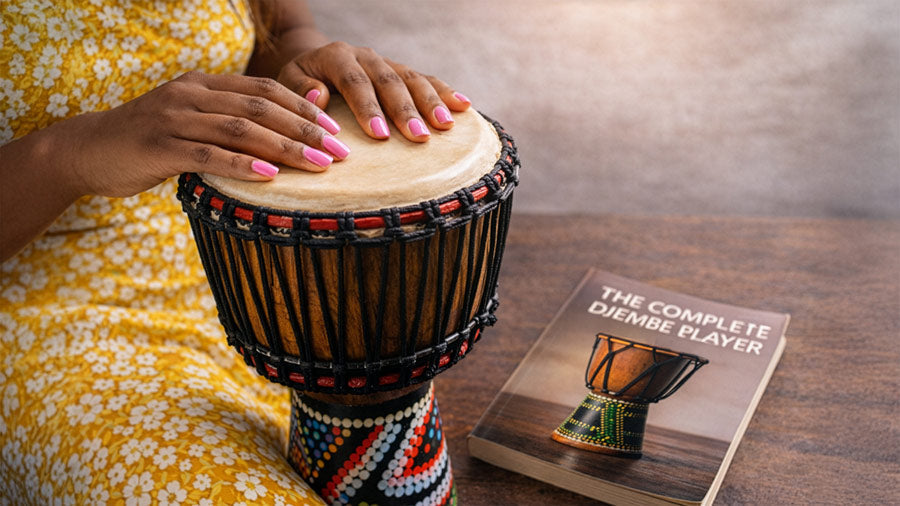
If you want to avoid common mistakes and actually enjoy learning, The Complete Djembe Drum Player offers a clear, practical approach for beginners and advancing players, focusing on proper tuning, real technique, and structured practice rather than random patterns. With step-by-step lessons, diagrams, tuning guides, and dedicated practice sessions, it helps you build rhythm, tone, and confidence even with no prior musical experience—because the djembe isn’t hard to learn, it just needs to be learned properly.


