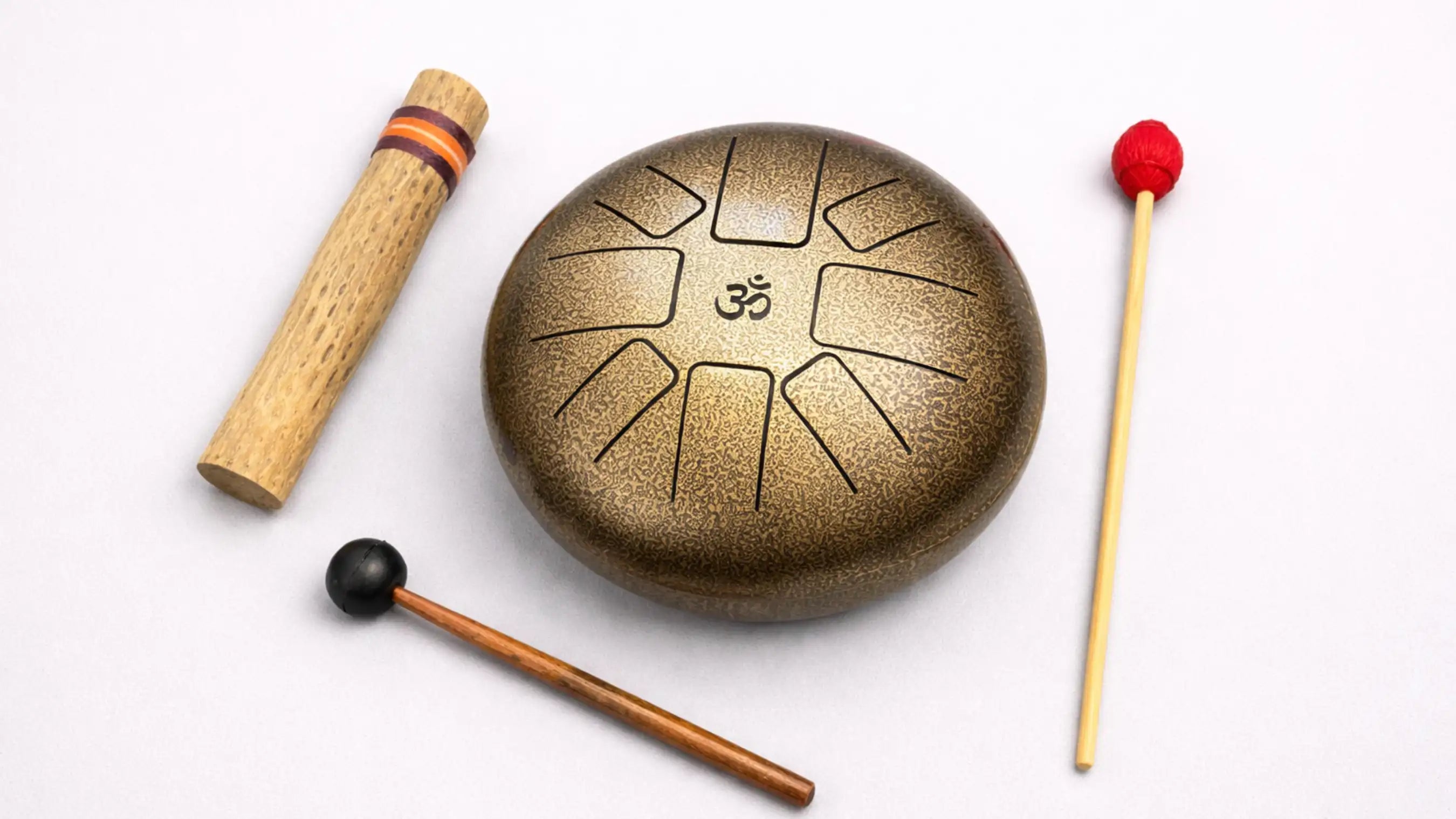
What can you use if you don’t have a tongue drum beater? Whether you’ve lost it, broken it, or simply want to experiment with different sounds, there are several everyday items that can work surprisingly well. In this guide, we explore alternative ways to play a tongue drum and how each option affects the sound.
Why the Beater Matters
A tongue drum beater is designed to produce a soft, controlled tone without damaging the instrument. The material, weight, and surface all affect how the drum responds. When using alternatives, the goal is to find something that still allows a clean strike while maintaining a warm, resonant sound.
Wooden Spoon
A wooden spoon is one of the most accessible alternatives. The rounded shape allows for a relatively smooth strike, producing a slightly brighter tone than a standard rubber beater. However, the harder surface can create a sharper attack, so it works best with a lighter touch. You can either use the wooden spoon end for striking the beater or you can the rounded wooden handle.
Pencil with Eraser
A pencil with an eraser tip can mimic the feel of a soft beater. The rubber end helps soften the impact, making it a practical option for controlled playing. The main limitation is the small surface area, which can reduce consistency when striking different notes.
Fingers
Using your fingers is a simple and effective method. It creates a softer, more natural tone and allows for expressive control. While you won’t get as much volume or sharpness, this method works well for quiet practice and relaxed playing.
Rubber Chopsticks
Rubber-tipped chopsticks offer a balance between control and tone. They provide a softer strike than wood while still maintaining enough structure for rhythmic playing. This makes them one of the more reliable alternatives.
Carrot
A carrot can technically be used as a beater due to its firmness and shape. It produces a muted, slightly dull tone and can work for light tapping. However, it can break or leave residue, making it more of a novelty than a practical long-term option.
Breadstick
Similar to a carrot, a breadstick is lightweight and easy to handle but lacks durability. It creates a very soft, dry sound and can crumble during use. This makes it more of a fun experiment than a dependable solution.
Makeup Brush
A makeup brush creates an extremely soft, almost brushed sound. Instead of a clear strike, it produces a gentle, ambient effect. This can be useful for creating texture rather than defined notes.
Drumstick (Light Use Only)
A standard drumstick can be used carefully, but it produces a much sharper and louder sound. Because of its hardness, it should only be used lightly to avoid damaging the drum. It’s not ideal for beginners but can create a more percussive tone.
Rainstick
If you already have other instruments, a rainstick can be used in a more experimental way. While it’s not designed for striking, gently tapping or combining its sound with the drum can create an ambient effect. This works better as a layered sound rather than a direct replacement for a beater.
Your Knuckles
Using your knuckles creates a firmer, more percussive tone than fingers. It gives a bit more volume and definition, but it can become uncomfortable over time. Like fingers, it’s best suited for short sessions or experimentation.
What Works Best Overall
The best alternatives are those that balance softness and control. Items with a slightly cushioned surface tend to produce the most pleasing sound while protecting the drum. Hard or brittle objects can work in the short term but are less reliable and may affect tone quality.
Get the Best Sound from Your Tongue Drum

While these alternatives can work in a pinch, a proper tongue drum beater is designed to give you the best possible sound and control. It produces a consistent tone, feels comfortable to use, and helps you play more accurately without risking damage to your instrument. If you want to get the most out of your playing, using the right tool makes a noticeable difference.