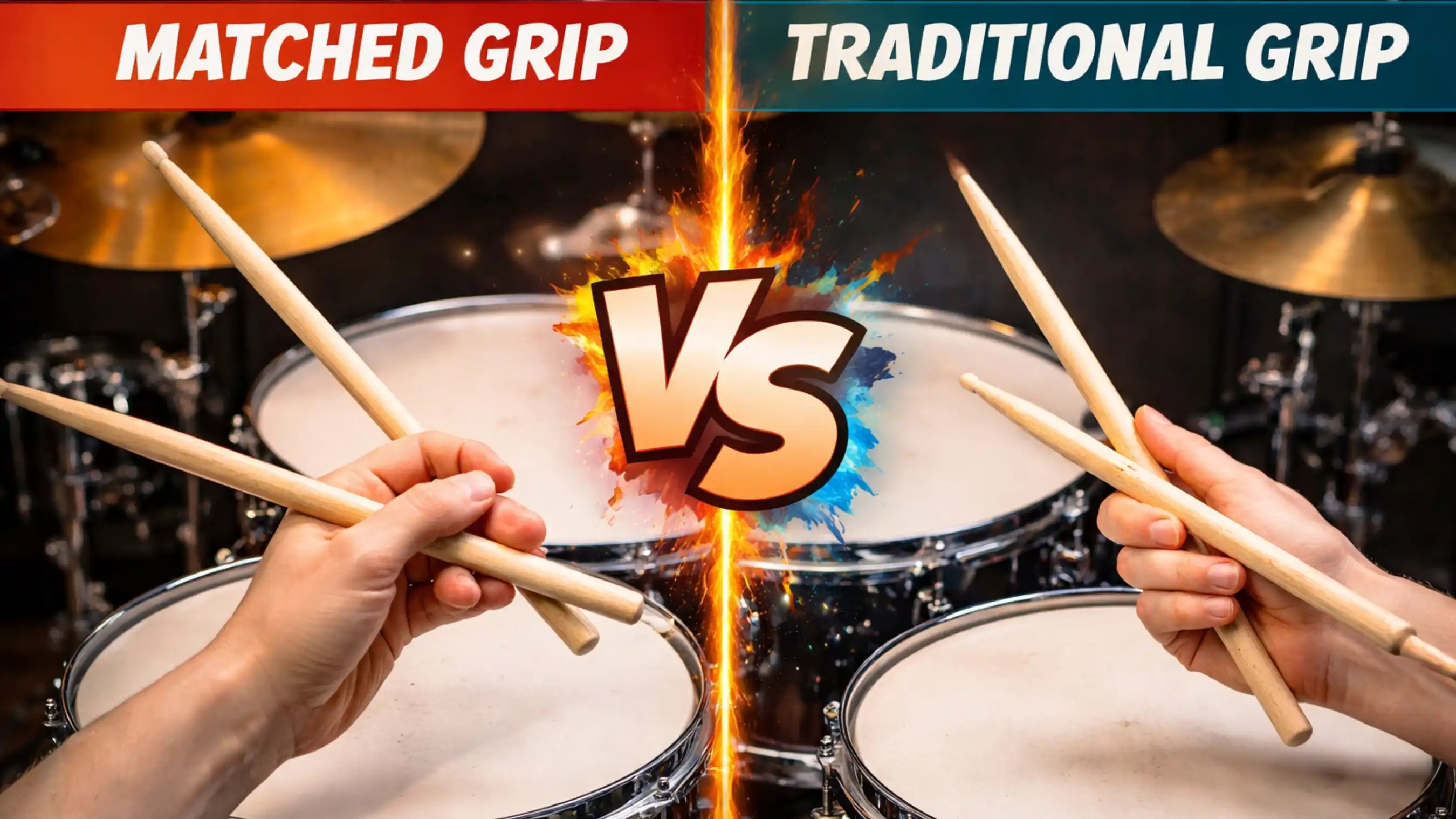
One of the most common questions beginner and intermediate drummers ask is whether matched grip or traditional grip is better. It’s a debate that has existed for decades in the drumming world, and many players spend a surprising amount of time worrying about which grip they should use. The truth is that both grips can work extremely well. Each has its own history, advantages, and learning curve. Rather than focusing on which one is “better,” it’s more useful to understand how each grip works and decide which approach fits your playing style and musical goals.
What Is Matched Grip?
Matched grip is the most commonly used drumstick grip among modern drummers, where both hands hold the sticks in the same way, creating a balanced and symmetrical position. Because the hands mirror each other, it often feels more natural for beginners, and most people instinctively pick up drumsticks this way even without prior experience. Matched grip is widely used across many styles of music—including rock, pop, funk, orchestral, and marching percussion—and it also transfers easily to other percussion instruments such as timpani, xylophone, and concert snare.
What Is Traditional Grip?
Traditional grip is the classic grip often associated with jazz drumming and marching snare drums. In this grip, the left hand holds the stick differently from the right hand, creating an asymmetrical playing position. This technique originally developed for marching drummers, who carried their drums on a strap over the shoulder. Because the drum was angled, traditional grip allowed the left hand to strike the drum comfortably. Over time, this grip became deeply associated with jazz drumming and remains popular among many experienced players today.
Why Drummers Debate the Two Grips
Many drummers experiment with both matched grip and traditional grip at different stages of their development, discovering that certain musical styles may feel more comfortable with one approach than the other. For example, traditional grip is often favored for jazz, ballads, or brush playing, while matched grip is commonly used for rock, pop, and louder musical styles. Although switching between grips can sometimes suit different situations, doing so frequently can create challenges, particularly when trying to maintain consistent dynamics, control, and balance between both hands.
Is One Grip More Powerful Than the Other?
A common myth is that matched grip produces more power than traditional grip. In reality, power comes from technique and control, not the grip itself. Many professional drummers using traditional grip play extremely loud and powerful music, while others using matched grip play with great finesse and subtlety. The grip simply provides a way to control the stick—the real difference comes from how the player develops their technique.
Why Many Drummers Choose Matched Grip
For many modern drummers, matched grip becomes the primary choice because it transfers easily across a wide range of percussion instruments. If you regularly play instruments such as concert snare, timpani, bass drum, or mallet percussion, matched grip often works naturally for all of them without requiring major adjustments in technique. It also tends to have a shorter learning curve for beginners since both hands perform similar movements, making coordination and control easier to develop early on.
Why Some Drummers Prefer Traditional Grip
Although matched grip is widely used today, traditional grip remains very popular among many experienced drummers. It is often favored in styles such as jazz, brush playing, and certain rudimental approaches where the grip can provide a distinctive feel and response. Many drummers also enjoy the musical control and expression traditional grip offers on the drum set, and over time it often becomes an important part of their personal playing style and identity.
Choosing the Right Grip for You
Rather than focusing on which grip is objectively better, it is more useful to consider which one works best for your playing. Factors such as the styles of music you perform most often, the instruments you regularly play, which grip feels most natural and comfortable, and the techniques you want to develop can all influence this decision. Many drummers try both matched and traditional grip early in their development before eventually choosing one as their primary approach.
A Practical Approach to the Decision
The most important step is making a conscious decision about which grip will become your main playing style. Constantly switching back and forth can slow your development because each grip requires slightly different coordination and control. Once you decide on a primary grip, commit to practicing with it consistently. Over time, your technique will improve and the grip will begin to feel completely natural. That said, some drummers still use both grips in specific situations. For example, many players who primarily use matched grip still switch to traditional grip when playing brushes.