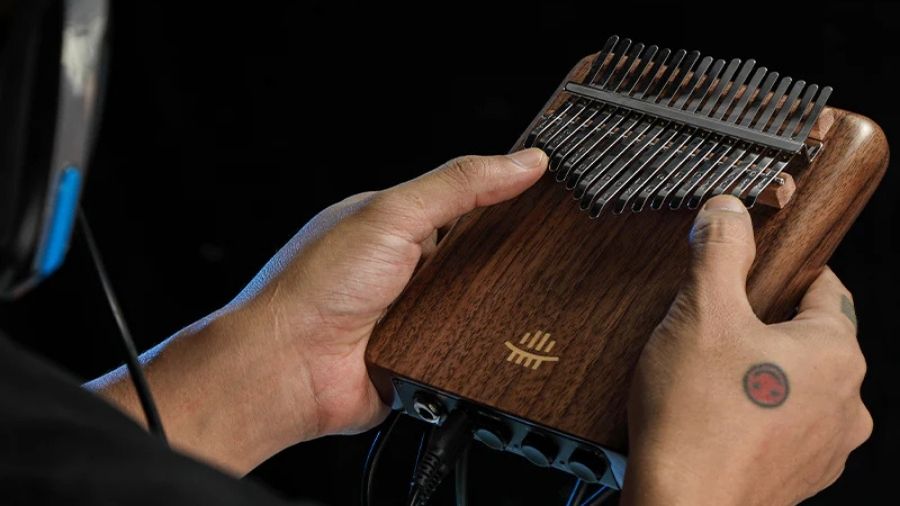
Kalimbas produce soft attacks, clear pitched notes, and long natural sustain. A clean recording comes from preserving that musical resonance while removing handling noise, boxiness, and excessive metallic overtones. The goal is clarity and balance, not reshaping the instrument. Below is a simple EQ approach that works for wooden kalimbas, gourd thumb pianos, box kalimbas, and sansulas used in music production, film, and ambient recordings.
EQ the Lows (Remove Rumble and Handling Noise)
Kalimbas don’t produce true bass, but recordings often capture unwanted desk vibration, finger noise, or room rumble. Use a high-pass filter around 80–120 Hz, and if the tone still feels thick, apply a gentle cut at 150–250 Hz. Avoid boosting the low end—kalimba warmth comes from sustain and resonance, not bass. Cleaning the lows keeps notes clear, separate, and musical.
EQ the Mids (Enhance Note Definition)
The midrange holds the kalimba’s pitch and emotion, so keep it mostly flat to preserve its natural tone. If the sound feels boxy, apply a gentle cut around 400–600 Hz, and if notes lack clarity, add a light boost around 1–2 kHz so melodies speak clearly. Make small moves—subtle mid EQ keeps the kalimba expressive without thinning or forcing the sound.
EQ the Highs (Control Metallic Overtones)
High frequencies create the kalimba’s sparkle but can quickly turn clicky. Add a light boost around 4–6 kHz only if presence is lacking, and if the sound feels sharp, gently cut 7–10 kHz instead. Avoid aggressive top-end boosts—kalimbas should feel bright but calming. Record slightly off-centre, keep mic distance consistent, and prioritise subtractive EQ; with restraint, the kalimba stays warm, melodic, and clear with long, natural decay.
Start with Kalimba Sounds That Don’t Need EQ

EQ can refine a recording, but professionally captured sounds remove the work entirely. The Kalimba Digital Sound Pack includes 16 clean, melodic kalimba riffs recorded from wooden kalimbas, gourd thumb pianos, Hokema kalimbas, sansulas, and African thumb pianos, all delivered in high-quality WAV format. The samples are already balanced, musical, and consistent—no mic setup, no noise, and no EQ troubleshooting—so you can drop them straight into music, film, or video projects and focus on creating, not fixing tone.