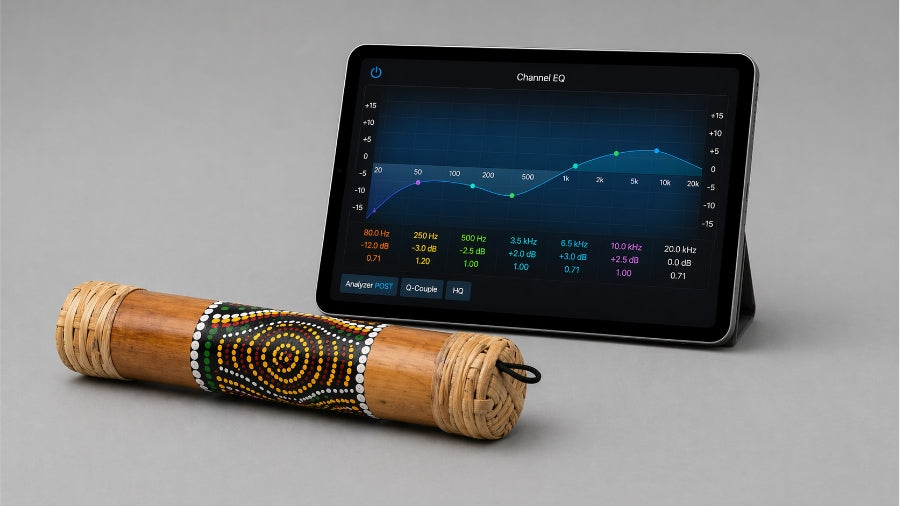
A rainstick produces a wide, natural cascade of sound that already contains movement, texture, and depth. Because of this, rainsticks usually require less EQ than most percussion instruments. The goal is not to reshape the sound, but to remove unwanted noise, improve clarity, and let the natural flow remain intact.
High-Pass Filter
Apply a high-pass filter to remove unnecessary low end, as rainsticks do not need sub-bass frequencies. Setting the filter between 80–150 Hz clears rumble, mic stand vibrations, and handling noise; lower it slightly if the sound feels thin, or raise it gently if it remains boomy. Always adjust while listening, aiming to clean the low end without affecting the body of the rain sound.
Low Mids (200–500 Hz)
The low-mid range (200–500 Hz) can add a hollow or boxy quality, especially with bamboo or cactus rainsticks recorded close to the microphone. If the sound feels congested or dull, apply a gentle 2–3 dB cut around 250–400 Hz to open it up and make individual rain particles more distinct. The goal is to improve clarity without losing warmth.
Mids (800 Hz – 2 kHz)
The mid range (800 Hz–2 kHz) carries much of a rainstick’s natural texture, so avoid aggressive EQ in this area. If the sound feels slightly nasal or cluttered, apply a very small cut around 1–1.5 kHz; if it feels too distant, a subtle boost can help it sit forward without sounding artificial. The goal is to preserve natural movement and detail.
High Mids (2–5 kHz)
The high-mid range (2–5 kHz) can contain sharp clicks or abrasive grains, especially with fast shakes or shorter rainsticks. Apply a narrow cut around 3–4 kHz only if harshness is clearly present; otherwise, leave this range untouched, as it contributes definition and realism. The goal is to remove harsh spikes without reducing natural brightness.
High Frequencies (6–12 kHz)
Start With a Professional Rainstick Sound

Starting with a clean, high-quality rainstick recording keeps EQ minimal and preserves the instrument’s natural character, as over-processing quickly removes its organic detail. This is why the Rainstick Sound Effect Pack is so effective: it offers 100 professionally recorded samples—including loops, single shakes, and long twist sounds—captured from bamboo, cactus, and Peruvian rainsticks in multiple sizes, all delivered as high-quality WAV files ready for immediate use. Designed for music production, film, sound design, and ambient or relaxation tracks, these recordings sit naturally in a mix, making EQ simple and often unnecessary.