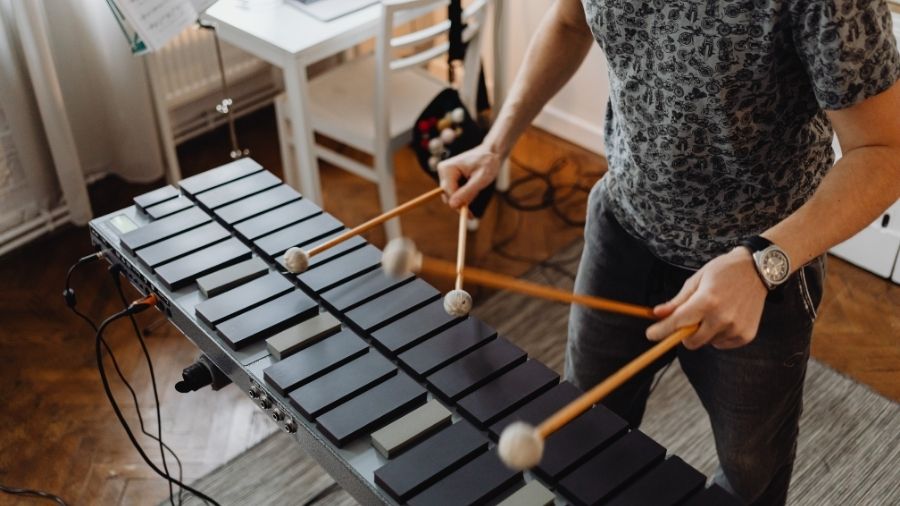
Xylophones are bright, percussive, and highly pitch-focused instruments. A clean recording depends on preserving note clarity and transient attack while controlling harsh highs and unnecessary low-end noise. The goal of EQ is not to make the xylophone sound bigger—but to make it clear, musical, and balanced in the mix. Whether you’re recording a wooden classroom xylophone, an orchestral instrument, or melodic percussion for film and educational content, these EQ principles apply.
EQ the Lows (Remove Rumble and Handling Noise)
EQ the Mids (Define Pitch and Note Separation)
The midrange is where a xylophone’s pitch and musical identity live, so keep it mostly flat for a natural tone. If notes feel congested, apply a small cut around 400–600 Hz, and for clearer articulation and melodic separation, add a light boost around 1.5–3 kHz—just enough to help melodies speak clearly without sounding forced or sharp.
EQ the Highs (Control Brightness and Attack)
Xylophones produce strong high-frequency transients, so controlling brightness is essential for a clean, musical sound. Add a subtle presence boost around 4–6 kHz only if the tone feels dull, and if the recording is harsh or brittle, apply a gentle cut around 7–10 kHz, avoiding excessive high-end boosts that exaggerate stick noise and listener fatigue. To reduce the need for EQ in the first place, use medium or soft mallets for a warmer tone, record slightly off-axis to soften sharp attacks, maintain consistent striking force for even dynamics, and prioritise subtractive EQ over heavy boosting—when recorded well, a xylophone needs very little processing.
Ready to go beyond EQ?

A clear xylophone recording can become a melodic hook or a rhythmic layer. Try repeating a short phrase, supporting it with bass and drums, then changing where it appears to give your track movement.
Become a Producer helps you develop a loop into a complete instrumental through practical exercises on rhythms, melodies, contrasting sections and arrangement.