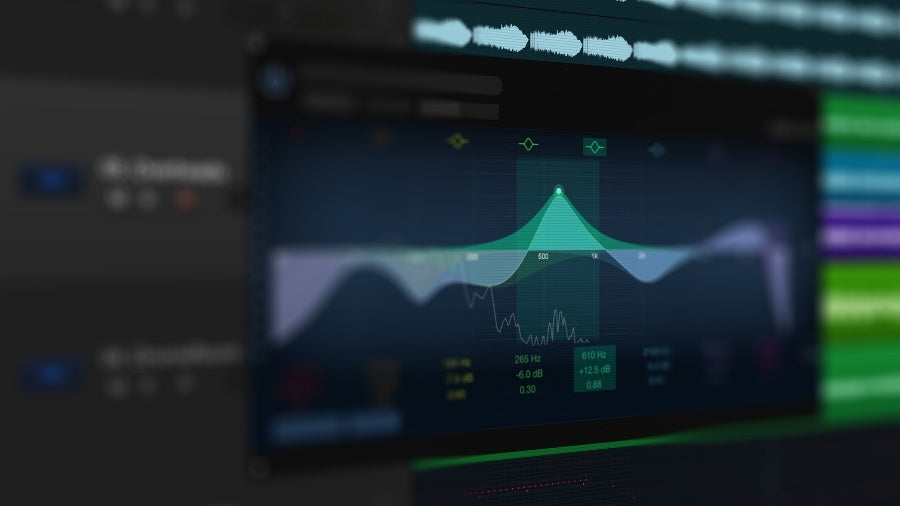
Mastering is the final stage of music production, where a finished mix is refined to sound balanced, loud, and consistent across different listening systems. While many engineers rely on expensive third-party plugins, Logic Pro X already includes a powerful set of stock tools capable of producing professional-quality masters. By understanding how to combine these plugins in a logical chain, you can control frequencies, enhance clarity, add perceived loudness, and prepare your track for streaming platforms. This guide walks through a practical mastering workflow using only Logic Pro X stock plugins, covering metering, EQ, compression, stereo enhancement, and limiting.
Start with Metering and Headroom
Before applying any mastering processing, it is essential to analyze the mix and ensure sufficient headroom. Mastering typically works best when the mix peaks several decibels below 0 dB, with 4–6 dB of headroom being a common starting point. If the mix is too loud, you can lower the overall level using VCA faders or proper gain staging without disturbing the internal balance of the track. Using a metering tool such as Logic’s Multimeter helps monitor key loudness measurements including True Peak, LUFS, and RMS levels. For many modern releases, engineers often aim for around −9 to −10 LUFS integrated, which provides competitive loudness while still allowing streaming platforms to normalize playback appropriately.
Clean Up the Low End with EQ
The first processing stage is usually corrective EQ. Even well-mixed tracks can contain unnecessary low-frequency energy that adds rumble or mud to the master. A gentle high-pass filter around 20–30 Hz can remove unwanted sub-bass information that may not be audible on smaller speakers but can cause problems on large sound systems. Many mastering engineers prefer using linear phase EQ during this stage because it allows precise adjustments without introducing unwanted phase coloration. The goal here is subtle cleanup rather than dramatic tonal changes.
Add Subtle Tonal Enhancement
After removing problem frequencies, the next step is additive EQ to gently enhance the overall tone of the mix. Tools such as Logic’s Vintage EQ or Graphic EQ work well for this stage, where small boosts in the upper frequencies can add clarity and openness. For example, a slight boost around 10 kHz can increase presence, while a gentle lift near 20 kHz can introduce air and brightness. These adjustments should remain subtle, as mastering EQ typically involves changes of 1 dB or less, just enough to refine and polish the mix without dramatically altering its original character.
Control the High End with Multiband Compression
When brightness is added to a mix, certain elements such as vocals, snares, or cymbals may become overly sharp. To control this, a multiband compressor can be used. Logic’s Multipressor allows you to compress only specific frequency ranges. For mastering, engineers often focus on the extreme high frequencies above around 15 kHz. By applying gentle compression to this range, you can reduce harsh peaks and keep the top end smooth without dulling the overall mix. This step ensures the master remains pleasant to listen to, even at louder playback levels.
Enhance Harmonics with an Exciter
An exciter adds harmonic content to a signal, creating brightness and presence in a different way than EQ. While EQ simply boosts existing frequencies, exciters generate additional harmonics that make the sound feel more lively. Logic’s Exciter plugin can be applied to the high frequencies around 7–8 kHz to add subtle sparkle to vocals and instruments. Again, restraint is key. A small amount of harmonic enhancement can make a mix feel more polished, but too much will make the master sound harsh.
Add Subtle Stereo Width
Stereo imaging can make a master sound wider and more immersive, but it should be applied carefully during mastering to avoid phase issues. Tools such as Logic’s Stereo Spread plugin allow you to widen higher frequencies while keeping the low end centered and stable. A common approach is to apply widening only above roughly 2–2.5 kHz, keep the low frequencies in mono, and use very small adjustments. Even subtle widening can create a sense of space and openness without compromising the overall stereo balance of the mix.
Increase Perceived Loudness
Before applying the final limiter, many engineers use subtle saturation or enhancement tools to increase perceived loudness. In Logic Pro X, the Phat FX plugin can add gentle saturation and low-end enhancement, helping the track feel fuller and more energetic without significantly raising peak levels. For example, a small amount of saturation can introduce harmonic richness, while a slight bass enhancement around 50 Hz can add weight to the mix. Used carefully, these adjustments can make the track sound louder and more powerful before the final limiting stage.
Apply Limiting for Final Loudness
The final stage of mastering is limiting, which increases the overall loudness while ensuring the signal does not exceed the digital ceiling. In Logic Pro X, the Adaptive Limiter is commonly used for this task because it allows you to raise the input gain while maintaining control over peak levels. Important settings typically include enabling True Peak detectionand setting the output ceiling between −1 dB and −0.5 dB to prevent clipping during playback or streaming conversion. Gradually increase the limiter gain until the track reaches your loudness target, listening carefully for signs of over-limiting such as pumping, distortion, or a noticeable loss of dynamics. If these artifacts appear, slightly reduce the gain to preserve the clarity and impact of the mix.
Compare the Master to the Original Mix
A useful habit during mastering is to regularly compare the processed master with the original mix. This helps ensure that your adjustments are genuinely improving the sound rather than simply increasing the volume. When making these comparisons, focus on whether the master improves clarity, tonal balance, stereo width, and overall energy. The goal of mastering is not to drastically alter the mix, but to refine and enhance it so that it translates consistently across different playback systems and listening environments.
Mix Better with the Logic Pro EQ Pack

The Logic Pro X EQ Preset Pack gives musicians and producers a fast starting point for achieving a clean, balanced mix. When instruments compete in the same frequency range, mixes can quickly become muddy and unclear. These presets solve that problem by placing instruments in their ideal frequency space, improving clarity and separation from the start.
The pack includes carefully designed EQ settings for bass, kick drum, snare, hi-hats, piano, violin, and vocals, allowing you to apply proven frequency shaping in seconds. Simply load the preset on the relevant channel and make small tweaks to fit your track, saving hours of guesswork while maintaining full creative control.