
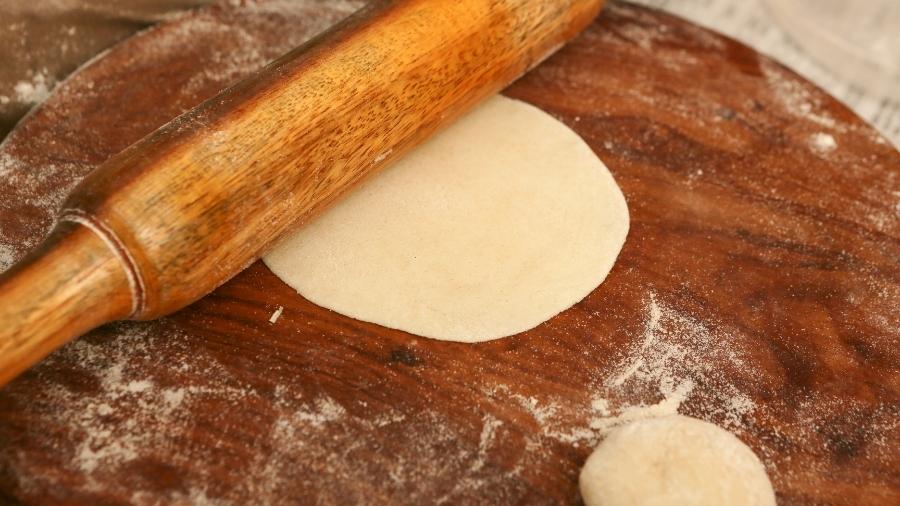
An Indian chapati rolling pin, traditionally known as a belan, is designed for rolling chapatis, roti and other Indian flatbreads into thin, even circles. Unlike conventional rolling pins, which are often wider and heavier, a belan is typically slimmer and lighter, allowing greater control over smaller pieces of dough. Its design makes it easier to rotate and shape flatbreads with gentle pressure. Traditionally used in Indian kitchens alongside a flat rolling board called a chakla, the belan remains a popular tool for preparing fresh, homemade chapatis.
Knead the Dough
Use finely milled wholewheat atta flour for soft, traditional chapatis. Gradually add warm water and knead until the dough is smooth, soft and pliable without being sticky. Divide into equal-sized balls, cover with a damp cloth and leave to rest for 20–30 minutes. This allows the dough to relax, making it easier to roll into thin, even circles without tearing or springing back.
Flour the Surface
Use a clean, smooth, dry surface such as a wooden chapati board, worktop or pastry board. Lightly dust both the surface and your rolling pin with atta (finely milled wholewheat flour) to prevent sticking, then flatten each dough ball into a small disc. If the dough feels too sticky, add a little flour at a time; if it feels dry or cracks around the edges, knead in a few drops of water. Avoid using too much flour when rolling, as this can make the chapatis dry and leave excess flour that burns during cooking. The dough should feel soft and pliable without sticking to your hands or rolling pin.
Roll the Dough
Use your chapati rolling pin to roll gently from the centre outwards, applying even pressure with both hands. Rotate the dough a quarter turn every few strokes to maintain a round shape, using your fingers to reposition it when needed. Aim for a thin, even circle approximately 2 mm thick, without pressing too hard or stretching the edges. Each chapati should take around 30–60 seconds to roll once you’ve practised the technique.
Cook the Chapatis
For the best flavour and texture, cook chapatis just before serving. Heat a dry skillet or tawa over medium-high heat and cook until small bubbles appear. Flip, then press gently with a spatula to encourage puffing. Avoid overcooking, which makes chapatis dry, and brush lightly with ghee or butter for extra softness and flavour. Keep cooked chapatis wrapped in a clean towel until serving. If preparing ahead, refrigerate the dough in an airtight container for up to 48 hours, then let it warm slightly before rolling and cooking.
Chapati Rolling Pin vs Standard Rolling Pin
A traditional chapati rolling pin is typically slimmer and lighter than a standard rolling pin, offering greater control when shaping chapatis, roti and paratha. Standard rolling pins are generally broader and better suited to larger sheets of dough, pastries and biscuits. While both can make chapatis, a dedicated chapati rolling pin is a practical choice for anyone who regularly prepares Indian flatbreads.
Cleaning and Caring for Your Rolling Pin
Wipe wooden pins with a slightly damp cloth and dry thoroughly; avoid soaking them, which can cause swelling or cracking. Follow the maker’s care instructions for any wood treatment. Metal and stone pins can generally be washed with mild soap and water, then dried. Store all pins in a dry place and replace a wooden pin if it develops deep cracks or splinters.
Traditional Indian Chapati Rolling Pin

Handcrafted in Rajasthan, India, our traditional wooden chapati rolling pin offers comfortable control when shaping chapatis, roti, paratha, puri, tortillas and even pastry dough. Its slim design makes it easy to roll dough evenly, while natural variations in the wood give every piece its own character. Pair it with a flat chapati board for a stable rolling surface, then use a clean towel to keep freshly cooked chapatis warm. Make authentic chapatis with a real Indian rolling pin—a practical addition to your kitchen.