Interested in producing your own music but unsure where to start? This guide explains what a producer does, the equipment you really need, how to choose software and the essential terms worth understanding before you begin.
What Is Music Production?
Music production is the process of shaping a musical idea into a recording. It includes choosing sounds, recording performances, arranging sections, editing audio and preparing the final mix. A producer makes creative decisions about how a track should feel and develop; a mixing engineer focuses on balancing its recorded elements, although one person can do both jobs. You can produce music at home without hiring a studio.
What Equipment Do You Actually Need?
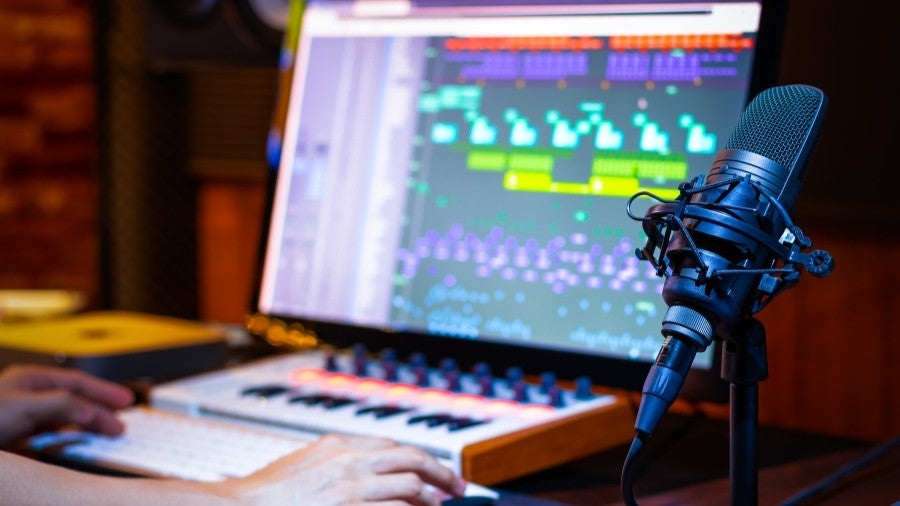
Start with a computer, headphones and a digital audio workstation (DAW). A DAW is the software used to record and arrange music. You can begin with built-in sounds and your computer's audio output. An audio interface becomes useful when you want to connect a microphone or instrument; a MIDI keyboard is optional because you can enter notes using your mouse or computer keyboard. Studio monitors and acoustic treatment can wait until you understand what your room and recordings need. Before buying equipment, check that the software supports your computer and operating system.
Choosing Your First DAW
GarageBand is a practical starting point for Mac users, while REAPER, FL Studio, Logic Pro and Ableton Live offer different recording and composition workflows. Compare them by asking: Does the software run on my computer? Can I record the instruments I own? Does its interface make sense to me? Is the price affordable? Many DAWs offer trials or entry-level editions. Choose one and learn its basic controls rather than repeatedly switching programs. For a closer comparison of the options, read our guide to the best music production software.
Essential Music Production Terms
Audio: a recorded sound, such as a voice or guitar. MIDI: performance instructions that tell a virtual instrument which notes to play; MIDI is not itself a sound recording. BPM: beats per minute, which sets the tempo. Track: a lane containing audio or MIDI. Plugin: software that adds an instrument or effect inside a DAW. EQ: a tool for adjusting frequency balance. Compression: a tool for controlling changes in level. Clipping: distortion that can occur when a signal exceeds the available level.
What Does a Music Producer Need to Learn?
The core skills are musical listening, rhythm, arrangement, recording, editing and basic mixing. You do not need to master every instrument or read traditional notation before starting. Understanding the difference between a melody, chords, bass and percussion helps you recognise what each part contributes to a song. Learn to hear problems before reaching for another plugin: a weak arrangement or poorly recorded sound is not always fixed by an effect.
Free Tools and Common Beginner Mistakes
Start with the instruments and effects included in your DAW; many are capable of producing finished music. Free third-party plugins can be useful, but installing dozens at once often makes learning harder. Avoid buying equipment before identifying a specific limitation, using too many sounds in one arrangement, monitoring at excessively high volume, or assuming that louder always means better. Save your project regularly and keep copies of important recordings.
Is Formal Training Necessary?
No qualification is required to make music. Courses, tutorials and feedback from other musicians can shorten the learning curve, but their value depends on whether you put the advice into practice. If you want to work professionally, finished examples of your work and the ability to collaborate reliably usually communicate more than a long list of software you have tried.
Ready to make your first production?

A studio setup is only the starting point. Become a Producer guides you through recording a musical idea, building drums and bass, and turning a repeating loop into a complete instrumental. Practical exercises and examples from Ryan Bomzer's productions help you make decisions about sounds, arrangement and effects, then finish and export a production of your own.