As a passionate musician, few things are as exhilarating as finding a new piece of sheet music or an instructional eBook that opens up a world of sonic possibilities. But that excitement quickly turns to frustration when you're searching frantically for the right PDF five minutes before practice.
At Carved Culture, we believe instruments are tools for personal growth and peace. When your digital life is chaotic, your musical journey is hindered. That "lost file" pain point is real, but it’s entirely solvable.
The key to unlocking consistent, stress-free practice is implementing a simple, powerful organization system. Forget your overflowing downloads folder. We're going to build a system that prioritizes access, speed, and cross-device vigilance.
Architecting Your Cloud-First Master Archive
The most common mistake musicians make is saving their precious arrangements—from basic scales to complex Handpan notations—in the default Downloads folder, the digital equivalent of tossing a rare instrument into an attic corner; the solution is a dedicated, cloud-based Master Archive. Move beyond local storage by making your primary storage location a cloud service like Google Drive or iCloud, because sheet music is often needed on your laptop for printing, your phone for quick reference, and most importantly, your tablet for playing—cloud storage ensures you can access the score for your Kalimba practice or your Didgeridoo harmonics lesson on any device, anywhere, creating the entrepreneurial vigilance of having your resources ready at all times. Apply the Instrument Separation Rule by creating top-level folders separated by instrument—this is non-negotiable—with a structure like /Sheet Music Master Archive/Kalimba, /Sheet Music Master Archive/Handpan, /Sheet Music Master Archive/Ukulele, as this organization is paramount for speedy retrieval. Finally, complete the final archival step: once you purchase or download a new piece of music, immediately move it from your Downloads folder into the correct instrument-specific folder in your cloud archive—do not skip this step.
The On-The-Go Practice Powerhouse: Your Dedicated Tablet
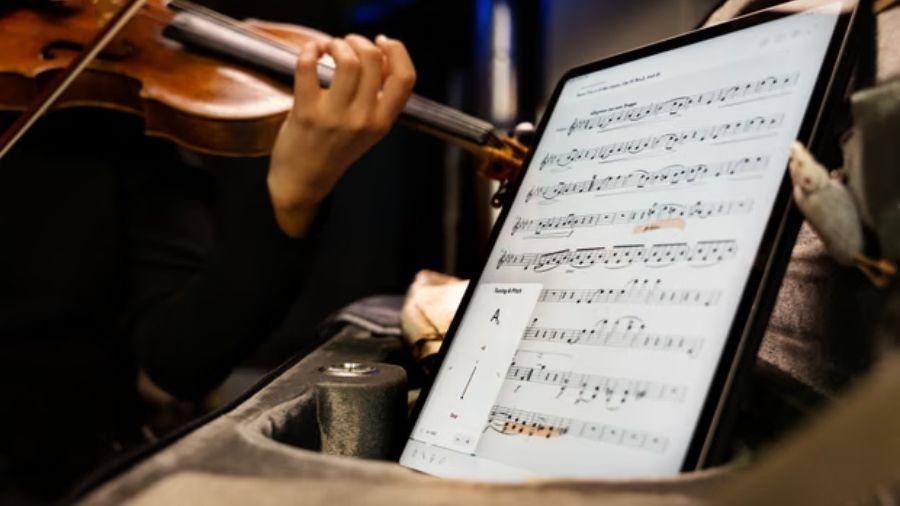
While a cloud archive is great for storage, fumbling through folders on a small screen isn’t ideal when you’re in the meditative flow of a sound bath or deep practice session—the best way to use your digital sheet music is on a tablet. Follow the Practice Device Workflow by using your tablet as your dedicated “Performance and Practice” hub: once you move a piece of music into your Google Drive archive (H1), use the Google Drive or Files app on your tablet to download a copy of the current repertoire locally, ensuring instant access even if your Wi-Fi is spotty in your backyard meditation spot. Take full advantage of annotation tools, since most modern tablets and PDF reader apps allow you to circle key phrases, add finger numbers, or highlight tricky rhythms—this process of digitally marking your scores is critical for deep learning and personalizing your practice experience, because art is the visual aspect of instruments and your marked-up score becomes a visual map of your progress. Finally, eliminate the pain point of generic files like notation_v3.pdf by adopting a clear naming convention within your folders—Instrument_Artist_Title_Key.pdf (for example, Kalimba_Traditional_AmazingGrace_C.pdf)—making searching across devices lightning fast.
Maintenance and The Art of Letting Go
A well-organized system isn’t a one-time setup; it requires regular, mindful maintenance, which aligns perfectly with the discipline needed for mastering a new instrument. Commit to a Quarterly Review by scheduling a 30-minute block every three months to review your Sheet Music Master Archive, deleting or archiving any old, duplicate, or irrelevant files—decluttering your digital space is just as motivational as polishing a Singing Bowl. Add a backup redundancy layer for true peace of mind: while Google Drive or iCloud is reliable, maintain a secondary physical backup on an external hard drive once per year, an investment in digital security that mirrors the investment you make in a handcrafted instrument. Finally, integrate instructional resources by placing any instructional eBooks (such as The Complete Kalimba Player eBook) in a high-priority, easily accessible folder within each instrument’s main folder, ensuring your learning tools are always coupled with your practice scores and setting the next step in your musical journey.

You’ve organized your digital life for speed and focus. Your file structure is immaculate, and your tablet is ready. Now, it’s time to fill those perfectly structured folders with expert-level instruction and unique arrangements.
The most logical next step is acquiring high-quality resources to practice immediately.
Your newly organized folders are hungry for content! Explore Carved Culture's Digital Sheet Music Collection—a constantly expanding library of unique tabs and challenging arrangements for Kalimba, Tongue Drum, and Handpan. This is the fastest way to test your new system and deepen your practice.