If you are wondering whether musical spoons are a real instrument, where they come from, and how far back their history goes, the answer is yes—they have deep roots across multiple cultures and centuries. Musical spoons are not a modern novelty or a gimmick; they are one of the oldest examples of people turning everyday objects into rhythm instruments. This guide explains where musical spoons originated, what they were first used for, how they spread around the world, and why they are still used in folk music today.
The earliest musical spoons
The origins of musical spoons can be traced back thousands of years. Archaeological evidence suggests spoon-like percussion instruments were used as early as 1500 BCE. Ancient Egyptian tomb paintings depict dancers and musicians holding objects shaped like spoons, likely used to add rhythm to dance and ritual. In ancient Rome, historical writings describe spoon playing as entertainment during banquets, reinforcing the idea that spoons were used socially long before formal percussion instruments were common.
In these early contexts, spoons were not manufactured as instruments. They were everyday tools repurposed for rhythm, making them accessible to anyone. This practicality is one of the reasons spoon playing survived across cultures—it required no specialist materials or training.
How musical spoons spread across cultures
As societies evolved, spoon playing developed independently in many regions. In Europe, spoons became part of Irish and Scottish folk traditions, where they were used to accompany fiddles and dancing. In Eastern Europe and Russia, wooden spoons—known as lozhki—were crafted specifically for music and became a recognised orchestral folk instrument.
Greek musical spoons, called koutalakia, were commonly used by Anatolian Greeks and played alongside dance rhythms. In Turkey, spoons known as kaşıklar are traditionally made from boxwood and played in pairs during energetic folk dances. These regional styles show that spoons were not limited to one country or genre; they naturally adapted to local music and movement.
Musical spoons in American folk music
Musical spoons arrived in North America through immigration during the 18th and 19th centuries, particularly from Irish, African, and European folk traditions. In the United States, spoons became closely associated with American folk music, jug bands, and Appalachian traditions. They were often played alongside other everyday objects such as washboards and jugs, forming rhythm sections that were loud, portable, and expressive.
During the 20th-century folk revival, musical spoons gained renewed attention as musicians sought to reconnect with traditional roots. Since then, they have remained a staple in folk, roots, bluegrass, and community-based music, valued for their sharp attack, rhythmic clarity, and visual performance style.
Where to buy musical spoons?

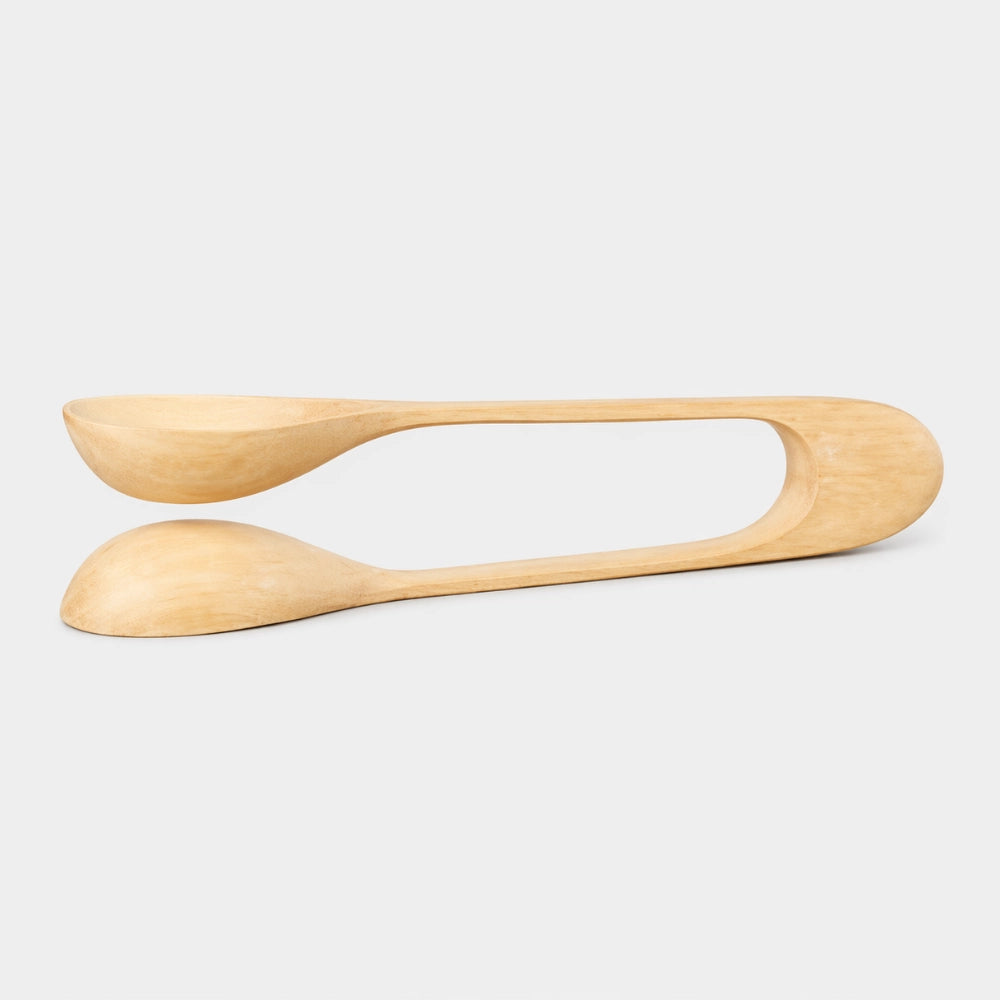
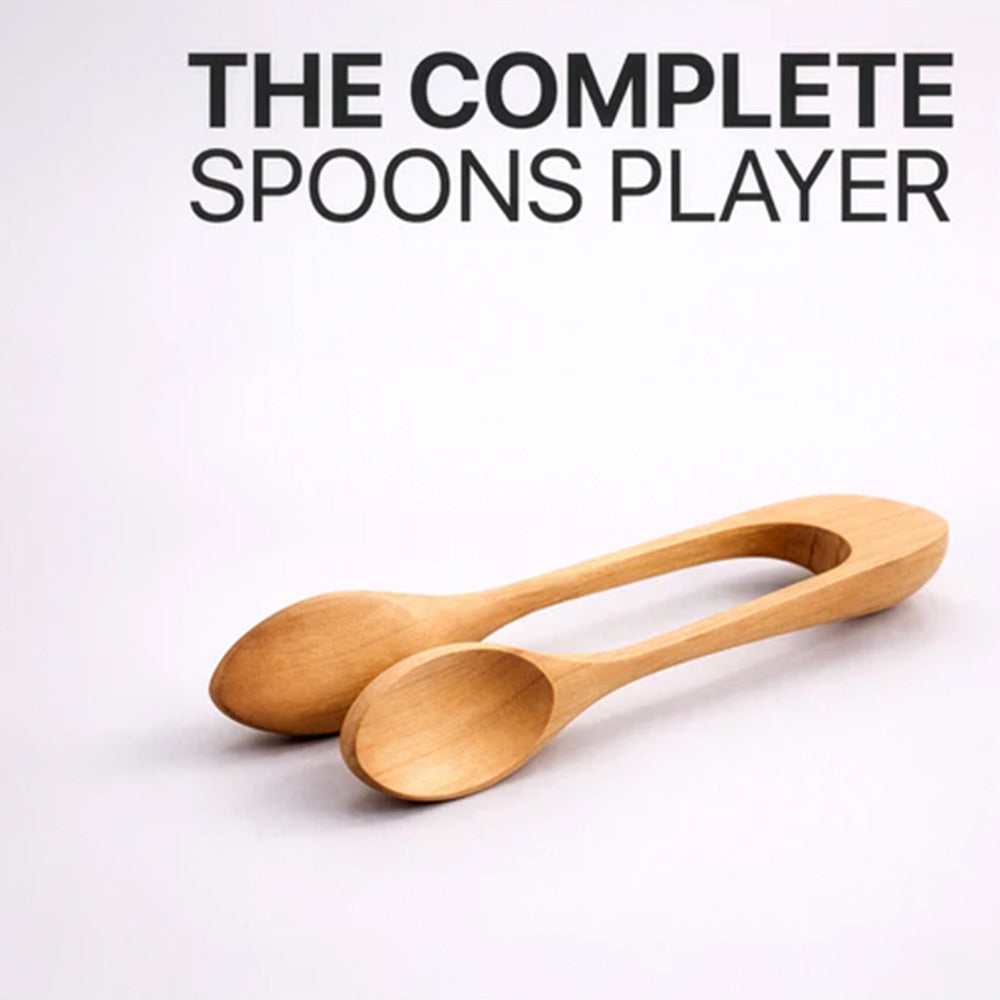
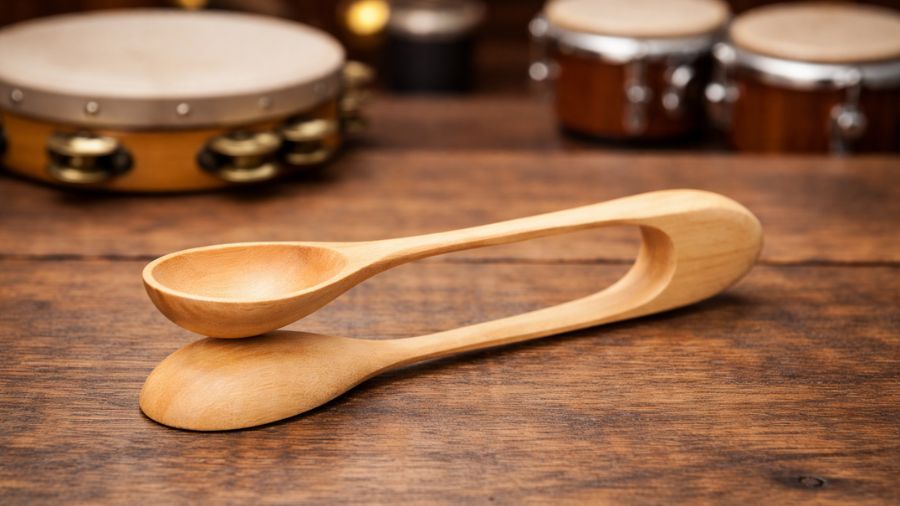
The Lakara Spoons Clapper is a modern continuation of this long tradition. Made from solid suar wood and handcrafted in Indonesia, it is lightweight, durable, and extremely easy to play. To produce sound, simply slap the spoons against your palm, leg, or any surface. Changing speed and pressure creates different tones, from soft clicks to loud clapping rhythms.
Musical spoons are used worldwide across folk traditions. In American folk music, they accompany other everyday instruments. In British folk music, they are commonly played alongside the fiddle. In Greece, koutalakia are played with dance rhythms. In Canada and Russia, spoons are part of established folk ensembles and orchestras. Turkish kaşıklar, often made from boxwood, remain central to regional dance music.
These specific ones are suitable for beginners, schools, and small bands. It is easy for children to use with supervision and is expressive enough for adult performers. Its warm, resonant tone, high pitch clarity, and fast attack make it ideal for rhythmic accompaniment, storytelling, and dance-based music.