Choosing the right kashaka shaker depends on how you want to play, how you learn best, and what kind of sound and feel you prefer. Below, we break down the most common decisions buyers struggle with so you can choose confidently and avoid ending up with an instrument that limits you later.
Single vs Pair Kashaka: Which Should You Start With?
It depends on your goal, but for most players, starting with a pair is the better long-term choice. A single kashaka is useful if you want to focus on one hand, explore basic movement, or layer rhythm gently into other playing. However, kashaka is traditionally played with one in each hand, and starting with a pair helps both hands develop equally from the beginning. If you start with only one, it’s common to struggle later when adding the second because the non-dominant hand hasn’t built the same muscle memory. While a pair is slightly more challenging at first, it leads to better coordination, balance, and consistency as you progress.
Natural vs Plastic Kashaka: Which Is Better?
Natural kashaka made from wood or gourd produce a richer, warmer, and more responsive sound than plastic versions. They also feel better in the hand and respond more clearly to changes in movement. Plastic kashaka are often mass-produced, less durable, and environmentally unfriendly, with a flatter, less expressive tone. If sound quality, sustainability, and long-term enjoyment matter to you, natural kashaka are the better choice.
What Size Kashaka Is Best for Your Hands?
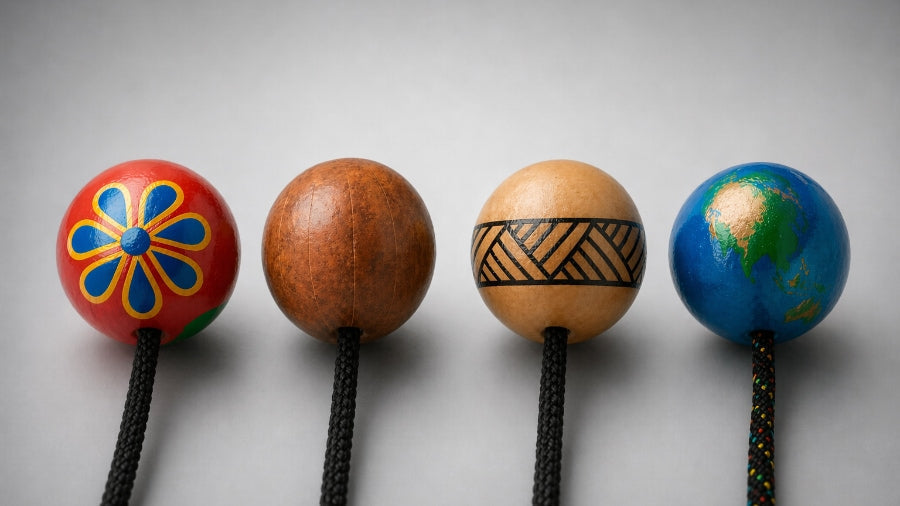
Most kashaka are made in a standard size that suits the majority of players. A simple rule of thumb is this: when holding one ball, the swinging ball should be able to strike it cleanly to create the knocking sound. Some kashaka are adjustable—these have rope ends that extend through the balls with a knot that can be repositioned. Adjustable models allow you to fine-tune length for comfort and control. Non-adjustable kashaka typically have the rope fixed between the balls, with no exposed ends.
Do Tribal Wood Kashaka Sound Different From Plain Ones?
Tribal wood kashaka tend to produce a fuller, warmer, and more grounded sound than lighter or plain shells. The denser wood adds weight and resonance, resulting in a clearer knock and more solid rhythmic response. If you prefer a deeper, more authoritative sound rather than a light click, wood kashaka are a strong choice.
Does the Internal Filling Affect Kashaka Sound?
The internal filling plays a major role in how a kashaka sounds and feels. Different artisans use materials such as gravel, beads, small stones, or seeds. Heavier fillings create a stronger, more pronounced knock, while lighter fillings feel faster and more subtle. This is one of the main reasons kashaka vary so much in tone and response.
Does the Carved Exterior of Kashaka Affect the Sound?
Carving has little effect on the core sound but greatly improves grip and control. Textured, carved surfaces help prevent slipping and give better tactile feedback, especially during faster or more complex movements. Carving is not just decorative—it enhances comfort and playability.
Where to buy a Kashaka Shaker?

Kashaka Shaker (Frequently Asked Questions)
Do carved kashaka have more grip in the hand?
Yes. Carved kashaka provide noticeably better grip than smooth shells. The texture helps your fingers stay engaged, reducing fatigue and improving control, especially during longer sessions.
Are tribal wood kashaka suitable for beginners?
Absolutely. Wood kashaka are stable, responsive, and produce a clear sound, which helps beginners hear and feel what they’re doing. Beginners do not need the simplest-looking instrument—they need one that gives clear feedback, and wood kashaka do exactly that.
Do all kashaka shakers sound the same?
Not at all. Kashaka vary widely in sound depending on shell material (wood, gourd, composite), internal filling, size, and craftsmanship. Even two visually similar kashaka can sound different. Because of this variation, we strongly recommend listening to audio previews on our product pages before buying, so you can choose the kashaka that matches your sound preference and playing style.