Vibrational therapy devices use sound or motion to stimulate the body, encourage relaxation, and support circulation and recovery. While these tools can complement mindfulness or wellness routines, they should never replace professional medical advice or treatment. Always check with a healthcare provider before using vibration devices if you have health conditions, implants, or injuries.
1. Tuning Forks
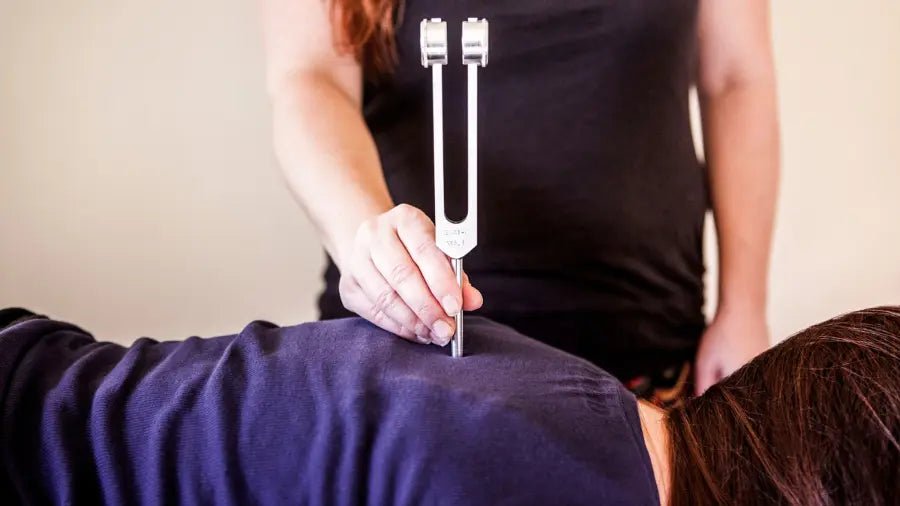
Tuning forks produce precise frequencies that create gentle vibration when struck. They’re often used near energy centers (chakras) or placed lightly on muscles to promote relaxation. Start with one tuned to 432 Hz or 528 Hz and strike it gently on a rubber activator. Hold it close to the body, never directly on bone, and focus on the vibration as it fades.
2. Vibration Plates
Commonly found in gyms and physiotherapy clinics, vibration plates stimulate muscles and circulation through rapid oscillation. Beginners should use low-intensity settings for 1–2 minutes, standing with knees slightly bent. These machines may not be suitable for people with spinal, cardiac, or joint conditions, so always seek guidance first.
3. Massage Guns (e.g., Theragun)
Massage guns use percussive vibration to ease muscle tightness and improve blood flow. Move slowly over large muscle groups for 15–30 seconds per area, avoiding bones and joints. They’re great for post-workout recovery but can be too intense for sensitive areas—start on the lowest setting and increase gradually.
4. Vibrational Mats and Pillows
These devices combine vibration with heat or sound to help reduce muscle tension. Use them during meditation or before sleep to relax the body. Keep sessions short (10–15 minutes) and avoid direct use over the abdomen during pregnancy or after recent surgery.
5. Wearable Devices and Gloves
Modern vibration wearables—like bracelets or gloves—emit subtle frequencies believed to improve focus or relaxation. They’re discreet, travel-friendly, and easy to use while working or meditating. Follow manufacturer instructions for placement and duration, and monitor how your body responds.
How to Use Vibrational Devices Safely
Use vibrational therapy devices mindfully and with care. Begin with short, low-intensity sessions and increase gradually as your body adapts. Stay hydrated, as vibration can enhance circulation and energy flow.
Avoid using devices directly on sensitive areas such as the head, spine, or joints unless advised by a professional. Always listen to your body—if you experience discomfort, dizziness, or strain, stop immediately. For anyone who is pregnant, managing a medical condition, or taking medication, it’s best to consult a qualified healthcare professional before starting.
The Bottom Line
Used mindfully, vibrational therapy devices can complement your self-care or relaxation practice. The goal isn’t intensity—it’s awareness. Let vibration become a reminder to pause, breathe, and reconnect with your body. This article is for informational purposes only and should not replace professional medical advice or treatment.