
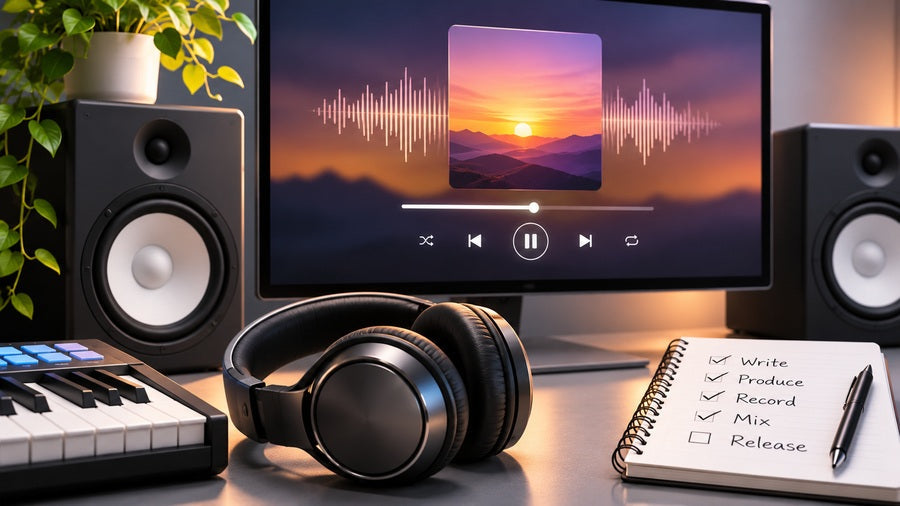
Creating a song from scratch is one of the most rewarding creative processes in music. Whether you’re writing your first tune or refining your workflow, every song begins with one spark—a lyric, a melody, or even a feeling. From that first idea to a polished track ready for release, the process involves five key stages: writing, recording, composition, mixing, and marketing. This guide walks you through each step, helping you turn raw inspiration into a finished song you can be proud of.
1. Songwriting

Great songs start with great stories—lyrics that make people feel something. Focus on emotion, rhythm, and flow by blending storytelling with vivid metaphors and wordplay. Use double-syllable rhymes for richness, and keep phrases catchy so they stick in listeners’ minds. Maintain consistent syllable counts and natural pacing to make your lyrics easy to sing or rap, creating a natural connection between words and melody.
Learn Songwriting for Beginners →
2. Music Production

When your lyrics are ready, start building the music around them. Experiment with melodies, chord progressions and song structures, including verses, choruses and bridges. Adjust the rhythm and tempo to match the mood, then layer instruments and harmonies to give your song depth and character.
Explore Music Production for Beginners →
3. Recording

Recording is where your song truly comes to life. Use quality gear—a reliable microphone, audio interface, and headphones—to capture clean, professional sound. Experiment with mic placement and vocal techniques for clarity, and record with emotional intent so every word feels genuine. Add layers like harmonies, backing vocals, or instruments to create depth and richness, and always record multiple takes to give yourself options when editing for the perfect performance.
4. Mixing and Mastering

Mixing and mastering turn your recording into a polished, professional track. Use EQ to balance tones and remove muddiness, and apply compression to smooth out dynamics for a cohesive sound. Panning helps create space by positioning instruments across the stereo field, while subtle effects like reverb or delay add depth and atmosphere. Finally, balance your volume levels and master the track so it sounds clear and powerful on any speaker or headphone.
5. Music Distribution

Once your song is finished, the next step is releasing it. Choose a music distributor to make your track available on platforms such as Spotify, Apple Music and YouTube Music. Prepare your artwork, release details and launch date, then promote your song through social media, behind-the-scenes content and a consistent artist identity. Distribution gets your music onto platforms; promotion helps listeners discover it.