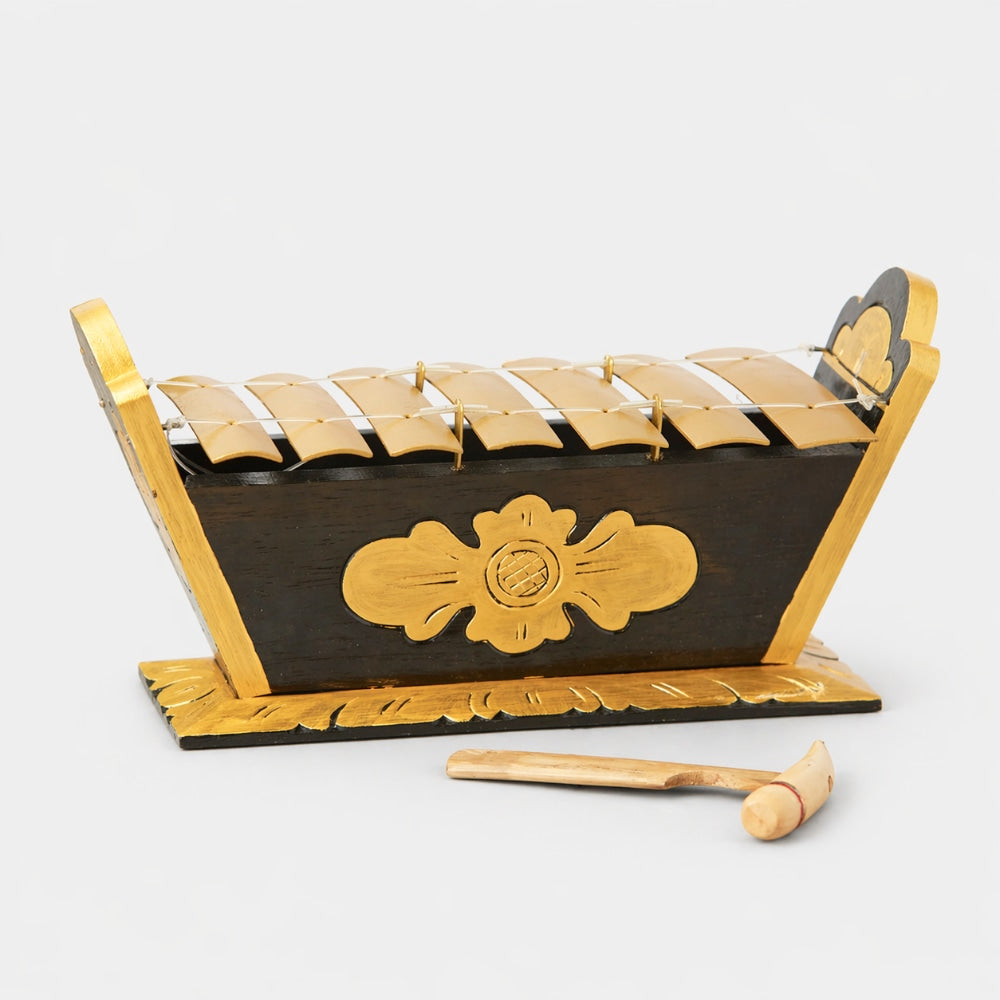
Gamelan instruments are simple to strike, but playing them cleanly requires more than hitting the metal bars with a mallet. The notes can sustain for a long time, so one of the most important techniques is learning to dampen the previous note as you strike the next. This guide covers what gamelan is, how to produce a clear tone, control the sustain and practise your first patterns.
What Is a Gamelan?
Gamelan is a traditional Indonesian musical ensemble associated particularly with Java and Bali. Rather than being one instrument, a gamelan can include metallophones, gongs, drums and other percussion instruments played together. The smaller instruments shown in this guide are gamelan metallophones, with tuned metal bars that produce sustained tones when struck with a mallet. The word gamelan is related to the Javanese word gamel, meaning to strike or hammer, which describes the basic playing action used across many instruments in the ensemble.
What Does a Gamelan Sound Like?
How to Play the Gamelan
Hold the mallet comfortably and strike one of the metal bars, allowing it to vibrate freely. Start gently and listen to how the note develops and fades before experimenting with the other bars. You can leave individual notes ringing for a spacious, resonant sound, but when several notes sustain together they begin to overlap. For cleaner playing, you need to learn how to control when each note stops.
How to Dampen Gamelan Notes

After striking a bar, lightly touch or pinch it with your free hand to stop it vibrating. Practise letting one note ring briefly before damping it, then progress to striking the next bar at the same moment you damp the previous one, allowing each note to end cleanly as the next begins.
The challenge is coordinating both hands, so start slowly with two neighbouring bars before adding more notes and increasing speed. You do not need to damp every note: allowing notes to sustain creates a fuller, more atmospheric texture, while damping gives you clearer separation and rhythmic definition. The goal is to control when each note should ring and when it should stop.
Balinese and Javanese Gamelan
Gamelan traditions vary across Indonesia rather than following one universal playing style. Balinese gamelan is particularly known for energetic playing and tightly coordinated interlocking patterns, while many Javanese styles use more spacious pacing and softer dynamics. These are broad characteristics rather than rules, but they demonstrate how the same basic ideas of striking, timing, resonance and damping can create very different music.
Is Gamelan Suitable for Beginners?
Gamelan is easy to begin because producing sound simply involves striking a bar with a mallet, although clean damping, timing and coordination take practice. Traditionally tuned gamelans are better suited to exploring Indonesian-inspired sounds, rhythm, resonance, improvisation and atmospheric playing than learning familiar Western songs from standard notation.
A Simple Gamelan Practice Exercise
Choose three bars and play them slowly, damping each previous note as you strike the next. Reverse the pattern and gradually increase speed, then repeat while allowing selected notes to sustain. This teaches you to control resonance and silence, not simply strike the bars.
Explore Gamelan Instruments

Our gamelan instruments are handcrafted in Bali and vary in their number of notes, construction, pitch and resonance. Explore the full metallophone range to compare the different instruments and hear which sound suits you.