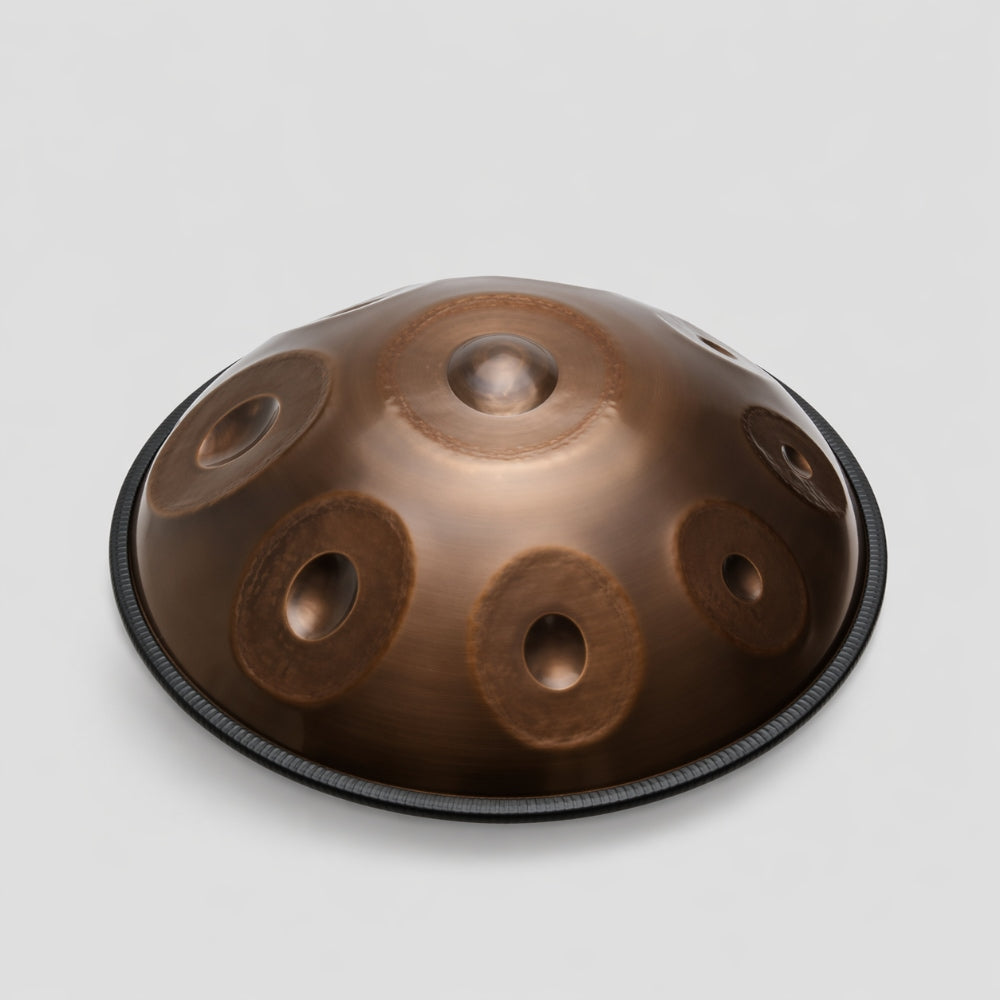
A handpan is a melodic steel percussion instrument with tuned note areas, usually a central “ding” surrounded by other notes. Learning to play starts with a relaxed touch and a comfortable position. You can begin without reading music: follow the steps below to make clear notes, build simple rhythms and develop melodies through steady practice.
How to Hold the Handpan
Sit comfortably with the instrument balanced securely across your thighs, or use a stable stand at a height that lets your shoulders relax. Keep the central note and surrounding fields within easy reach without hunching or lifting your wrists awkwardly. Avoid blocking the opening underneath or pressing your body against the shell, which can change the resonance. Remove jewellery that could scratch the surface and adjust the position before you start.
Make Your First Clear Notes
With a loose wrist, tap a tone field lightly using a fingertip or finger pad and let your hand rebound immediately. Try slightly different contact points to find the clearest response; holding a finger against the metal can damp the note. Explore the central note and each surrounding field separately, leaving time to hear the decay. If a strike sounds dull, adjust the touch and position before adding force. Handpans are normally played with the hands; use beaters only if the maker specifically approves them.
Build a Simple Rhythm
Count “one, two, three, four” and alternate relaxed left- and right-hand taps on one note. When the pulse feels even, use the central note on beat one and a surrounding note on the other beats. Leave one beat silent, vary an accent or try two evenly spaced taps per beat. Practise slowly enough to keep the notes consistent, then use a metronome if it helps. Stop and reset when you feel tension rather than pushing through an uneven pattern.
Turn Notes into Melodies
Choose two or three notes and repeat a short phrase over your pulse. Change just the final note, then compare how the phrase feels. A repeating central note can anchor the pattern while the other hand explores the surrounding fields. Build gradually towards scales, broken chords and syncopated rhythms; use gentle contact to mute a ringing note when you want a clear rest. Record a short practice session and listen for rushed beats, uneven volume or overlapping notes that obscure the melody.
Looking After Your Handpan
Wipe away moisture and fingerprints with a soft, dry cloth after playing, and let the instrument dry before closing it in a case. Keep it away from rain, prolonged humidity, extreme heat and direct sunlight; stainless steel is not permission to submerge it. Use a padded bag or suitable protective case for transport and apply only cleaning products or coatings recommended for its material and finish. If a note changes after a knock, contact the maker or a specialist tuner: pushing out dents or hammering the shell yourself can damage the tuning.