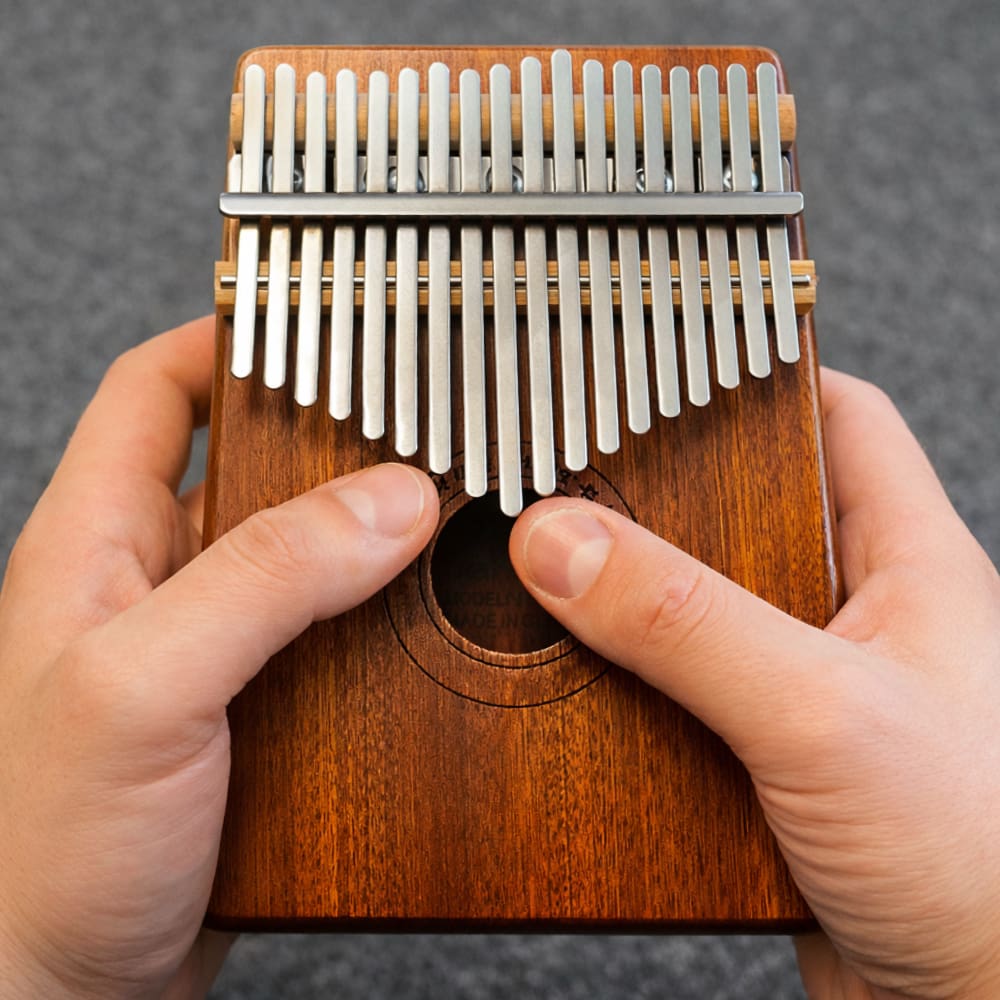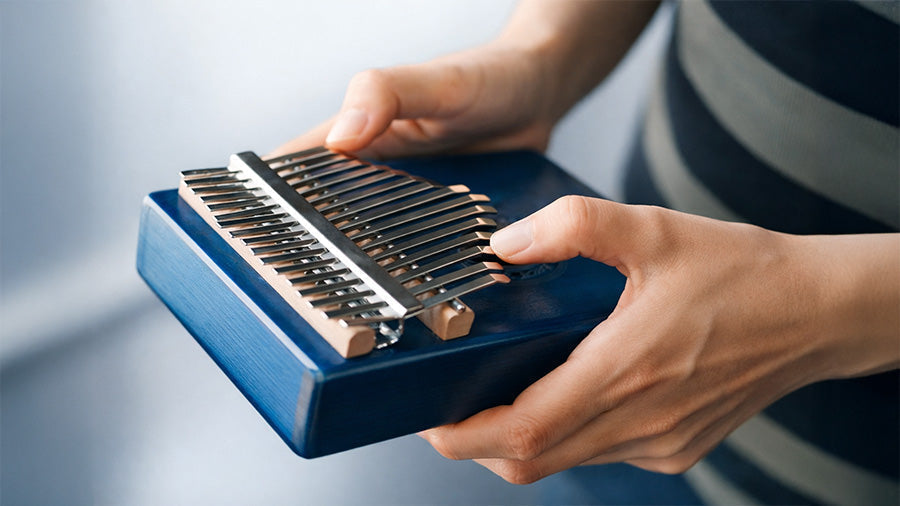
Once you have a kalimba, the first step isn’t learning notes it’s deciding your goal. After helping thousands of beginners start playing, we’ve found that some want to play songs immediately, others want to understand the instrument properly, and some want a ready-made collection of music to enjoy. Knowing this early avoids frustration and makes learning smoother: a quick guide gets you started fast, a complete book builds long-term skill, and a songbook lets you enjoy playing straight away.
Is Kalimba Easy to Learn for Beginners?
The kalimba becomes easy to learn when beginners follow a clear, structured path instead of guessing. With the right guidance, most beginners find it enjoyable, accessible, and quick to make progress on.
How Long Does It Take to Learn the Kalimba?
You can start playing simple kalimba melodies within a few days and feel comfortable within a few weeks. Long-term improvement comes from structured practice rather than practicing more hours.
How to Learn the Kalimba Using Song Tabs
Song tabs are one of the most effective ways to learn the kalimba, especially early on. While tabs won’t teach you everything about tuning or theory, they provide hands-on experience that builds rhythm, plucking technique, coordination, and muscle memory. Playing real songs keeps practice enjoyable and helps your hands learn naturally. Over time, you’ll find yourself remembering melodies more easily and playing with less effort.
How To Read Kalimba Tablature PDF For Beginners

Kalimba tablature (tab) is a simple grid that mirrors the layout of the kalimba’s tines, making it easy for beginners to see which notes to play and in what order. Each vertical line represents a tine, and dots or markers placed on the grid show the sequence and rhythm of the notes, read from left to right to follow the melody. Because the visual layout matches the instrument itself, kalimba tabs allow you to learn songs quickly without reading traditional sheet music.
How to Learn Kalimba Without Reading Sheet Music
You do not need to read traditional sheet music to play the kalimba. This is a common misconception. Kalimba books and songbooks use letter notation or kalimba tablature, which clearly show which notes to play and in what order. Letter notation simply labels notes in a straight line, while kalimba tabs use a visual grid that mirrors the layout of the instrument. Both methods are intuitive and beginner-friendly, allowing you to focus on playing rather than decoding music symbols.
Learn to Play Kalimba Step-by-Step

Stop guessing and follow a clear step-by-step path designed for complete beginners. Instead of jumping between random tutorials, you’ll know exactly what to do from your first note. Learn how to hold the kalimba, understand how the notes work, and start playing real songs with short, focused lessons that are easy to follow and build real skill quickly. It’s a structured way to learn that saves you time, removes confusion, and helps you progress.
Access the Kalimba Starter Course →
Common Beginner Kalimba Player Questions
What is a kalimba?
A kalimba is a small African musical instrument, also known as a thumb piano or mbira, made from a wooden board with attached metal tines that are played using the thumbs. It produces soft, melodic sounds and is popular worldwide for its calming tone and beginner-friendly design. The kalimba evolved from the African mbira and was adapted in the 1960s by Hugh Tracey to suit Western music, while remaining rooted in African musical tradition.
Whats the difference between a thumb piano, kalimba and Mbira?
Thumb piano is a general term for tine instruments, mbira is the traditional African version with multiple rows and non-Western tuning, and the kalimba is a modern, Western-tuned adaptation designed to be easier to play.
How is a kalimba made?
A kalimba is made by attaching metal tines (lamellas) to a wooden soundbox, where their length determines the pitch—shorter tines produce higher notes and longer tines produce lower notes. While traditional kalimbas require precise materials, angles, and tuning to sound right, beginners don’t need to build one from scratch. DIY kallimba kits make the process easier by providing pre-cut parts and instructions, allowing you to assemble, decorate, and tune without specialist tools.
What kalimba is suited to me?
The best kalimba for you depends on your experience level. Beginners often prefer kalimbas with fewer tines because they’re easier to learn and less overwhelming, while more experienced players benefit from full-scale kalimbas that offer a wider range and custom tuning. Prices vary depending on size, materials, and craftsmanship.
Simple beginner kalimbas can cost as little as £15, while higher-quality instruments made from premium woods or with more detailed construction can cost £100+, offering improved tone and resonance. For a detailed comparison of sizes, materials, and styles, see our Kalimba Buying Guide to choose the right instrument with confidence.
How to tune a kalimba?
A kalimba is tuned by adjusting the length of the metal tines—shortening raises the pitch and lengthening lowers it. This is usually done using a tuning hammer and a reference tuner before regular practice. You don’t need a tuning hammer to tune a kalimba, but it can make the process easier. Some players adjust the metal tines using their fingers, which works but can be uncomfortable and less precise. A kalimba tuning hammer is recommended if you want quick accurate tuning without hurting your fingers.
How to play the kalimba?
A kalimba is played by holding it in your hands and plucking the metal tines with your thumbs to create melodies. With practice, you can play full songs, and many people find the soft tones relaxing and stress-reducing. Playing chords on the kalimba involves pressing multiple notes at the same time using your thumbs to create harmony instead of single-note melodies. Most beginner chords are simple triads made from nearby tines.
You can start by plucking two notes together and when you understand where the notes are laid out, chords become a natural extension of melody playing adding depth, rhythm, and emotion to songs, even with no prior music theory experience.
Do kalimbas have sharps and flats?
What you are referring to is a chromatic kalimba. A chromatic kalimba is tuned to the chromatic scale which uses flats and sharps instead of being tuned to regular C. Although, it is also possible to achieve sharps and flat notes with a specific tuning.
What are kalimba stickers for?
Kalimba stickers are used to label the tines with note names, helping beginners recognise notes and navigate the instrument more easily. They can speed up learning at first but are optional and not required long term.
What are the best Kalimba music books?
The best kalimba music books match your skill level and musical interests, with clear layouts and songs you enjoy playing. Beginners often prefer simple guides or familiar songs, while more advanced players may choose themed or genre-specific collections. If you want to learn all about the kalimba and how it works, we would recommend the Complete Kalimba Player.
Where can I find Kalimba tabs?
You can find kalimba tabs as printable PDFs that show which notes to play without using traditional sheet music. They are usually organised by kalimba size (such as 17-note) and cover a range of styles including beginner songs, folk tunes, classical music, and nursery rhymes. If you already know how to play the kalimba and are ready to play real songs, then we would recommend the kalimba songbook which features over 80 song tabs.
What is the easiest song to play on kalimba?
This is of course debatable but I would say that the easiest song to play on the kalimba is Twinkle Twinkle Little Star as it uses only a few notes and can be broken up into parts, here is the first two lines of notes: C, C, G, G, A, A, G, F, F, E, E, D, D, C.
Can you play any song on the Kalimba?
As long as you have enough keys, you absolutely can. If you can learn it, you can play it. There is a special technique that I use to be able to learn any song on the kalimba, and it is highlighted right here in this video.
How do you record a Kalimba?
There are different ways to record a kalimba and how you do it depends on your goal. For professional audio recordings you will need to place a microphone close to the instrument and adjust its position until the sound is clear and balanced. A studio microphone connected to an audio interface will produce higher-quality recordings, while a USB microphone offers a simple low cost option with reduced sound quality. Another option is a purchasing an electric kalimba or a kalimba pickup. If you do get one, it's worth noting that you may need an amp to connect it. The process of recording is outlined entirely in the kalimba starter course.