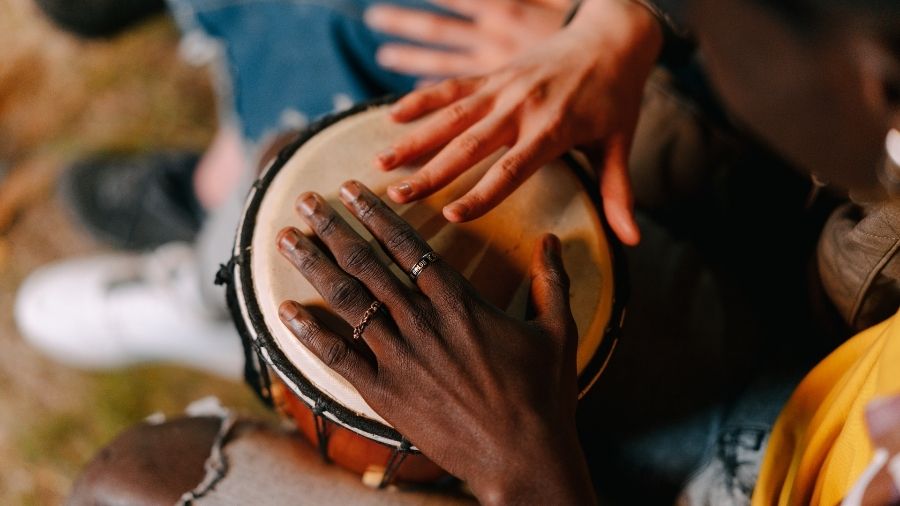
If you’re new to hand drumming, choosing your first djembe can feel confusing. Sizes vary wildly, materials affect sound, and prices range from toy-cheap to professional instruments. The good news: a beginner does not need a “perfect” djembe—they need one that makes learning easy, comfortable, and motivating. This guide explains what actually matters for beginners, so you can choose confidently without overthinking brands or price tags.
What Makes a Djembe Beginner-Friendly?
A good beginner djembe prioritises playability over power. If the drum is too loud, too heavy, or uncomfortable to hold, practice quickly becomes frustrating. Here are the key factors that matter most.
Size
For beginners, medium or small djembes are the most practical choice. An 8"–12" diameter offers the best balance of comfort, control, and sound, making it easier to learn proper technique without fatigue. Larger 14"–16" djembes deliver more bass, but they demand stronger hands and better control, which can slow early progress. When starting out, the goal is tone control and consistency—not wrestling with a drum that’s too big.
Weight
While heavier djembes can sound impressive, they’re often harder for beginners to control. A beginner-friendly djembe should sit comfortably between the knees, tilt easily for proper projection, and feel stable without straining the wrists, arms, or shoulders. If the drum feels awkward or tiring to hold, technique breaks down—comfort and control always come before volume.
Drumhead
Natural goatskin drumheads are ideal for beginners because they respond clearly to hand position and striking technique, making bass, tone, and slap easier to hear and control. They reward correct playing immediately, while synthetic heads tend to mask mistakes and can slow real progress by hiding technique issues.
Rope-Tuned vs Fixed Tuning
Rope-tuned djembes are absolutely suitable for beginners and are the most common option worldwide. You don’t need to tune often when starting—early progress comes from hand technique, timing, and tone control, not tuning adjustments. While learning to tune is useful long-term, it isn’t essential on day one, so beginners should focus on playing comfortably and consistently before worrying about tension systems.
Sound Quality
A good beginner djembe should produce clear, defined tones with an obvious difference between bass, tone, and slap—without sounding overly boomy or painfully harsh. If every strike sounds the same, the drum masks technique and slows learning. Clear tonal separation helps beginners hear mistakes immediately and improve faster through feedback from the instrument itself.
The Biggest Beginner Mistakes
Most beginners assume progress comes from buying a better instrument, but real improvement comes from learning how to play it. Even a high-quality djembe will sound dull without proper hand positioning, controlled strikes, rhythm awareness, and structured practice. This is where most players get stuck—not because their drum is limiting them, but because they lack clear guidance on how to use it effectively.
Learn Faster With the Right Instruction

If you want to actually play the djembe—not just own one—technique matters more than gear, which is why The Complete Djembe Drum Player focuses on building real skill from the start by teaching proper bass, tone, and slap sounds, correct posture and hand technique, rhythm fundamentals, and structured practice that builds confidence quickly with no prior experience required. For beginners, the smartest path is simple: choose a comfortable, medium-sized drum, prioritise playability over power, and focus on learning technique rather than upgrading gear—because a good drum helps you start, but clear instruction is what actually helps you progress.