Drums and rattles offer different ways to create a steady pulse, rhythmic texture or a focus for listening. Some practitioners use them in ceremonies described as shamanic healing or spiritual journeying; these meanings belong to particular traditions and personal beliefs, rather than guaranteed effects of an instrument. Compare the sounds, materials and handling below, alongside a few non-musical ceremonial accessories. Natural-hide drums respond to humidity, so consider where you’ll play and store yours.
Choosing Your Instrument
Start with the sound and role you want: a drum for a repeated beat, a rattle for shaking textures, or a suitable beater to change the attack of a drum you already own. Listen at a similar volume, check weight and grip, and choose a size you can hold comfortably. Diameter alone does not determine pitch or resonance; hide tension, construction and playing technique matter too. Beginners can start with one instrument and a simple pattern. A product’s country of manufacture does not establish ceremonial authority or membership of a particular tradition.
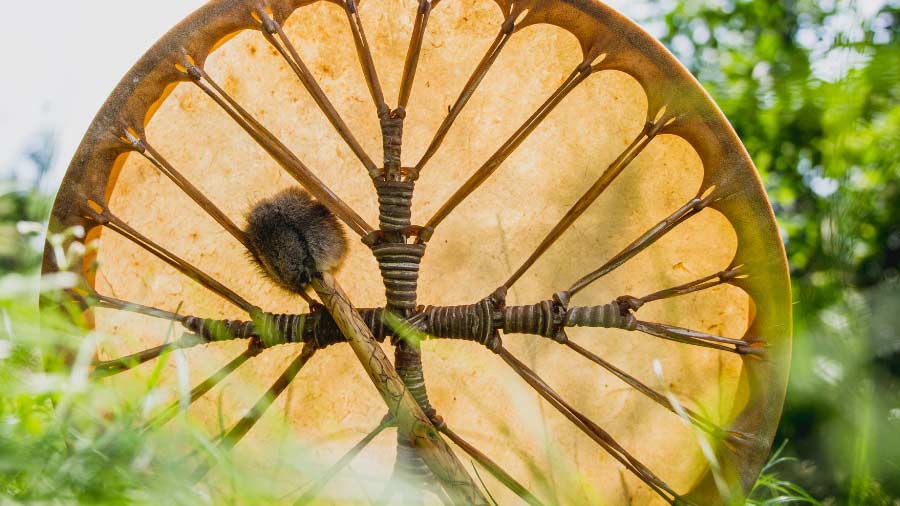
Khenji Shamanic Drum

The 30cm (12-inch) Khenji is made in Pakistan with cowhide hand-tied over a wooden frame; its specification lists cedar. At approximately 600g, it is worth considering for handheld playing when you want a frame drum without the bulk of the larger models. Compare the sample with your preferred sound and check the current listing for included accessories rather than assuming every drum comes with the pictured beater.
Shamanic Tribe Drum

Made in Indonesia from wood and goat hide, this frame drum is listed in approximately 30cm and 40cm sizes. It offers another option for repeated beats, expressive accents and group drumming. Listen to the preview of the 30cm model, then compare the size and grip you would use; a recording of one size does not represent every handmade drum exactly.
Dhyangro Shamanic Drum

Our Nepal-made Dhyangro has two goatskin heads, a wooden frame and a carved handle, giving it a different holding style from a rear-grip frame drum. Dhyangro drums are associated with Nepalese shamanic traditions, though designs and practices vary. Choose this model for its construction, sound and handled playing format, and seek tradition-specific instruction if your interest is ceremonial.
Khenji Shamanic Shaker

Handmade in Pakistan from natural branches and hand-tied cowhide, the approximately 25cm Khenji shaker offers a textured rattle for steady pulses or looser sound effects. Each piece varies in appearance. Use small wrist movements for short accents and longer motions for flowing textures; compare the preview rather than assuming its hide construction means a low-pitched sound.
Terre Shamanic Rattle

The Indonesian Terre rattle combines a wooden handle and stitched goatskin head with yarn, beads and feathers. Its decorated design and choice of sizes provide an alternative to the branch-handled Khenji. Listen for the texture you prefer, and check the selected size before buying. Start with gentle shakes and vary their length and speed to explore the response.
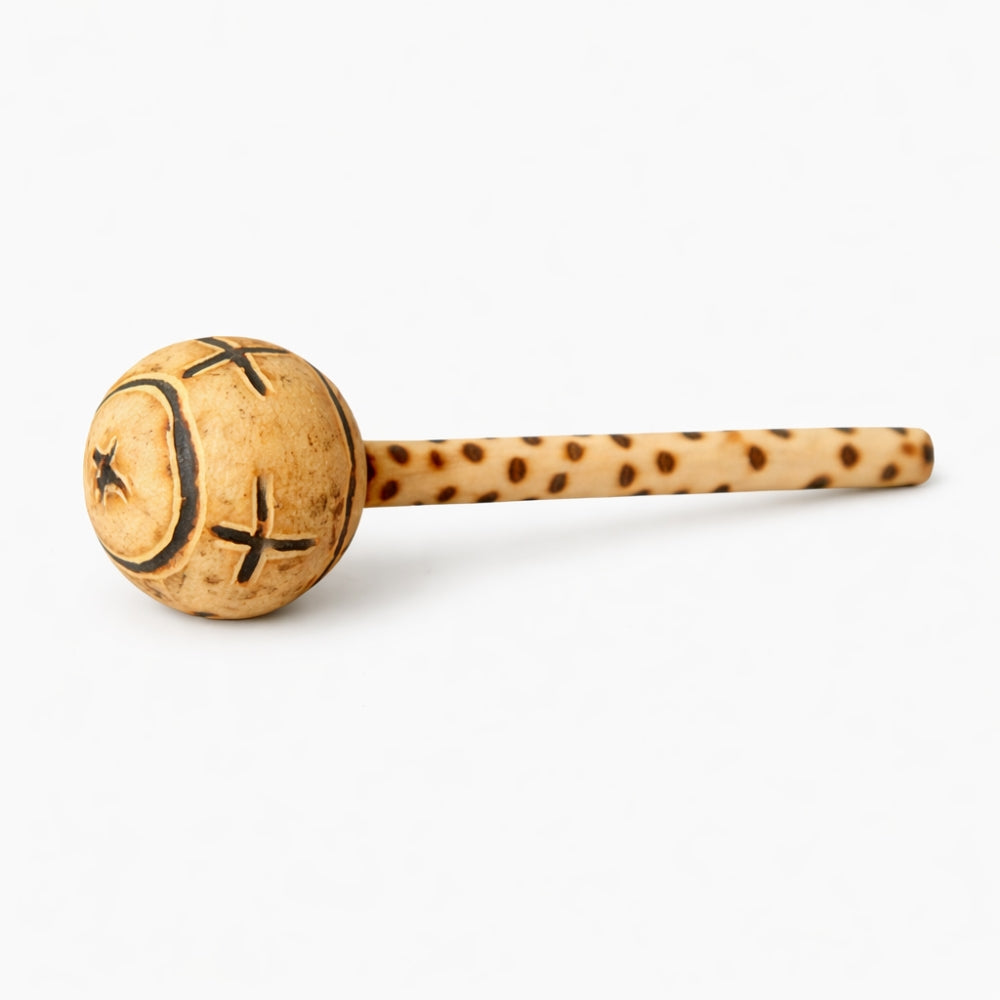
Kenyan Gourd Shaker

This Kenya-made shaker uses a dried gourd and a wooden handle decorated with burnt patterns. At approximately 24cm and 82g, it is a lighter option to compare with the hide rattles above. Its listing does not identify the filling, so we do not describe it as seeds or beans. Choose it for its sound and handling without assuming that a Kenyan instrument belongs to a particular shamanic tradition.
Shamanic Drum Beater

A replacement beater lets you compare grip, balance and attack without changing your drum. The wooden-handle styles are made in Indonesia and twig-handled versions in Pakistan; the listing allows animal-hide or faux-leather coverings depending on availability. Confirm the specific material if avoiding animal products. Choose a smooth, suitable padded head and check whether your drum already includes a beater.
Feathers and Other Ceremonial Accessories

Some practitioners use feathers, decorated shields, incense, crystals or other personal objects as symbols of intention, protection or connection. Their meaning depends on the community and practice; there is no universal essential kit, and decoration does not give an instrument proven healing properties. Learn the context before adopting ceremonial designs, choose responsibly sourced materials, and keep attachments clear of vibrating surfaces. Incense and herbs are optional: consider ventilation, fire safety and other participants’ comfort rather than treating smoke as necessary.
Play with Purpose and Confidence

The Complete Shamanic Drummer connects background on the drum’s construction and ceremonial uses with practical playing. Learn holding and beater technique, open and muted strokes, heartbeat-style patterns and rhythm exercises, plus guidance on group playing, care and recording. Use it to understand the purpose behind your practice while building steadier, more controlled drumming.