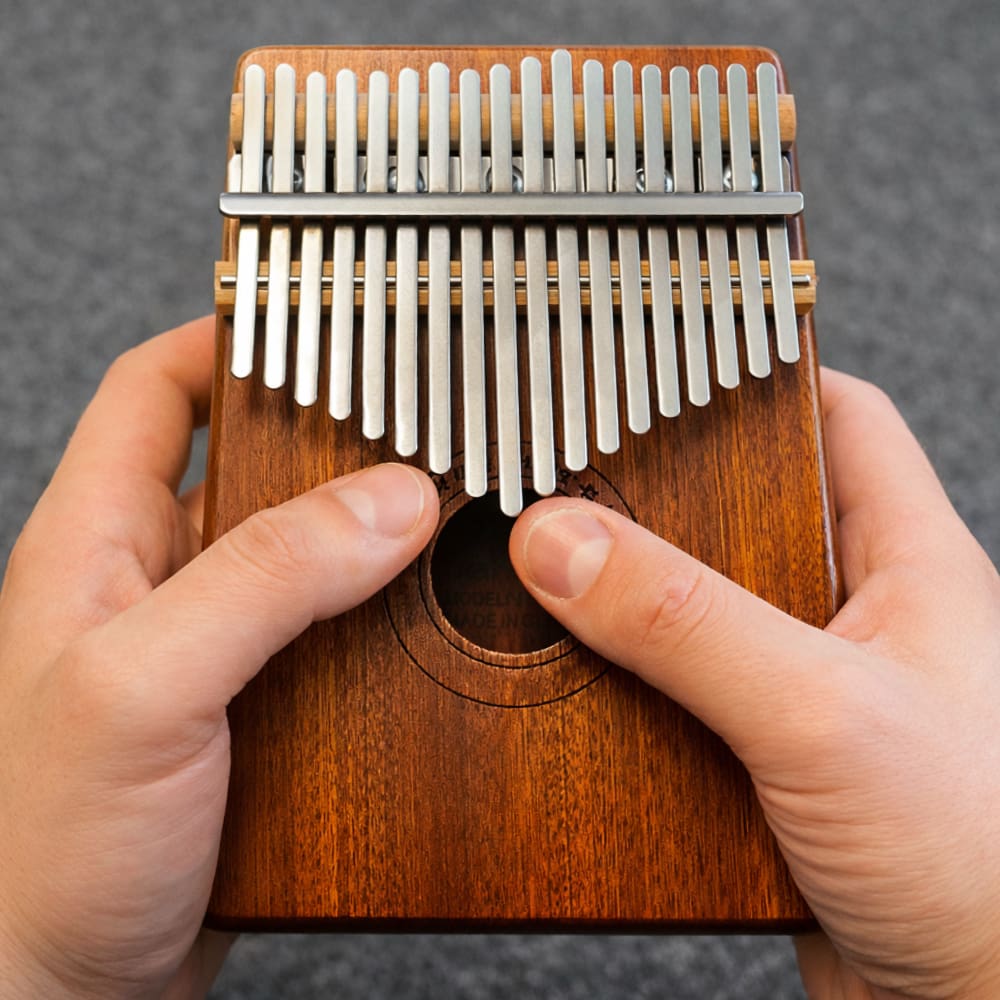
The kalimba is often described as simple, relaxing, and beginner-friendly—but those descriptions sometimes turn into misunderstandings. These myths can stop people from choosing the right instrument, learning properly, or realising how much depth the kalimba actually has. Below are the most common kalimba myths, explained clearly so you can make informed choices and enjoy the instrument fully.
1. The Kalimba Is Just a Toy
A well-made kalimba is a serious musical instrument, not a novelty. Professional kalimbas are used in recordings, soundtracks, and live performances. Cheap mass-produced versions may feel like toys, but that does not define the instrument itself.
2. All Kalimbas Sound the Same
Kalimbas vary widely depending on wood type, tine material, number of notes, and construction. An 8-note kalimba sounds very different from a 17-note one, and solid wood bodies produce more resonance than acrylic or hollow designs.
3. You Don’t Need to Tune a Kalimba
Kalimbas go out of tune over time due to temperature changes, humidity, and regular playing. An untuned kalimba sounds unpleasant and discouraging. Learning how to tune your instrument is essential for enjoyable playing.
4. Kalimba Music Is Only for Meditation
While kalimbas are popular in meditation and relaxation, they’re also used for folk, classical, pop, film music, and modern compositions. The instrument is far more versatile than its calming reputation suggests.
5. You Can Only Play Simple Songs
Simple songs are a starting point, not a limitation. With the right technique and layout, kalimbas can play complex melodies, harmonies, chords, and expressive dynamics. Skill not the instrument determines complexity.
6. Kalimbas Are Only for Beginners
Many people start on the kalimba, but advanced players continue using it for life. As your technique improves, the instrument offers more control, expression, and musical depth rather than becoming obsolete.
7. You Don’t Need Proper Technique
Poor hand position, inconsistent thumb movement, and incorrect tine striking lead to muted notes and frustration. Like any instrument, good technique matters if you want clean sound and long-term progress.
8. Free Tabs Online Are Good Enough
Many free kalimba tabs online are incomplete, inaccurate, or poorly arranged. This often leads to confusion, wrong notes, and stalled progress. Structured arrangements make a huge difference in how quickly you improve.
9. You Have to Read Sheet Music to Play Well
Sheet music is useful, but not required. Kalimba tablature and simplified notation systems allow players to make music quickly without formal music theory. Different notation styles exist to suit different learners.
10. Kalimba Is Either Easy or Hard to Play
Kalimba is easy to start but hard to master. Beginners can play simple melodies quickly, but developing timing, accuracy, expression, and confidence takes guidance. Without a clear learning path, progress can feel random and slow.
Learn to Play Kalimba Step-by-Step

Stop guessing and follow a clear step-by-step path designed for complete beginners. Instead of jumping between random tutorials, you’ll know exactly what to do from your first note. Learn how to hold the kalimba, understand how the notes work, and start playing real songs with short, focused lessons that are easy to follow and build real skill quickly. It’s a structured way to learn that saves you time, removes confusion, and helps you progress.
Access the Kalimba Starter Course →