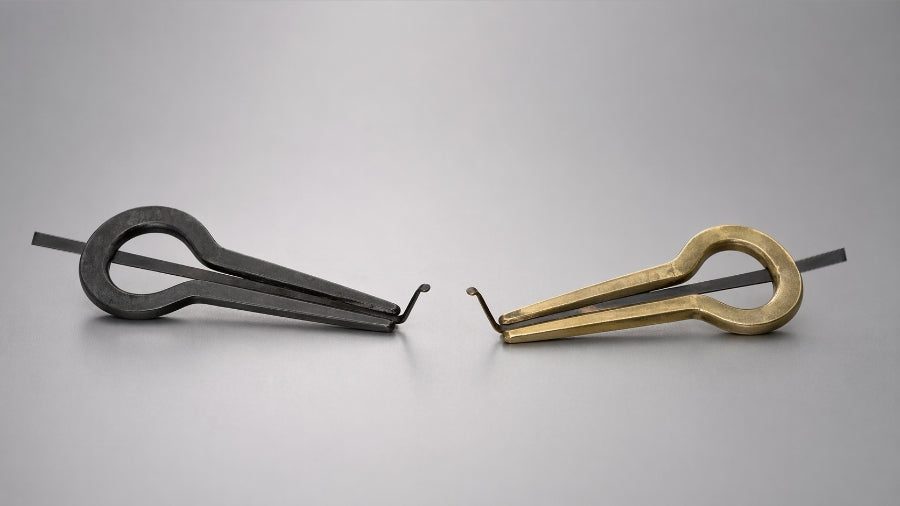
Cast iron and brass jaw harps may look similar, but the material changes how they feel, sound, and behave in use. The difference is not about which is “better,” but about tone character, weight, durability, and playing experience. Understanding how each material responds helps you choose the jaw harp that matches your sound preference and intention.
Cast Iron Jaw Harp

Cast iron jaw harps deliver a bold powerful sound thanks to its heavier, rigid frame, which stabilises the instrument and produces a bright metallic tone with strong resonance and a raw earthy character ideal for rhythmic playing, folk traditions, and meditative drone work. The trade-off is maintenance and feel: cast iron can tarnish or lightly corrode in humid conditions and often has sharper edges from traditional forging, making it less suitable for beginners but highly rewarding for experienced players with controlled technique who value strength, stability, and presence.
Brass Jaw Harp

Brass jaw harps offer a smoother feel on the lips while naturally resisting rust, making it lower maintenance and better suited to changing or humid environments. Its sound remains bright and metallic but is often slightly warmer and more controlled than cast iron, trading some raw edge and projection for a cleaner, refined tone; while still best suited to experienced players, brass jaw harps are a strong choice for those who want resonance without harshness, especially for travel or extended playing sessions. Brass is more corrosion-resistant but can still tarnish naturally.
Which Jaw Harp Is Right for You?
Cast iron and brass jaw harps feel similar in overall weight but differ in balance and comfort, with cast iron feeling denser and more grounded, while brass feels slightly more responsive and agile. Neither material is easier to learn, as jaw harps rely on breath control, mouth shaping, and plucking technique, but cast iron benefits from occasional wiping to prevent surface corrosion, while brass offers lower rust risk and a smoother feel.
Both are traditionally handmade with rustic finishes where minor imperfections are part of the character; choose cast iron for bold metallic resonance and a solid, grounded feel, or brass for a warmer tone, smoother playing experience, and lower maintenance—once you understand how material affects tone, feel, and care, the right choice becomes clear.