Cheap and expensive kalimbas are built for different uses. A pocket kalimba is small, simple, affordable, and easy to carry, while a higher-end kalimba is built for fuller sound, better tuning stability, stronger materials, and professional use. The right choice depends on where you want to play, how much range you need, and whether you want a casual instrument, a learning instrument, or a long-term professional kalimba.
Pocket Kalimba

Pocket kalimbas are ideal for beginners, gifts, travel, and casual playing. Their small size makes them easy to hold, carry, and keep in your pocket, so they are perfect for playing on the go or trying the kalimba without spending much. Most pocket kalimbas have a smaller note range, often around one octave, which makes them simple and approachable. They are best for short melodies, rhythm ideas, and anyone who wants a fun, affordable entry point rather than a full learning instrument.
View the Chisai Pocket Kalimba →
Coconut Thumb Piano

The Kuta offers a different entry-level experience from a pocket kalimba. Handmade in Bali with a resonant coconut shell and carved wooden top, it has seven metal notes and a distinctive natural character. It is enjoyable for simple melodies and relaxed playing, but its limited range makes it less suitable for learning complex songs. Choose it for its traditional construction and sound rather than expecting the versatility of a 17-note instrument.
View the Kuta Thumb Piano (7 Note) →
Box Kalimba

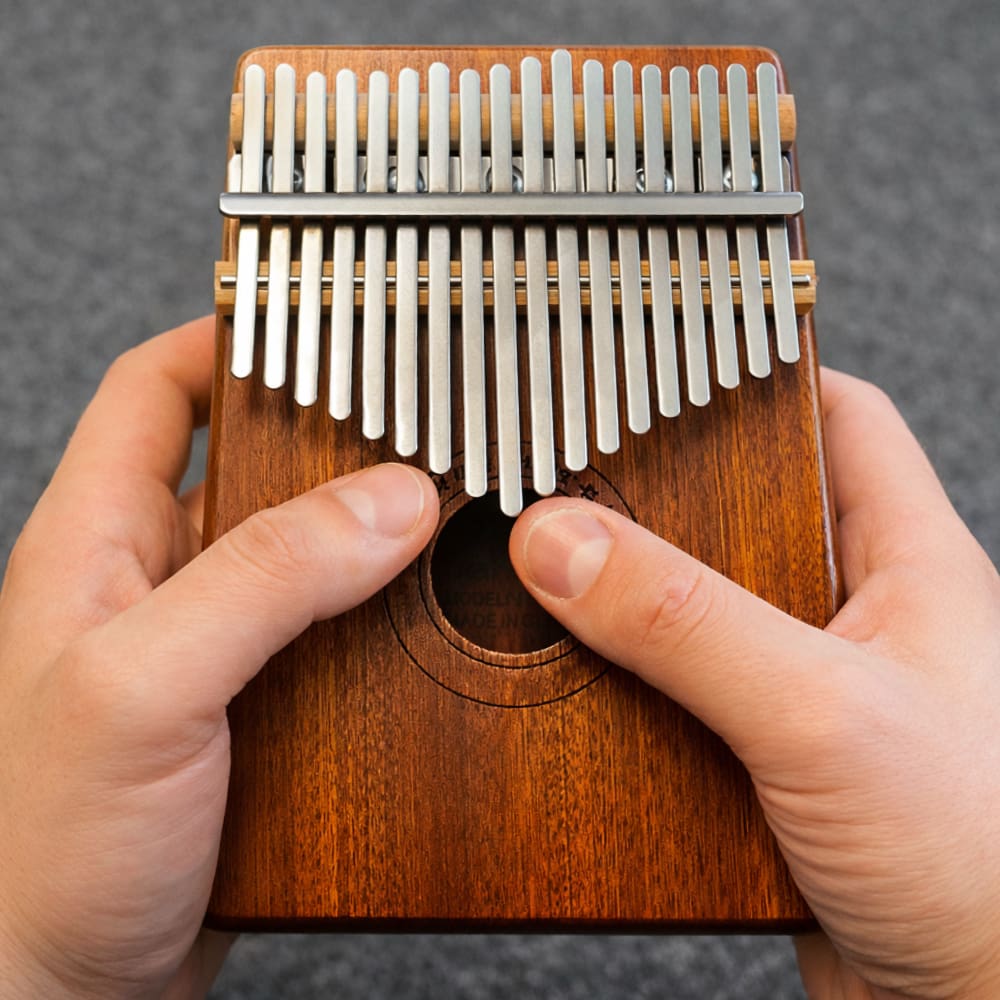
A box kalimba is the best choice for most people. It gives you enough notes to play proper songs, learn technique, follow kalimba tabs, and progress without feeling restricted too quickly. The hollow body helps amplify the sound, giving more volume and resonance at a good price.
Box kalimbas are great for beginners, casual players, and learners who want a real musical instrument without moving straight into the premium range. Compared with solid board kalimbas, they usually use a thinner body, so premium board models may feel stronger and more durable long term.
Magadi Kalimba

Premium kalimbas are often solid board instruments, giving them a stronger body, refined tone, reliable tuning, and a more professional playing feel. A larger solid wood body gives the instrument more strength, stability, and a more refined tone, while upgraded key mechanisms help improve tuning, sustain, and note response. These kalimbas are best suited to professional musicians, sound therapists, recording, performance, meditation, and long-term serious use. They cost more, but they are built for people who care about tone, reliability, and a higher-quality instrument.
Hokema Kalimba

Handcrafted in Germany from solid cherry wood, the Hokema Kalimba features 17 notes in C major. Its solid-body design delivers a clear tone, making it ideal for experienced players, recording and anyone seeking premium craftsmanship.
When Should You Upgrade Your Kalimba?
Before buying another kalimba, check whether your current instrument needs maintenance rather than replacing. Buzzing, dull notes or poor tuning may be resolved by adjusting the tines or using a tuning hammer. If you have a 5–8 note kalimba and want to play more complex melodies, moving to a 17-note model is a meaningful upgrade.
If you already own a 17-note kalimba, consider upgrading only when you want a different playing feel, build quality or tonal character. Hollow-body models can offer greater acoustic projection and wah-wah effects, while solid-body models often produce a more controlled sound. Upgrade when your current instrument limits your playing, not simply because another model costs more.