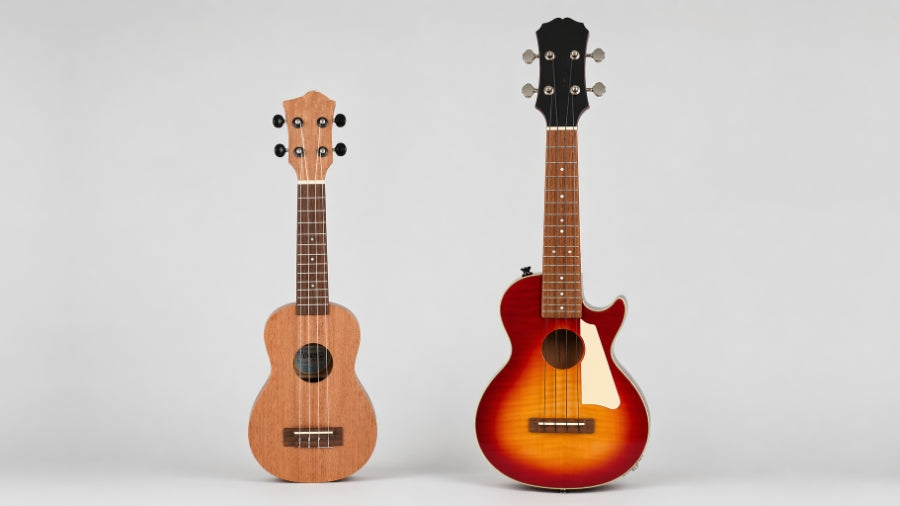
If you’re wondering whether an expensive ukulele is really worth it, the short answer is yes but it depends on your expectations. Cheap ukuleles can get you started, but they often create frustration through poor tuning stability, weak sound projection, and inconsistent build quality. Expensive ukuleles, on the other hand, offer better tone, durability, playability, and long-term value. The difference isn’t branding it’s materials, construction, and performance.
Cheap Ukuleles
Budget ukuleles are typically made from laminate wood, low-grade hardware, and basic machine heads; while affordable and visually appealing, many struggle to hold tuning as poor-quality tuners slip, leaving you constantly adjusting strings instead of playing. Some ultra-cheap models also have high action (strings too far from the fretboard), making them uncomfortable for beginners.
Tone is another limitation low-cost ukuleles often sound thin or muted because the materials lack resonance, and poorly assembled factory instruments can be difficult to tune accurately across the fretboard. Cheap ukuleles are not useless and can suit absolute beginners experimenting for the first time, but expectations should match the price to avoid frustration outweighing savings.
Expensive Ukuleles
Higher-quality ukuleles justify their price through superior materials and craftsmanship: solid wood construction improves resonance and sustain for a brighter, richer, more balanced tone, while better tuning machines hold pitch consistently so you spend more time playing and less time adjusting. Premium models also offer improved fretwork, smoother edges, and lower, more comfortable string action, making chords easier to press and reducing finger strain.
Some higher-end options, including electric-acoustic and Les Paul-style designs, feature built-in pickups so you can connect to an amplifier or audio interface for recording and live performance adding real versatility and long-term value. In short, you gain better sound, stronger stability, and a more enjoyable playing experience.
What Actually Matters When Buying
The real question isn’t “cheap or expensive?” it’s “what experience do I want?” If you only want something temporary to test the waters, a budget model may be sufficient. But if you want reliable tuning, strong projection and tone, comfortable playability, recording or amplification options, and an instrument that lasts for years, investing more upfront often saves money long term. A poor instrument can slow progress; a good instrument encourages it.
Before You Buy, Learn What to Look For

Before buying a ukulele, understand how the instrument works from tuning and posture to chord shapes and rhythm so you can recognise quality, avoid common mistakes, and choose a model that fits your goals. The Complete Ukulele Player by Ryan Bomzer provides that foundation in a structured 65-page guide covering holding position, tuning, posture, chords, scales, rhythm, and expression through clear step-by-step lessons. It includes chord diagrams, scale charts, 20 full songs with tablature, practice routines, and structured tutorials designed to build real confidence. When you understand how to play, it becomes much easier to know what to buy.
Explore The Complete Ukulele Player here.