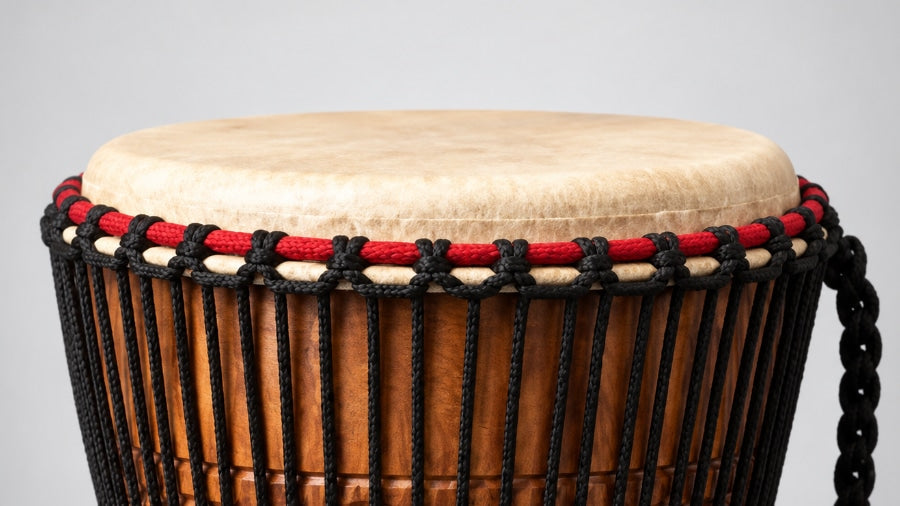
Djembe drum size matters a lot as the size directly affects tone, volume, playability, portability, and who the drum is best suited for. Smaller djembes are easier to handle and quieter, while larger djembes deliver deeper bass, stronger projection, and more expressive range. Understanding how size changes the instrument helps you choose the right djembe for your body, environment, and musical goals.
Small Djembes (6")
Small djembes are lightweight, compact, and easy to control, producing brighter, higher-pitched tones with limited bass, which makes them ideal for children, beginners, classrooms, travel, and casual rhythm games.
Their smaller shell and head respond quickly to light strikes, helping players learn basic hand positions and rhythms without physical strain, though volume and depth are naturally limited due to reduced air movement. Highly portable and forgiving to play, they offer an accessible entry point with a bright, light sound but minimal bass presence.
Medium-Small Djembes (8")
An 8" djembe bridges the gap between beginner and general-use sizes, remaining approachable while offering noticeably more tonal depth than a 6" drum, with clearer slaps and more present bass tones. It suits younger players who want more sound as well as adults seeking a compact yet musical practice drum, delivering a balanced, controlled tone with high portability and a comfortable, responsive playing feel ideal for home practice.
Medium Djembes (12")
A 12" djembe is widely considered the most versatile size, delivering strong bass, clear tones, and crisp slaps without feeling overwhelming, while offering enough playing surface to develop proper technique. It responds well to dynamics, translating both soft and loud playing clearly, which makes it well suited for adult beginners, teens, drum circles, and group sessions, with a full, balanced, expressive sound, moderate portability, and excellent playability for building solid rhythm skills.
Large Djembes (16")
Large djembes deliver powerful bass, strong projection, and a wide dynamic range, with increased shell volume allowing low frequencies to resonate fully, making them ideal for performance, recording, and leading drum circles. The trade-off is weight and physical demand, as they are heavier, louder, and require stronger technique and endurance, with poor hand placement becoming more noticeable. Best suited to experienced players, they offer deep, commanding sound and expressive potential but low portability and a more demanding playing experience.
Which Size Is Right for You?
Djembe size directly affects tone, playability, and portability: as size increases, bass frequencies deepen, volume rises, and tone separation improves, while smaller drums emphasise higher tones and slaps. Smaller djembes are easier to play for long periods and require less strength, whereas larger djembes reward good technique but punish tension and poor hand placement, making comfort critical for progress.
Portability also matters small djembes are easy to carry and store, while larger ones are heavier and less practical for casual use. There’s no single “best” size: children and beginners benefit from smaller drums, most adults learning seriously do well with a 12" djembe, and performers or advanced players often choose 16" djembes for power and presence.
Want a Deeper Understanding of Djembe Technique?

Choosing the right size is only the first step. Tone, rhythm, hand position, tuning, and technique ultimately shape how any djembe sounds — regardless of size. The Complete Djembe Drum Player is a clear, practical guide that teaches proper technique, rhythm patterns, tuning, and structured practice from beginner to advanced level. It helps you get the most out of anydjembe size by focusing on how the instrument actually works. If you want to understand your djembe properly — not just own one — deeper learning makes the difference.
Download The Complete Djembe Drum Player