
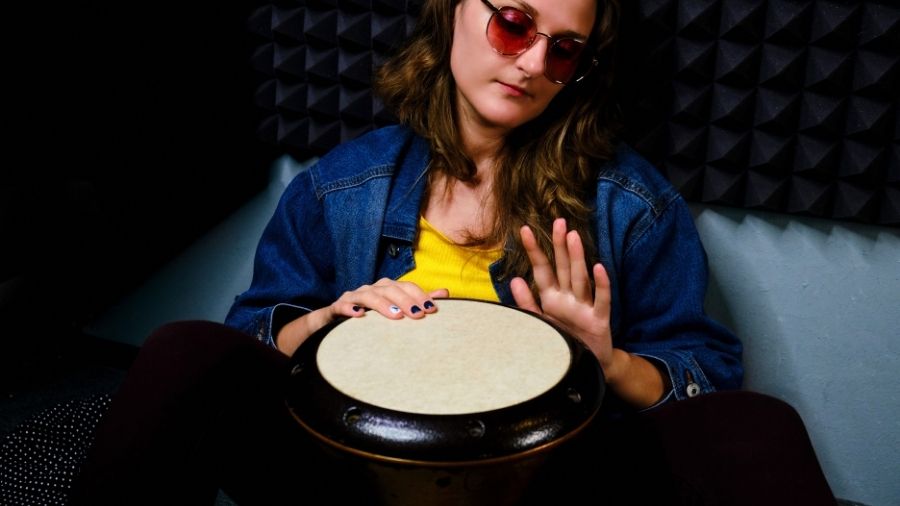
The djembe is a dynamic hand drum with deep bass, sharp slaps, and expressive mid tones. A clean recording comes from balancing clarity with impact—not making the drum louder or heavier than it naturally is. The goal of EQ is to remove problems, shape definition, and let the character of the drum speak clearly in the mix. Below is a simple, practical EQ approach that works for solo djembe recordings, ensemble percussion, and layered world-music productions.
EQ the Lows (Control Boom Without Killing the Bass)
EQ the Mids (Define Tone and Slap Clarity)
EQ the Highs (Shape Slaps Without Harshness)
High frequencies shape a djembe’s slaps, attack, and air, so the goal is clarity without harshness. Add a soft boost around 4–6 kHz only if slaps lack definition, and if the sound feels sharp or fatiguing, apply a gentle cut around 7–9 kHz, avoiding extreme high-end boosts that exaggerate finger noise or mic harshness. Prioritise subtractive EQ before minimal enhancement, record slightly off-axis to soften slap transients, and let dynamics come from the player rather than heavy processing—when EQ’d correctly, a djembe should sound crisp, open, and natural, with clear bass, defined tones, and controlled slaps.
Ready to go beyond EQ?

EQ helps you balance the bass, tones and slaps in a djembe recording. Producing a complete track takes a broader set of skills, from building a supporting bassline to choosing melodies and developing the arrangement.
Become a Producer guides you through rhythms, sound selection, musical layers and arrangement, with practical exercises to help you turn your ideas into a finished instrumental of your own.


