Learning to play the panpipes is easier than it looks once you understand the basic technique. In this beginner’s guide, you’ll learn how to hold the panpipes correctly, position your lips, control your breath, produce clear notes and move smoothly between pipes. By learning these fundamentals, you’ll have everything you need to start playing simple melodies and develop better tone, control and confidence with practice.
What Are Panpipes?
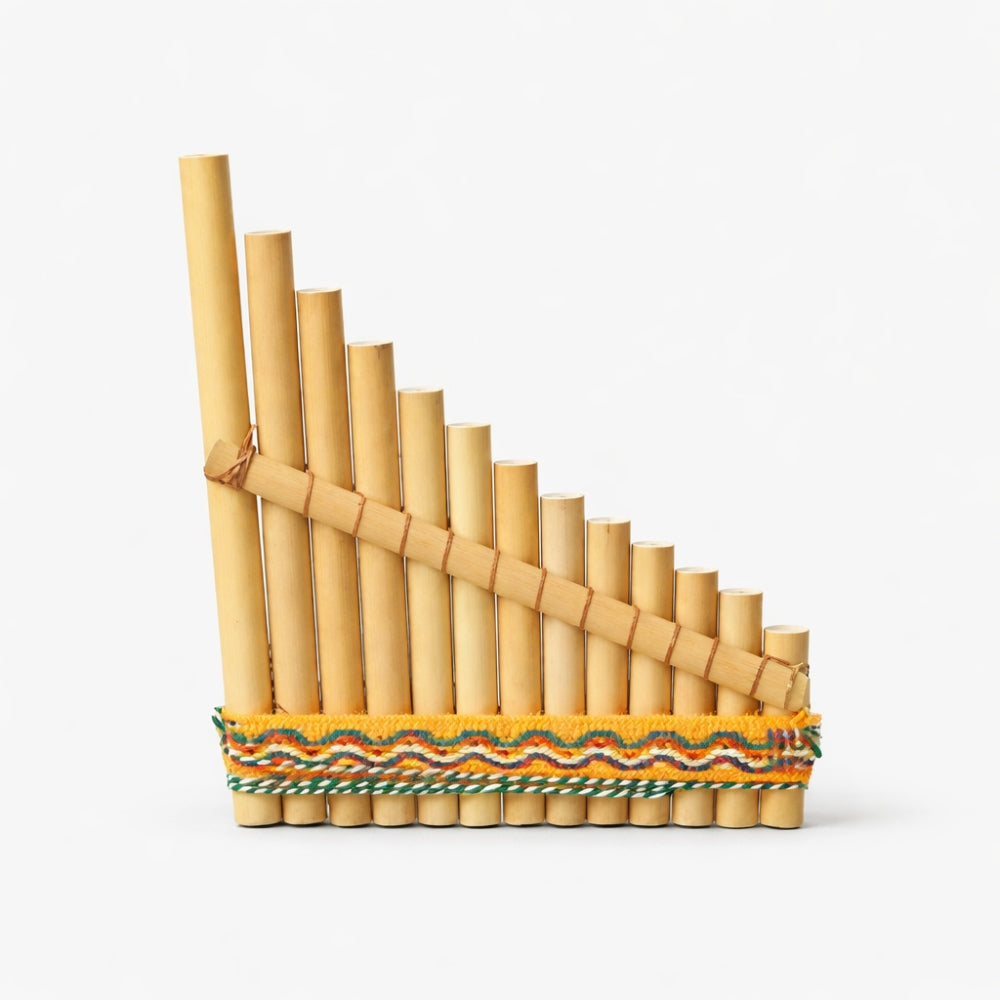
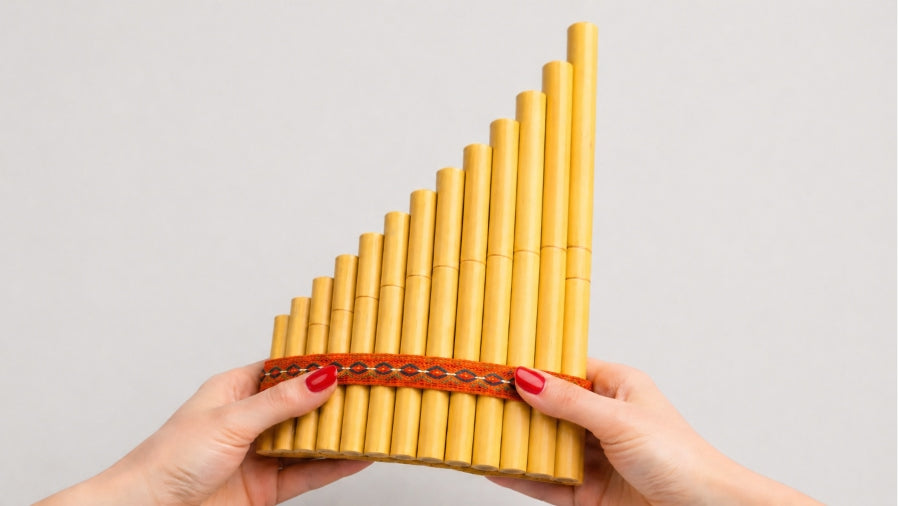
Panpipes are a wind instrument made from a row of hollow pipes of different lengths, with each pipe producing a different note when you blow across the opening. They are traditionally associated with Andean music, ceremonies and communal playing, but are also used for performance, music education, meditation, film music and contemporary recordings.
Different playing styles can emphasise anything from soft breathy tones to clear melodic phrases and rhythmic folk playing, but they all begin with the same fundamentals: breath control, embouchure and moving accurately between the pipes. Children can also learn to play panpipes with appropriate adult supervision.
How Different Panpipes Are Played
Most single-row panpipes are played by moving the instrument left and right across your lips to reach each pipe. Double-row panpipes such as the Zampoña require you to alternate between the two rows, while larger panpipes require more breath and more movement between notes.
How to Play Panpipes
Playing panpipes comes down to four fundamentals: a relaxed grip, correct lip position, controlled airflow and smooth movement between the pipes. Start by producing one clean, consistent note before trying to play scales or melodies. You can also control dynamics through your airflow, using gentler breath for softer notes and stronger controlled airflow for greater volume.
1. Hold the Panpipes
Hold the panpipes securely with both hands while keeping your grip, shoulders and arms relaxed. Sit or stand upright and keep the pipes level in front of you so you can move them freely from side to side.
2. Position Your Lips
Place the top of one pipe just below your lower lip and purse your lips slightly, similar to blowing across the top of a bottle. Keep your mouth relaxed and direct the air across the pipe opening rather than blowing directly into it.
3. Produce a Clear Note
Blow a steady, controlled stream of air across the pipe. If the note sounds weak or overly airy, make small adjustments to the angle of your breath until the tone becomes clear. Practise holding a clean note consistently before moving on.
4. Move Between the Pipes
Keep your head relatively still and move the panpipes smoothly left or right to position each pipe beneath your lips. Start slowly with individual notes, then practise moving between neighbouring pipes. Once your transitions are clean, progress to scales and simple melodies, gradually building speed while maintaining a clear tone.
Common Myths About Panpipes
Despite common misconceptions, panpipes don’t need perfectly uniform tuning, unusually strong lungs or direct blowing into the pipes. Traditional bamboo or reed instruments can have small natural tuning variations, and they are played by blowing across the pipe tops using controlled airflow, embouchure and angle. Panpipes are also not limited to folk or solo music; they can work in ensembles, recordings and styles ranging from classical and cinematic to ambient and modern music. Although easy to start learning, developing clean tone, dynamics and expressive control takes practice.
Take Your Panpipe Playing Further

The Complete Panpipes Player gives you a structured path from the fundamentals to playing complete songs, with step-by-step lessons, diagrams, tuning guidance, note charts and 20 notated songs to practise. You'll also learn how to care for your panpipes so they stay clean, protected and ready to play.