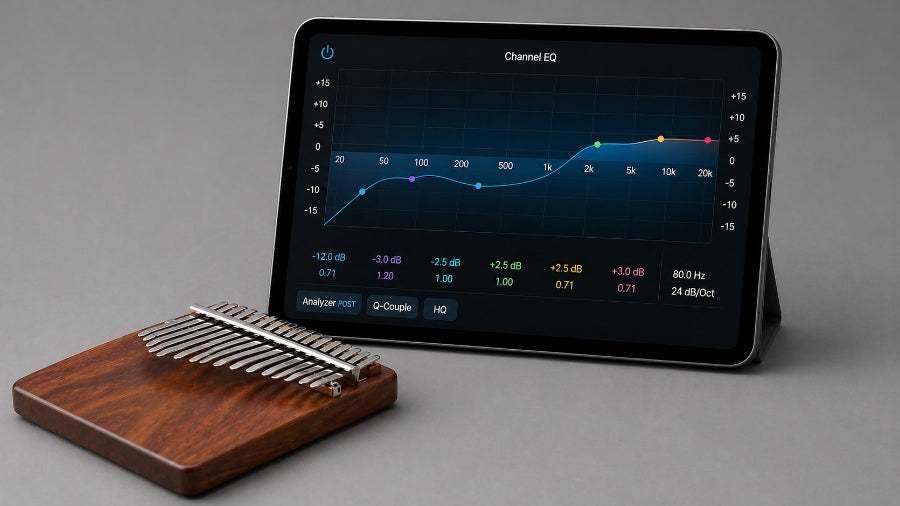
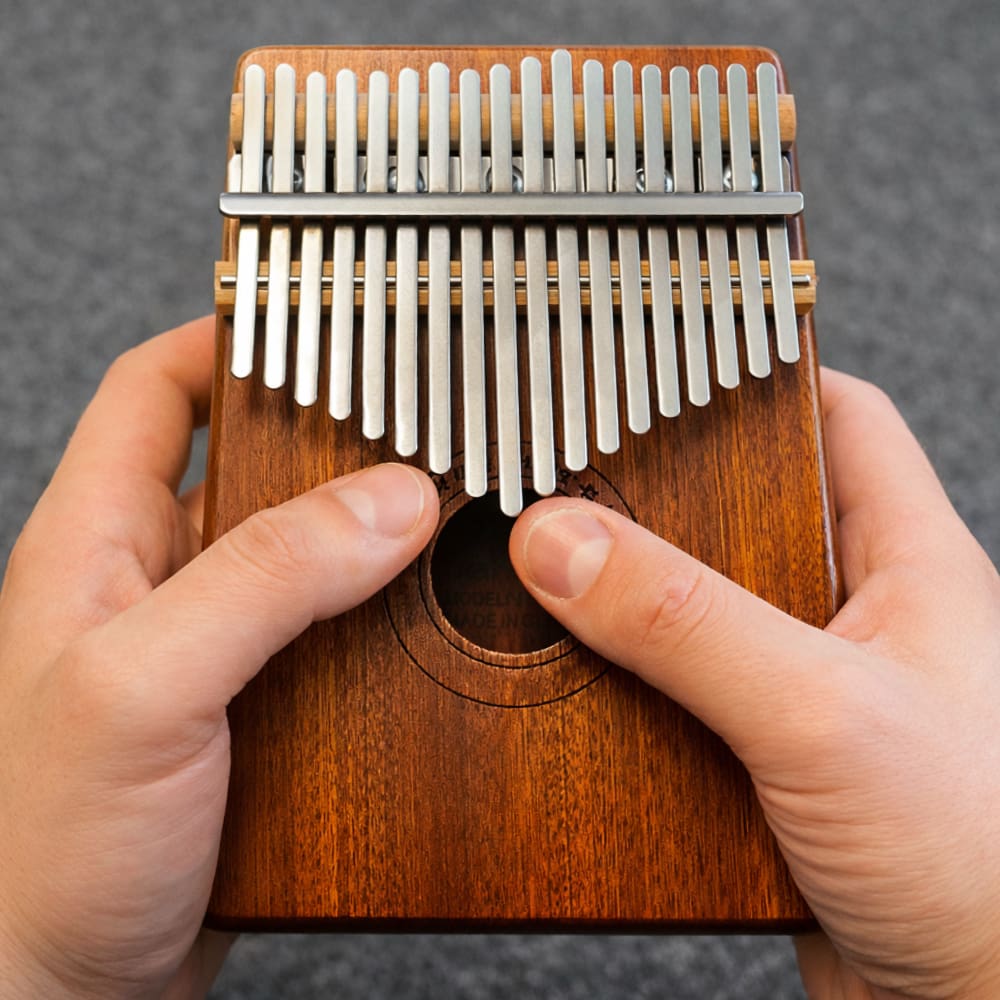
The kalimba has a naturally balanced, gentle tone, which means it rarely needs aggressive EQ. Most problems come from room noise, mic placement, or over-processing rather than the instrument itself. The goal of EQ is not to change the kalimba’s character, but to clean it up, improve clarity, and help it sit naturally in a mix.Below is a practical EQ approach that works for most kalimba recordings.
Low-End EQ (Removing Rumble and Mud)
Kalimbas don’t produce true sub-bass, so low-end EQ should focus on removing rumble rather than shaping tone. Apply a high-pass filter around 80–120 Hz to clear handling noise, desk vibration, and room rumble, and if the recording feels boomy or boxy, apply a gentle reduction around 150–250 Hz. Avoid cutting too much in this range, as it will thin the sound— the goal is a clean low end that keeps the body of the instrument intact.
Midrange EQ (Tone and Definition)
The midrange is where the kalimba’s tone and definition live, but it’s also where harshness can build if you’re not careful. A slight reduction around 300–600 Hz can clear dullness or congestion, while small cuts in the 800 Hz–1.5 kHzrange help reduce honkiness. If notes lack clarity, a gentle boost around 2–4 kHz can improve articulation. Keep all moves subtle, as heavy EQ in the mids quickly sounds unnatural on kalimba.
High-End EQ (Brightness and Air)
The high end gives the kalimba its sparkle and sense of air, but it needs careful handling. A light boost around 5–8 kHzadds brightness and attack, while a gentle shelf in the 8–12 kHz range can open up a closed or flat recording. If harsh clicking appears, use a narrow cut around 6–7 kHz, and avoid over-boosting, as too much top end exaggerates finger noise and makes the sound brittle.
Removing Harsh or Unwanted Noise
To remove harsh or unwanted noise, listen for sharp clicks or metallic spikes and use a narrow EQ band to sweep and locate the problem frequency, then apply a gentle 2–4 dB cut. Always judge EQ in context and avoid fixing issues that aren’t actually audible, as kalimbas are naturally percussive and some attack noise is part of the sound and shouldn’t be removed entirely.
Start with Kalimba Sounds That Don’t Need EQ

EQ can refine a recording, but professionally captured sounds remove the work entirely. The Kalimba Digital Sound Pack includes 16 clean, melodic kalimba riffs recorded from wooden kalimbas, gourd thumb pianos, Hokema kalimbas, sansulas, and African thumb pianos, all delivered in high-quality WAV format. The samples are already balanced, musical, and consistent—no mic setup, no noise, and no EQ troubleshooting—so you can drop them straight into music, film, or video projects and focus on creating, not fixing tone.