One of the first frustrations kalimba players face is notes ringing into each other, making clean melodies sound blurred or messy, and the issue isn’t the instrument—it’s control. The kalimba muting technique solves this by stopping a tine from vibrating so each note sounds clear and intentional, instantly making your playing more musical. The bigger problem is that many players don’t realise how many techniques they’re missing; without guidance, you don’t know what you don’t know, and progress can stall even with regular practice.
What Is the Kalimba Muting Technique?
The kalimba muting technique is the intentional act of stopping a tine from ringing after it’s played, usually by lightly touching the tine with a thumb or finger, or by using the opposite thumb to dampen nearby notes. The goal isn’t silence but clarity, allowing you to separate fast note sequences, prevent overlapping resonance, control rhythm and phrasing, and make melodies sound clean and deliberate. Without muting, longer-sustaining kalimbas can easily sound muddy, especially in faster passages or chord-based playing.
How to Mute Notes While Playing
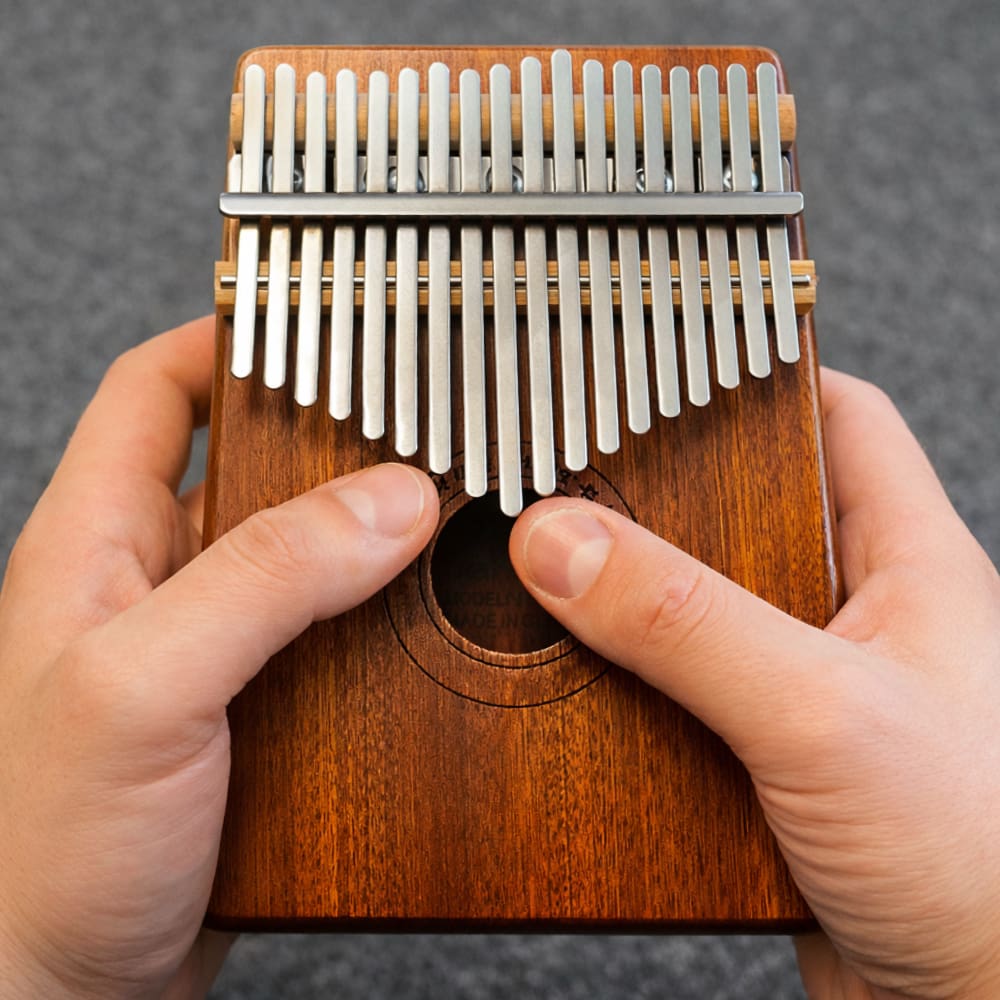
To mute notes while playing, use thumb muting by striking a tine as normal, then gently touching it again to stop the vibration before moving to the next note. As songs become more complex, adjacent thumb muting becomes essential, with one thumb playing while the other lightly rests on nearby tines to prevent unwanted ringing. Muting feels subtle at first, but it’s a key technique that separates casual playing from confident musicianship.
Why Most Players Never Learn This
Muting is rarely explained in free tabs or short tutorials. Many players assume overlapping sound is “just how the kalimba is.” It isn’t. The real issue is incomplete learning. You may know a few songs, but without understanding techniques like muting, dynamics, rhythm control, and phrasing, your progress plateaus. This is where structured learning matters.
Learn to Play Kalimba Step-by-Step

Stop guessing and follow a clear step-by-step path designed for complete beginners. Instead of jumping between random tutorials, you’ll know exactly what to do from your first note. Learn how to hold the kalimba, understand how the notes work, and start playing real songs with short, focused lessons that are easy to follow and build real skill quickly. It’s a structured way to learn that saves you time, removes confusion, and helps you progress.
Access the Kalimba Starter Course →