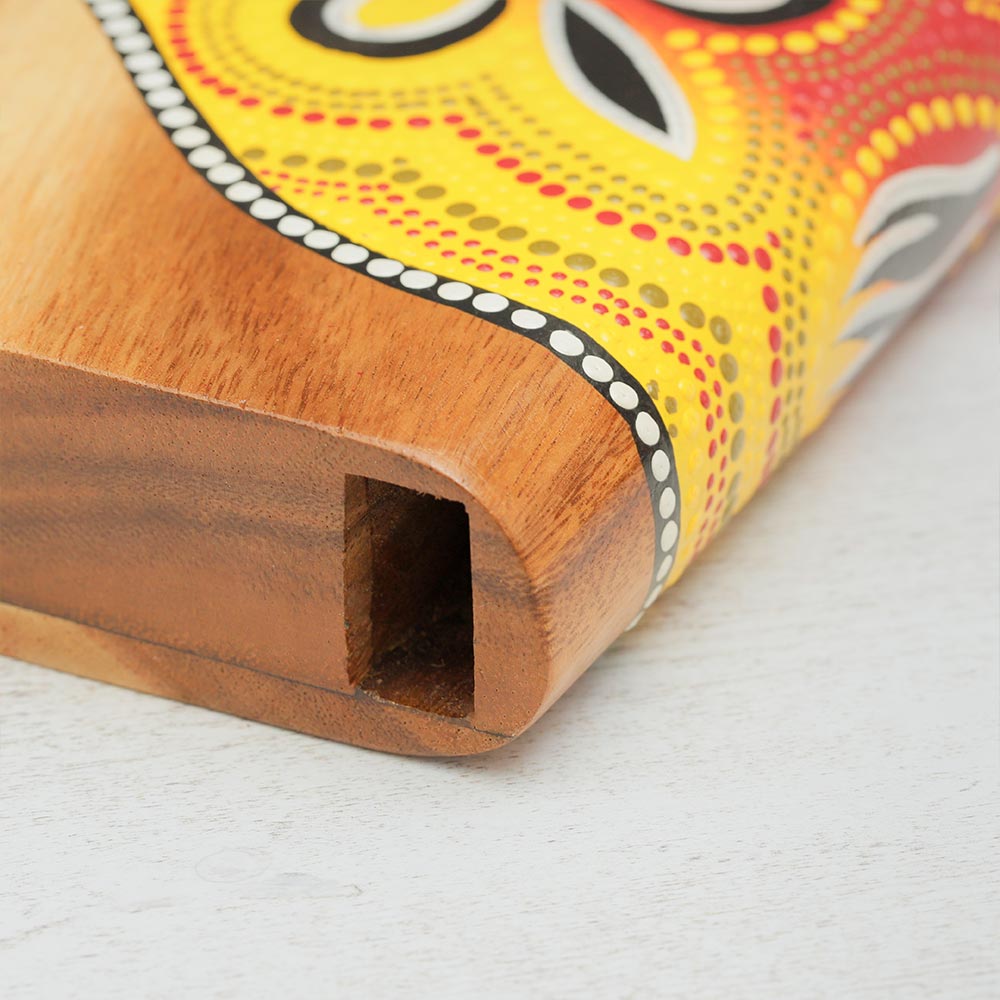
The Didgeridoo produces a continuous drone sound by vibrating the lips and using circular breathing, a technique where the player inhales through the nose while pushing stored air out through the mouth using the tongue and cheeks, allowing skilled players to sustain notes for long periods with practice. A 2005 study published in the British Medical Journal found that learning and practicing the didgeridoo may help reduce snoring and sleep apnea by strengthening upper airway muscles once circular breathing is mastered. This pocket didgeridoo produces a lovely tone and is handmade, fair trade, eco-friendly, and fun, making it a portable instrument and a great gift for musicians.
Specifications
|
Size
|
21 x 14cm
|
|
Weight
|
450g
|
|
Country of Origin
|
Indonesia
|
|
Product Care
|
Wipe with a damp cloth
|
|
Pitch
|
Mid range
|
|
Decay time
|
N/A
|
|
Dominant Frequency Range
|
200hz - 1.7khz
|
|
Frequency Range
|
100hz - 13khz
|
|
Peak decibels
|
84db
|
|
RMS decibels
|
71db
|
|
Loudness Rating
|
Level 8
|
|
Attack
|
N/A
|
|
Dynamic Range
|
Medium to high
|
|
Difficulty Rating
|
6
|
|
Timbre Tone Colour
|
Warm, mellow, resonant, and slightly nasal.
|
|
Safety Warning
|
Contains small parts. Not suitable for children without adult supervision.
|
Frequently Asked Questions
Is the didgeridoo suitable for beginners?
The pocket didgeridoo is more suited to those with experience, as it requires breath control and circular breathing techniques.
How to play the didgeridoo?
Blow into the mouthpiece using controlled breathing while adjusting your lips and tongue to produce drone tones. Circular breathing is key to continuous sound.
What are didgeridoos used for?
Didgeridoos are used in traditional ceremonies, meditation, rhythm practice, and sound therapy.