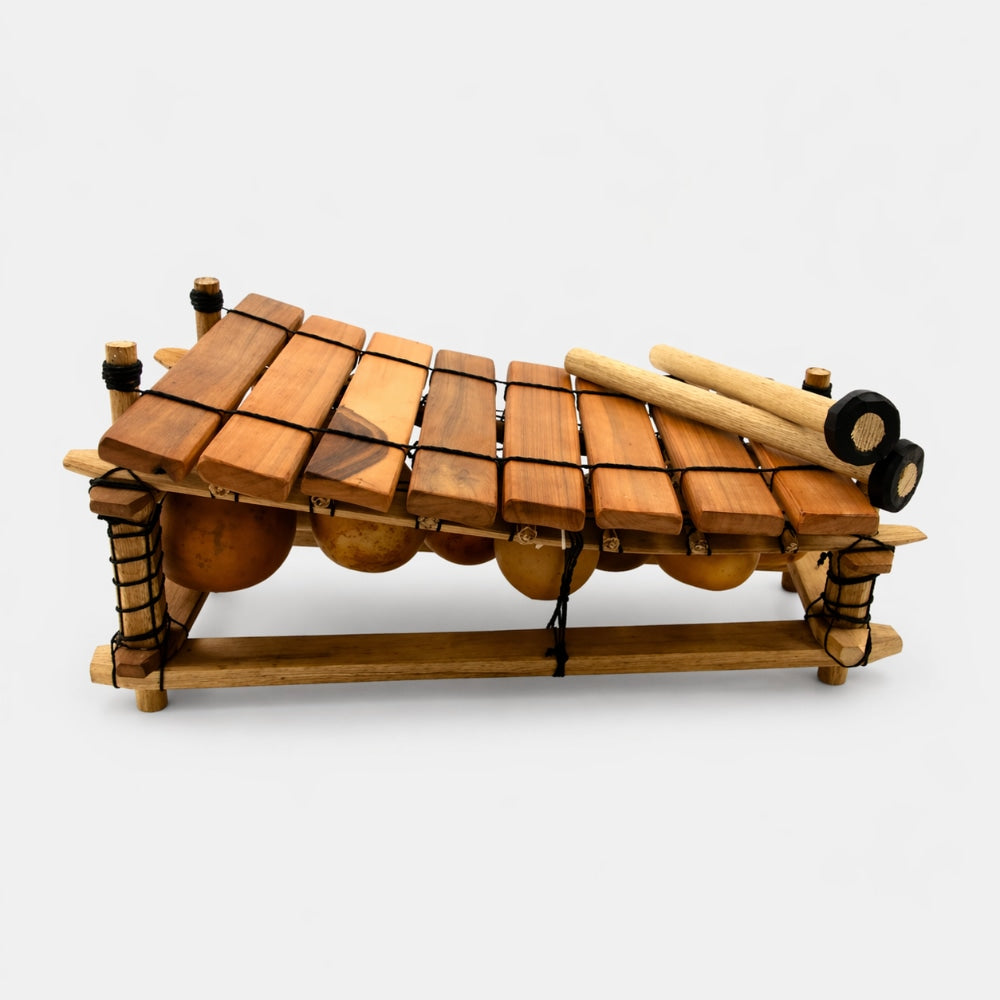
The 8/9 Note Balafon Xylophone is a traditional handcrafted percussion instrument made in Ghana, featuring wooden keys with suspended gourds beneath that naturally amplify its warm, calming tones. Unlike a standard western xylophone, it is not tuned to the western scale, giving it an authentic and distinctive sound rooted in West African musical traditions. Available in a variety of sizes, each balafon is individually handmade, meaning slight variations in design add to its unique character. Complete with two beaters and easy to enjoy for both beginners and experienced musicians, this beautiful instrument makes a thoughtful gift for musicians, hobbyists, and anyone who appreciates traditional world music.
Specifications
|
Size
|
55cm × 25cm × 34cm
|
|
Weight
|
2kg
|
|
Country of Origin
|
Ghana, Africa
|
|
Product Care
|
Wipe down with damp cloth
|
|
Number of notes
|
8/9
|
|
Tuning
|
E5, D5#, C5#, A4#, G4#, F4, D4#, C4
|
|
Pitch
|
High pitched
|
|
Decay time
|
68ms
|
|
Dominant Frequency Range
|
350hz - 3khz
|
|
Frequency Range
|
65hz - 20khz
|
|
Peak decibels
|
88db
|
|
RMS decibels
|
59db
|
|
Loudness Rating
|
8
|
|
Difficulty Rating
|
5
|
|
Attack
|
31ms
|
|
Timbre Tone Colour
|
Bright, resonant, and percussive
|
|
Dynamic Range
|
High
|
|
Safety Warning
|
Contains small parts. Not suitable for children without adult supervision.
|
Frequently Asked Questions
Is the balafon suitable for beginners?
Yes, the balafon is suitable for beginners, especially those with an interest in percussion instruments. While it can take some practice to master the technique, its melodic tones and intuitive layout make it a great choice for newcomers.
How do you play the balafon?
To play the balafon, strike the wooden keys with mallets. The keys are tuned to specific pitches, and players can create melodies and rhythms by striking them with different levels of force. The instrument is traditionally played with two mallets.
What is a balafon used for?
The balafon is a West African percussion instrument used in a variety of cultural and ceremonial contexts. It is commonly played in traditional music ensembles, storytelling, and dance performances, providing both melodic and rhythmic support.