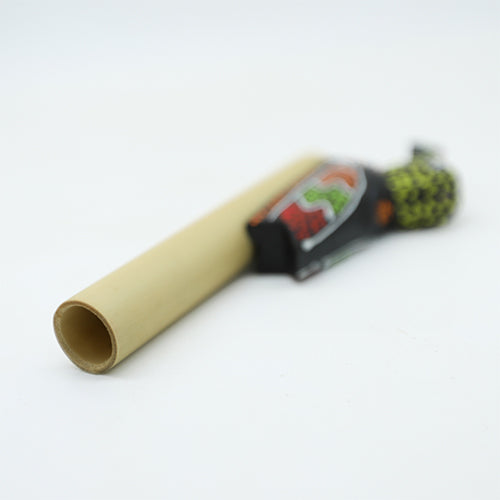
The classic bamboo Duck Quacker Whistle produces a realistic duck-like sound, with each piece featuring slight variations in design due to its handcrafted nature. This wind instrument adds a playful touch to any musical setup while also serving as a unique conversation piece. Carefully made from bamboo with a dot painted design, it blends simple craftsmanship with eye-catching style. Perfect for musicians looking for something fun and distinctive, it also makes a great gift for any music enthusiast.
Specifications
|
Country of Origin
|
Bali (Indonesia)
|
|
Key
|
A#, B, C, F#, G
|
|
Pitch
|
High pitch
|
|
Frequency Range
|
150hz - 12khz
|
|
Dominant Frequency Range
|
1.5khz - 3khz
|
|
Loudness Rating
|
Level 8
|
|
Difficulty Rating
|
1
|
|
Attack
|
4ms
|
|
Decay time
|
7ms
|
|
Timbre / Tone Colour
|
Slightly harsh, warm, with a slightly nasal tone.
|
|
Dynamic Range
|
Medium
|
|
Peak decibels
|
88db
|
|
RMS decibels
|
63db
|
|
Safety Warning
|
Contains small parts. Not suitable for children without adult supervision.
|
Frequently Asked Questions
Is the Duck Whistle suitable for beginners?
The Duck Whistle is ideal for beginners. It’s easy to use—simply blow into the correct end to create a realistic duck quacking sound. No prior experience is necessary, and both designs (plain and duck) produce the same sound, so it’s easy to enjoy right away.
How do you play the Duck Whistle?
To play the duck quacker whistle blow air steadily into the end where the internal mechanism is closest to the edge (on the duck design, this means the duck should face outward). Adjust the airflow to vary the pitch and volume, creating a range of quacking effects. If you're unsure, look inside to identify the correct side.
What are the Duck Whistle’s uses?
The Duck Whistle is commonly used for sound effects, fun performances, and educational purposes. It's perfect for creating realistic duck sounds, adding a playful touch to music production or nature-themed performances. It’s also an engaging tool for young learners or anyone interested in sound exploration.