
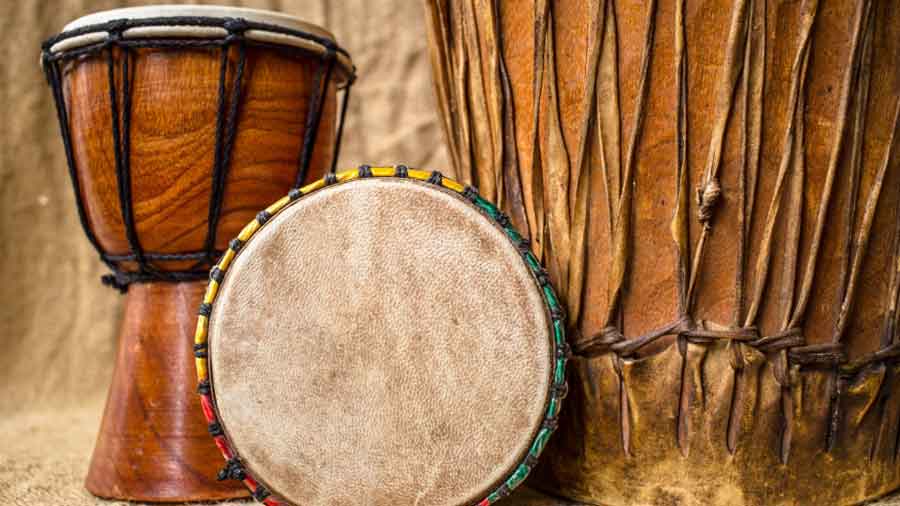
Djembe Drum Wood

The type of wood used to make a djembe drum has a major impact on its tone, projection, sustain, and durability. Traditional djembes are carved from hardwoods, each with distinct characteristics: Acajou and Djalla are prized West African redwoods known for balanced tone, strong bass, and clear slaps, with Djalla typically darker and denser; Hickory (Balafon wood) is extremely dense with tight pores, producing the loudest projection and sharp articulation which is often favoured for performance settings.
Iroko has more open pores, giving it a warmer, rounder sound that carries well and feels lighter in the hands. While all quality hardwood djembes can sound excellent, the differences in wood affect volume, sustain, weight, and feel, making wood choice an important factor depending on whether you prioritise projection, warmth, portability, or long-term durability.
Djembe Drum Sizes

Djembe drums are available in a range of sizes, and size directly affects volume, pitch, and feel. Smaller djembesproduce a brighter, higher-pitched sound and are easier to handle, while larger drums deliver deeper bass and more resonance. Our Indonesian Pura djembes are available in 20cm, 30cm, and 40cm sizes, while our largest African djembe from Ghana is around 60cm, handcrafted from a solid carved cedar shell with an unbleached goatskin head for maximum depth and projection.
Djembe Drum Skin

Djembe drums are traditionally made with goatskin or cowhide. The type of skin used will affect the sound and the durability of the drum. Goatskin is typically used for higher-pitched tones while cowhide is used for lower-pitched tones.
Djembe craftsmanship
Djembe drums are available in a range of sizes, and size directly affects volume, pitch, and feel. Smaller djembesproduce a brighter, higher-pitched sound and are easier to handle, while larger drums deliver deeper bass and more resonance. Our Indonesian Pura djembes are available in 20cm, 30cm, and 40cm sizes, while our largest African djembe from Ghana is around 60cm, handcrafted from a solid carved cedar shell with an unbleached goatskin head for maximum depth and projection.
Where to Buy a Djembe Drum?

When choosing where to buy a djembe drum, focus on authenticity, build quality, and suitability for your level. Traditional West African djembes made from hardwood with natural goatskin offer the richest, most expressive sound, while well-made Indonesian djembes are lighter, more affordable, and ideal for beginners or classroom use. Pay attention to size, weight, tuning method, and always buy from a trusted specialist that understands world percussion, ethical sourcing, and playability.
View our Handcrafted Djembe Drums
Djembe Drum (Frequently Asked Questions)
Where did the djembe drum originate?
The djembe drum originated in West Africa during the 12th–13th century, within the Mali Empire, among the Mandé people of present-day Mali and Guinea. It was traditionally carved by the numu, a hereditary class of blacksmiths and woodworkers, and used in ceremonies, healing, storytelling, and community gatherings as a symbol of rhythm and unity.
What is the djembe drum used for?
Musicians use it for dancing at events like weddings, baptisms, funerals, and ceremonies. They also play it during farming activities, courtship rituals, and to resolve disagreements among the men in the village.
What Music Genres Use the Djembe Drum?
What are the different types of djembe drum?
There are three main types of djembe drums based on construction: traditional hand-carved hardwood djembes with goatskin and rope tuning (the most authentic and widely used), mechanically tuned djembes (durable and easy to adjust, common in schools), and synthetic djembes made from fibreglass or plastic (lightweight and weather-resistant). Traditional djembes may vary slightly in shell shape, but they are all the same instrument—built differently to suit tone, durability, or convenience.
Is it worth buying a secondhand djembe drum?
Buying a secondhand djembe can save money and sometimes offers a broken-in tone, but it comes with risks like worn skins, loose rope, cracks, or no warranty. New djembes are more reliable and consistent, making them a safer choice for beginners, schools, and regular use, while fair-trade handmade djembes balance authenticity with dependable quality.
What is the tone of the djembe?
The middle note on the djembe is called a tone. It's not about how it sounds or its pitch; it's just the name for the note played on the edge of the drum. The tone is the most common note on the djembe and mastering it is essential for improvement.
What are some unique djembe drum accessories?
Useful djembe accessories include a padded drum bag for protection, natural oils to care for the wooden shell, and stands or straps for comfort during long sessions. Rope pullers help with tuning, while head covers protect the skin. For practice and performance, metronomes, ankle bells, or shakers add rhythm and variety.
How long does djembe skin last?
A skin can provide good performance for 5-15 years for many drummers. Some individuals, aiming for optimal sound quality, choose to replace the drum head every few years.
How do I maintain a djembe drum?
It's essential to store your drum in a dry environment. Avoid keeping it in damp places like basements or near a body of water. Consider using a reliable dehumidifier. For extra care, purchase a case meant for the djembe drum.


