
The ukulele is traditionally known for its cheerful melodic tone but its lightweight, resonant body makes it one of the most expressive percussive instruments available. By integrating rhythmic hits and slaps with your standard strumming, you can make your ukulele sound like a full band, providing both melody and percussion simultaneously. This expert technique adds groove and complexity, transforming simple chords into dynamic, high-energy performances. These techniques—Body Taps, String Scrapes, and Bridge Hits—are essential steps toward mastering rhythm and bringing a new cultural depth to your playing.
Body Taps (Percussive Rhythms)
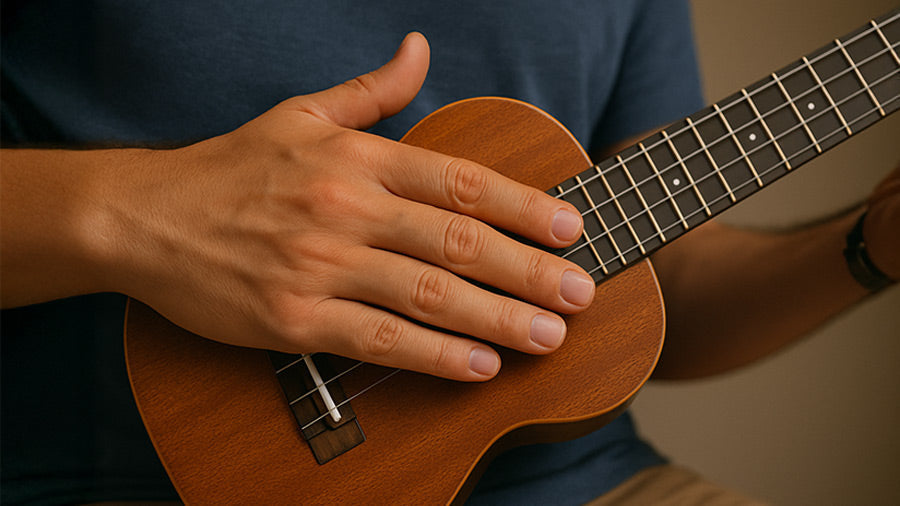
Body tapping, or percussive strumming, involves using your fingertips or palm to strike the ukulele’s top or sides for rhythmic accents between chords or melodies. The goal is to create a controlled, bass drum-like sound that mimics a drum beat. To execute this, fret your chord normally. On the down-stroke, aim the fleshy part of your palm, or the back of your fingernails, against the body near the shoulder or lower bout, quickly muting the strings as you strike. This produces a "thump" sound, which perfectly replaces the first or third beat (the downbeat) in a common rhythm. Mastering this technique requires consistent timing and a light, accurate touch, as hitting too hard can overwhelm the melodic sound.
String Scrapes (The Rhythm Accent)
The string scrape is a sharp, quick sound used to imitate a snare drum or high-hat, adding a bright, slicing accent to your rhythm. This technique is often incorporated during an up-strum. Instead of gliding smoothly over the strings with the pad of your finger, use the edge of your thumbnail or even a hard pick and strike the strings rapidly as you move upward. The key is to dampen the strings with the base of your strumming hand just before the scrape, preventing the notes from ringing out, which creates a pure, dry "shick" sound. Integrating the String Scrape on the two and four counts (the backbeats) adds a sophisticated rhythmic complexity to your standard down-up strumming patterns.
Bridge Hits (The Backbeat Snap)
The Bridge Hit, or slap, provides a sharp, muted crack that cuts through the melody and acts as a precise backbeat. To perform this, play a standard down-strum, but use the base of your thumb or the side of your index finger to quickly hit the strings directly over the saddle or bridge. The force of the strike should mute the strings while simultaneously producing a sharp, woody crack sound that comes from the strings hitting the fretboard. This technique is highly effective when used on the two and four beats in a rock or pop rhythm, giving your ukulele groove a commanding, driving snap. Like all percussive techniques, practice requires synchronizing the hit with precise rhythm and timing.
The Only Ukulele Guide You'll Ever Need

You have now successfully learnt three essential percussive techniques, transforming your ukulele into a melodic and rhythmic powerhouse. These "experimental techniques" add imprtant but they are only one small part of the path to confident, assured playing. To effectively use body taps and string scrapes, you must first master rhythm, timing, and fundamental chords—the elements that make these techniques shine.
The next step is to move beyond individual tricks and into a comprehensive structure that builds your overall musicality. The Complete Ukulele Player eBook is your complete step-by-step guide to mastering the instrument. It gives you the full foundation, covering ukulele basics, diagrams, tips, and most importantly, the core strumming patterns and the rhythm and timing exercises that allow you to seamlessly weave percussive hits into your music. Inside, you will learn how to play over 30 popular songs suitable for both beginner and advanced players, ensuring you never run out of material to practice.


